Senior Multimedia Reporter
The independence of Independent Senators has again come under scrutiny from Government MPs, with two Cabinet ministers backing Prime Minister Kamla Persad-Bissessar’s criticism of the Senate bench and raising concerns about what they described as a pattern of obstruction since Government took office.
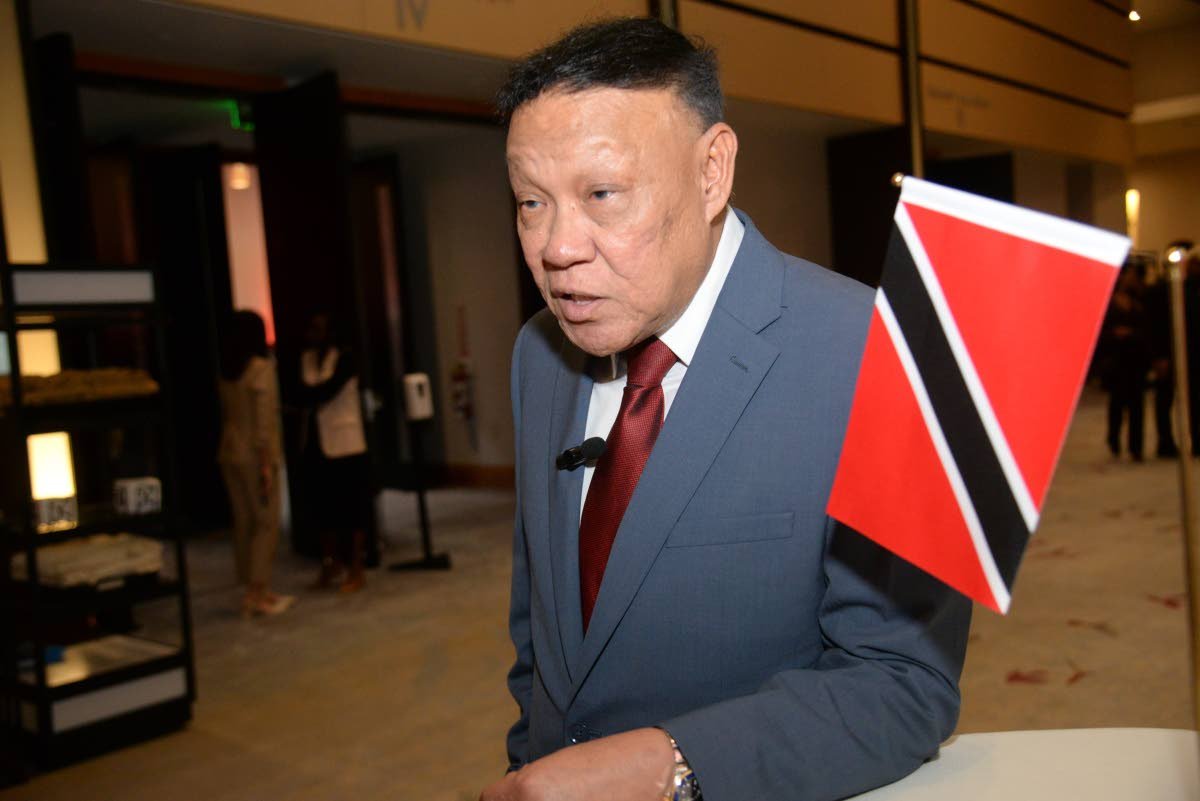
Speaking at a function celebrating China’s National Day at the Hyatt Regency in Port-of-Spain on Friday, Housing Minister and Caroni Central MP David Lee said he believed the Independent Senators had consistently sought to delay and oppose Government legislation.
“The Prime Minister is correct in her words and in what she said about the Independent Senators not being fair to the country and the people of Trinidad and Tobago,” Lee said.
“The Prime Minister also mentioned that these Independent Senators are not elected, yet they are making demands on the Government. What demands will continue to be made by these Independent Senators? It continues to defy logic.”
Lee pointed to concerns raised by Independent Senators during debate on Government’s Special Operations Bill. He noted that after the original ZOSO legislation was defeated in the Senate on January 27, 2026, the Government made amendments, but senators continued to raise objections.
The original bill required a special majority, while the revised legislation in the Special Operations Bill required only a simple majority.
Lee also questioned whether the Independent bench would adopt a similar approach when the Senate debates the Procurement Amendment Bill tomorrow.
“It is like they constantly want amendments. I personally do not think they want to pass a bill for the good of the country,” he said.
“We are going into the Senate on Monday to debate the Procurement Amendment Bill. I would not be surprised if these so-called Independent Senators again vote against this bill. But time will tell. I leave it to good sense to prevail in the Senate on Monday.”
Meanwhile, Public Utilities Minister Barry Padarath also criticised the Independent Senators during an interview on state-owned broadcaster TTT.
“The Government stands very resolute and very strong with the Honourable Prime Minister in her condemnation of the actions of these nine hand-selected persons by the president of the day,” Padarath said.
“There is no better way to describe them than the words used by the Prime Minister for persons who undermine the will of the population in terms of the policies of the sitting government.”
Padarath also defended Senate President Wade Mark’s decision to cast the tie-breaking vote in favour of the Government during Wednesday’s debate on the Special Operations Bill. He cited previous instances in which former House Speaker Bridgid Annisette-George exercised a casting vote, including during debate on the Bail Amendment Bill in 2017.
“I want to make it abundantly clear that the Constitution of Trinidad and Tobago does not provide guidance on how the President of the Senate, who is the presiding officer, is to vote,” Padarath said.
“All it provides is a discretion for a tie to be broken by the presiding officer, whether in the House of Representatives or in the Senate. Therefore, the onus is on the presiding officer, in his or her wisdom, to break the tie. What occurred in the Senate is not unique.”
Robinson-Regis challenges analyst’s claim
However, Opposition MP Camille Robinson-Regis has rejected that position. Her comments challenged arguments raised by political analyst Hamid Ghany following the contentious voting process, which was ultimately decided by Mark’s casting vote.
In a statement, the Trincity/Maloney MP said references by Ghany to Annisette-George’s 2017 casting vote on the Bail Amendment Bill overlooked the purpose and effect of the vote.
Ghany has argued that Annisette-George used her casting vote to break a 17-17 tie during debate on the Bail Amendment Bill 2017 in favour of the then People’s National Movement government.
However, Robinson-Regis explained, “There has been discussion about the casting vote she exercised in 2017, but saying she ‘voted with the Government’ misses the more important question: What did the casting vote actually do?
“The House divided 17-17 on whether debate should be adjourned to another date. Speaker Annisette-George exercised her casting vote in favour of the motion. The motion to adjourn therefore carried. So yes, the Chair voted ‘Aye’. But the effect of that vote was to postpone the matter and allow further consideration. That distinction matters.”
She also cited a 2004 ruling by then Senate President Dr Linda Baboolal involving the Caricom (Removal of Restrictions) Bill.
“The Senate Hansard records her voting with the Noes because she considered it her duty to uphold parliamentary practice, with the effect that the bill was not debated at that sitting and senators were given further time to consider it,” Robinson-Regis said.
“And in 2025, current Senate President Wade Mark, ORTT, when faced with tied votes in the Senate, expressly described the casting vote as being intended to ‘preserve the status quo’.”
Robinson-Regis argued that these precedents reinforced the principle that a presiding officer’s casting vote should maintain the status quo rather than create a substantive majority that the Government was unable to secure on its own.