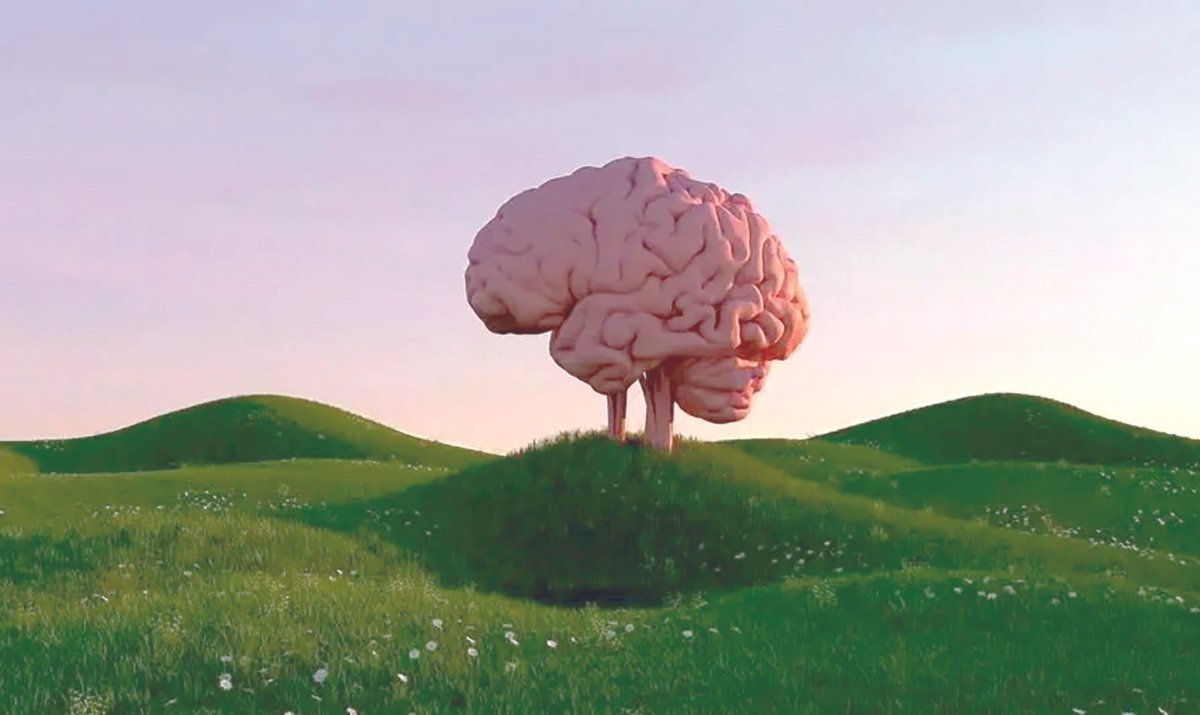
In today’s fast-paced world, filling every moment of the day and night with work, reading, checking the phone or watching series has become a pervasive habit, but new neuroscience research shows that this lifestyle is designed exactly against the natural needs of the brain.
The brain is not idle
Neuroscientist and author Joseph Ghibli explains that what we call “doing nothing” are actually golden moments for the “default mode network” to activate.
This vast network of brain regions is activated precisely when the mind is free; While walking, daydreaming, or even just staring out the window.
In this case, instead of shutting down, the brain is busy with one of its most vital tasks: processing past experiences, analyzing social relationships, categorizing memories, and creating new connections between ideas.
Simply put, creativity and sudden insights usually come to mind in the bathroom or while driving, not when you’re sitting at your desk and focusing on a problem.
Does modernity wear out our brains?
But the modern lifestyle is the enemy of this natural process. Nonstop cell phone use, multitasking, and filling every free minute with digital content never allow the default mode network to function. Ghibli describes this as “training the brain for constant distraction,” not rest.
Research shows that even short breaks of 20 to 30 minutes can dramatically improve cognitive performance.
In a comparison experiment, people who took breaks between tasks performed better at solving complex problems than those who worked without stopping.
Interestingly, the brain also consumes about 20% of its total energy in “idle” mode. That is, it never really turns off.
Tips for effective rest
Contrary to popular belief, Ghibli does not recommend complete unplanning, but emphasizes “smart rest”. The best pattern involves short regular breaks: a few minutes of complete mental pause every hour. Also, simple activities such as spending 20 minutes in the green space, taking a 30-minute nap, or even looking at the clouds can significantly increase creativity and problem-solving ability.
In the work culture of modern societies, rest is unfortunately still considered the opposite of work, but from a neuroscience perspective, rest is an integral part of a healthy cognitive performance cycle. Maybe it’s time to dedicate a part of the day to “doing nothing” without feeling guilty. Because real success lies not in eliminating rest, but in using it properly.