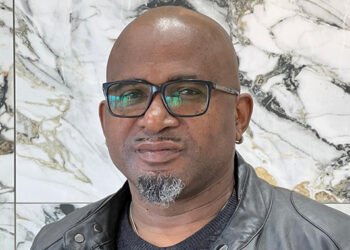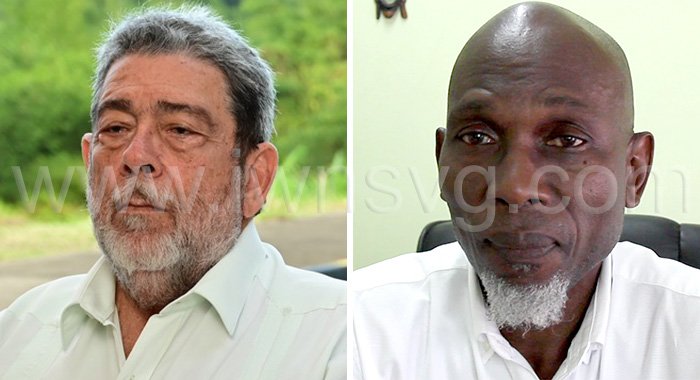
Former Speaker of the House of Assembly, lawyer Jomo Thomas, says Opposition Leader Ralph Gonsalves, his former finance minister Camillo Gonsalves and other “bigwigs” in the Unity Labour Party lack the moral authority to talk about alleged abuses of the Constitution.
The opposition leader was the prime minister from March 2001 until he was voted out of office last November, and Camillo, his son, who was MP for East St. George, was part of the “yellow washing” when the electorate rejected the ULP, leaving only the older Gonsalves in Parliament.
The ULP on Tuesday night began accusing the New Democratic Party (NDP) government of attempting to change the Constitution to protect itself against two election petitions that the ULP brought.
The petitions are challenging the election of Prime Minister Godwin Friday and Finance Minister Dwight Fitzgerald Bramble as MPs for the Northern Grenadines and East Kingstown, respectively.
The ULP is claiming that Friday, who is in a sixth five-year term, and Bramble, who was elected for a second straight term, did not qualify to run in the election because of their Canadian citizenship, which they have held public before they were first elected.

Thomas maintained on Wednesday his view that the ULP will lose the petitions, but disagreed with the NDP’s move to amend the Constitution to bring “clarity” to the definition of a foreign power ahead of the June trial.
“… I have seen comments by [Opposition Leader] Gonsalves, former finance minister Camilo Gonsalves, I’ve seen comments by a number of ULP bigwigs. I think some of it is pure politics,” Thomas, who is also a journalist and social commentator, told iWitness News on Wednesday.
“You would recall that after the 2015 elections, Justice Henry had made a decision regarding the petition (filed by the NDP), which was appealed … then-prime minister Gonsalves went ballistic,” said Thomas, who was a candidate for the ULP in the 2015 election.
“He (Ralph Gonsalves) said judges are not supposed to determine the outcome of elections,” Thomas said, noting that Gonsalves said then that elections are determined by the people who participated in them.
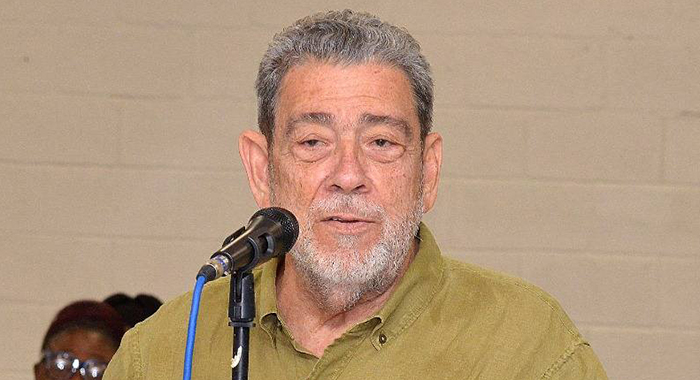
On June 30, 2017, Gonsalves attempted to downplay a High Court judge’s decision to hear the two petitions filed by the NDP, challenging the outcome of two seats in the 2015 general election.
In his 2017 comments, Gonsalves described the court’s decision as “just another step in a legal process”, adding that while the law is important, it is also important to recognise representative democracy.
“The courthouse doesn’t determine who represents you. I want to emphasise that. People who represent you are those who people vote for in an election and there will be other elections in St. Vincent and the Grenadines, whether before or at the time of the year 2020 in which real flesh and blood people, who are entitled under the law and Constitution to vote, will vote. That is our system. Judges do not decide who are your representatives,” Gonsalves had said.
Thomas told iWitness News on Wednesday:
“So, when I hear him now sounding all sanctimonious about, let the court resolve — and I am a believer in the fact that the court should resolve it — but he has no moral authority to talk about this.
“… If you take the Public Administration Act, the Public Administration Act that PM Gonsalves pioneered, and that Camilo supported, runs a horse on a carriage through the Constitution of Saint Vincent and the Grenadines.
“It fundamentally takes away, usurps the authority of the Public Service Commission in terms of who can hire public servants. So, these guys, when they talk about respect for the Constitution, they are speaking to the uninitiated. They can’t speak to somebody like me.”
Thomas’s law chambers have brought several lawsuits in which the court ruled that the ULP administration had violated the Constitution.
He noted that the Gonsalves father and son have both been finance ministers under the ULP administration.
“I remember back in 2020, I wrote a piece called ‘Explosive outtakes from Budget Debate’, in which I talked about the ways in which those guys flaunted and violated the Finance Act as it relates to the way in which they disregard the law, having to do with special warrants and so on,” Thomas said.
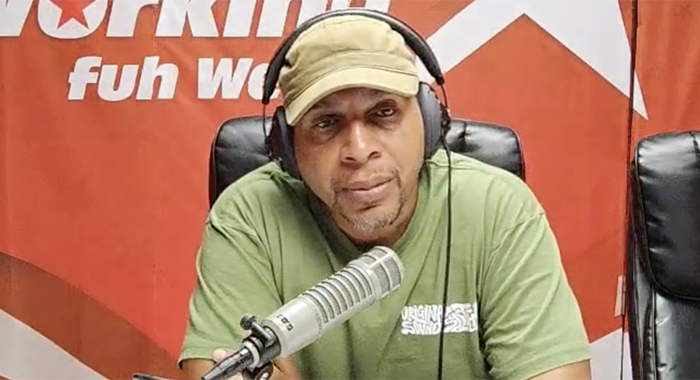
“And they were worse because they controlled the Parliament by the slimmest majority. They had an 8-7 majority when they did all of these things that truly assaulted the Constitution.”
He said that some people might say that he, as speaker, “aided and abetted in this” when he did not allow the debate of a motion of no confidence that the NDP lawmakers brought against the ULP government.
Thomas said that back then, the Gonsalves, as well as then senator Luke Browne, “who I see is making heavy weather of this (the NDP proposed changed to the constitution), when all of them argued strenuously that the section of the Constitution that dealt with votes of no confidence said that you could hold a vote before the vote of no confidence to determine whether you would have the discussion.
“They knew that that was not the right thing, but they argued forcefully and for it full well, trying to stymie and do an injustice to the Constitution.
“And I remember it was Camilo Gonsalves who said to me, persuasively at the time, because I was under tremendous pressure, having to listen to both sides, that ‘look honourable speaker, the standing orders allow for the amendment of any resolution that comes before it.’
“And that’s true, but silly me at the time, didn’t have the focus to understand that the standing order was a subsidiary legislation, and a subsidiary legislation couldn’t in any way trump the Constitution, which calls for a vote of no confidence.
“While I understand what’s taking place here, these guys don’t have any moral authority to talk about anything as if they intend to defend the Constitution,” he told iWitness News.
He said that he believes that the two NDP lawmakers will survive the legal challenge.
Thomas said that the government could change the section of the constitution, noting that it only needs a two-thirds majority vote in the Parliament, but that a referendum.
He, however, expressed the view that the government should not do so, adding that doing so suggests that it is not confident that the prime minister and minister of foreign affairs will survive the legal challenge.