The war in the Middle East has worsened the near‑term outlook for both growth and inflation in St. Vincent and the Grenadines, the Washington-based International Monetary Fund (IMF) says, even as it notes that the outlook is subject to downside risks.
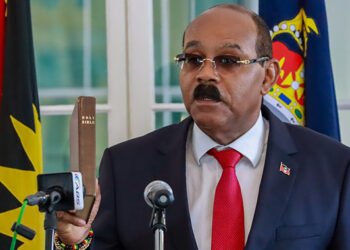
Sergei Antoshin, the IMF mission chief for SVG, delivered the outlook during a joint press conference with Prime Minister and Minister of Finance Godwin Friday in Kingstown on Tuesday, at the end of the annual IMF’s 2026 Article IV consultation.
Antoshin said growth in SVG moderated to 3.7% in 2025 as the post‑pandemic rebound faded, although tourism and construction remained strong.
The IMF said it expects growth to decelerate further in 2026-2027 in light of higher oil prices, a weaker global outlook and the normalisation of construction activity, converging to 2.7% over the medium term”.
Inflation, driven by war‑related commodity price shocks, is projected to rise in the near term.

“Inflation is projected to rise sharply because of the war-related commodity price shocks to 2.9% by end‑2026 but thereafter stabilise at 2%,” he said.
On the external side, Antoshin said the current account deficit remains large. It widened to 20% of GDP in 2025, mainly due to construction‑related imports and increased profit repatriation by hotels, despite strong tourism growth, and is projected to remain high in the medium term.
Antoshin argued that SVG can lift potential growth by improving the business environment, upgrading skills, and transitioning to renewable energy.
He said a move towards solar energy could significantly reduce energy costs and bolster the country’s resilience to volatile oil prices.
“The transition to renewable energy could significantly lower energy costs for households and firms and build resilience against volatile oil prices that we witness now,” he said.
“A key measure is replacing old diesel generators with solar energy. This would boost competitiveness and promote growth and employment, especially for women.”
However, Antoshin noted that this transition requires modernising electricity legislation, adding that this is necessary to enable solar energy development.
Antoshin welcomed the government’s pledge to address skill mismatches, particularly among young men and women, through education and labour market reforms.
These reforms include expanding vocational training, modernising curricula and targeted training in tourism and construction.
He pointed out that the government is already responding to the emerging needs of the economy by developing training programmes to meet business demands. Improving childcare support, Antoshin said, would also help increase women’s labour force participation.
Improving the business environment is another key plank of the growth strategy as this will support the private sector further.
“Streamlining regulatory processes and licensing and efficiencies, reducing tax complexity and expanding digital government services would help lower barriers to firm entry and growth,” Antoshin said.
He also cited the government’s initiatives to promote innovation, including research hubs, as supportive of long-term productivity.
The IMF official, however, said that given SVG’s vulnerability to natural disasters, further progress in preparedness is crucial to containing fiscal risks and protecting the vulnerable.
He endorsed the country’s existing three-layered insurance framework for natural disasters, calling it “consistent with Fund advice”.
“Other priorities include updating natural disaster risk assessment, upgrading regulations and strengthening compliance in land use planning and building codes to make structures more resilient,” Antoshin said.
Meanwhile, speaking ahead of Antoshin at the press conference, the prime noted that he was aware of the statement that the IMF was about to make and reiterated his government’s commitment to transparent and serious governance.
“We have undertaken an obligation, a task, that we have given a commitment to the people of this country, that we will be transparent, that we will be serious and professional in the way we address the issues that confront the country,” Friday said. “But most of all, that we will take the people into our confidence with every major decision that we have to make.”
He noted that his New Democratic Party administration had been in office for five months, and he framed the IMF mission and the press conference as part of a broader effort to engage citizens on complex but important economic issues.
“Today’s session is a part of that process of engaging with the people of this country on important matters that affect them,” Friday said, adding that while some issues “can be a little technical”, they “affect lives” and require honest and pragmatic handling.
He noted that the outlook was being given weeks before the start of the hurricane season and even as Dominica was recovering from floods from a trough system.
Friday said the extreme weather event in Dominica was a reminder of the “perilous period” the region faces.