
The results of the last PISA test reveal the terrible deterioration of educational quality in the country. Our learning has evolved over a decade, to the point that 60% of 15-year-old students do not understand what they read and 70% are not able to solve basic mathematical problems. Only 0.5% of Peruvian students reached the highest performance levels, compared to 12% in the OECD. Setbacks are equivalent to having lost a year of studies.
There is, however, one redeemable fact that breaks the negative pattern: we are the only country where the gap in results between rich and poor students was reduced, instead of widening as in most educational systems. Even so, the socioeconomic condition of the students continues to explain 13% of the variability in grades, a high figure, although declining.
It should be no consolation that almost all participating countries fell, nor that several neighbors in the region did worse than us, since there are notable exceptions that we could well emulate. Costa Rica improved in all three subjects evaluated, and other middle-income economies such as Türkiye are now among the best performers. Prosperity is no longer the only determining factor in educational excellence.
How to understand this disaster? Without a doubt, the effects of the pandemic continue to be serious, considering that it coincided with a key stage in the educational process of the children evaluated, a particularly adverse situation in our country due to the total and prolonged suspension of in-person classes.
Another transversal variable is the greater use of screens. However, this does not appear to be critical for Peru: less than 10% of children spend more than four hours a day of digital leisure outside of class (compared to 25% of the OECD average). More worrying in our environment is the increase in bullying (from 9% to 16%), the decline in family support in schoolwork and the deterioration of perseverance and curiosity among students.
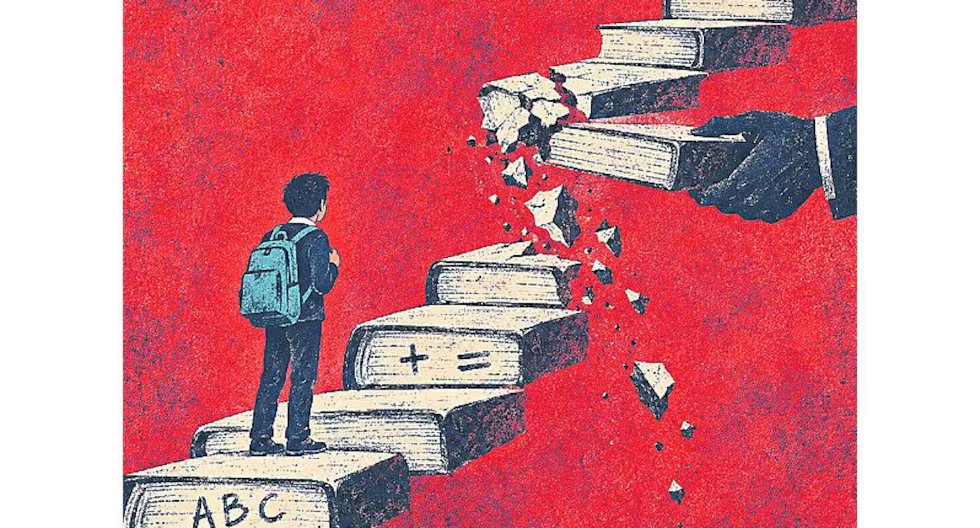
The most relevant explanatory factor in the Peruvian case is the dismantling of teaching meritocracy, a scheme that sought to improve educational quality with the adoption of entry and retention requirements and evaluations for teachers. Yielding to pressure from the teachers’ unions that had achieved important political representation, the last Congress dynamited this process, facilitating the reinstatement of teachers dismissed for not passing the evaluations or not appearing for them.
Contrary to what is believed, we are not necessarily facing a problem of lack of resources: public spending on education practically doubled in the last decade and the salary status of teachers improved. Certainly, it is necessary to value the school infrastructure, much of it in terrible condition, without access to basic services and highly vulnerable to disasters. Closing this gap is necessary, but if in parallel we do not restore teaching meritocracy, no other efforts will provide the desired results.
We must therefore put the well-being of students before that of organized groups that, far from being allies in improving educational quality, today appear as its main detractors. Hence the importance of the recently presented National Plan for Teaching Excellence, with minimum cut-off grades and training subject to evaluation.
Although this is a step in the right direction, the success of this effort will depend on the ability of the Executive to resist the political pressures of those who have already announced their rejection, and that Congress does not give in to populist temptations to repeat the mistake that has done so much damage to our young people.
*El Comercio opens its pages to the exchange of ideas and reflections. In this plural framework, the Diario does not necessarily agree with the opinions of the columnists who sign them, although it always respects them.