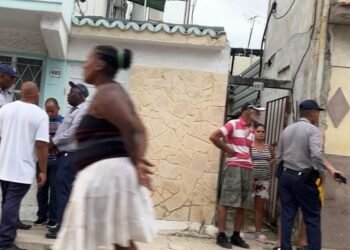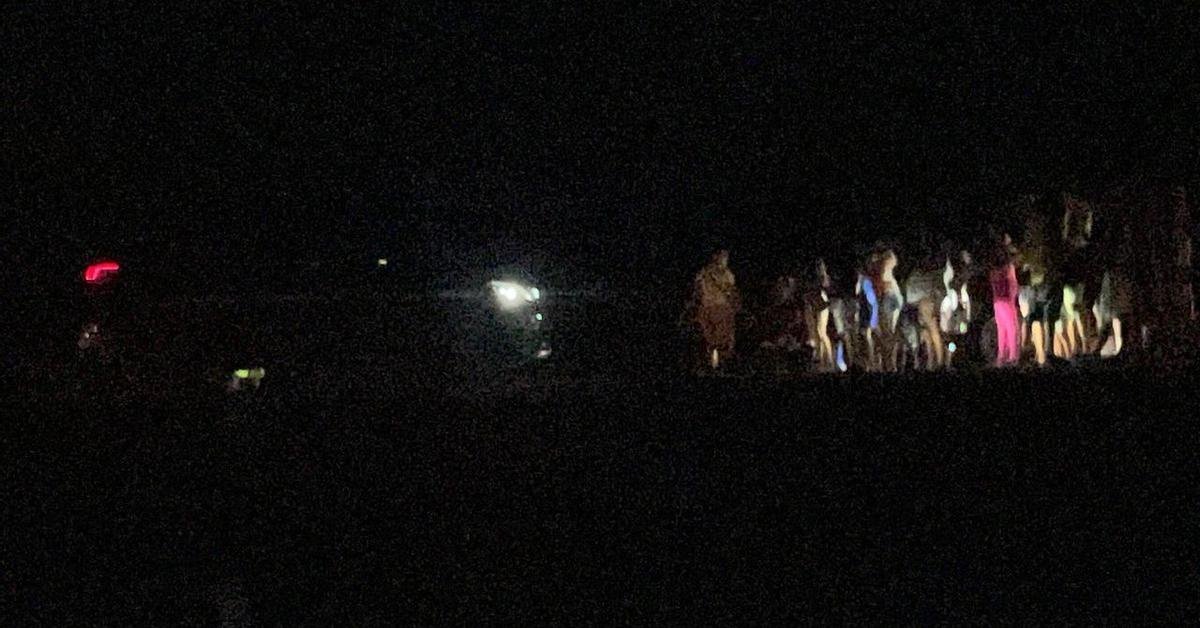
Havana/More than 50 people blocked the Vía Blanca in Havana this Sunday, as documented by this newspaper, which witnessed the police deployment in the protest area. The neighbors demonstrated against the lack of electrical service that they had suffered for three days, according to the testimony of one of them.
Women, adolescents and children were the main protagonists of the protest. Standing on the road, blocking one of the main highways that connects the capital with Matanzas, protesters played cauldrons to express their discontent. After almost half an hour, several patrols arrived in the area to discourage traffic disruption.
Scarcity and desperation are pushing more and more citizens to take to the streets and demonstrate, even in broad daylightdespite the usual police response and arrests that usually accompany these protests.
The energy crisis affects practically all areas of daily life on the Island. Blackouts also cut off the water supply, make it difficult to preserve food, prevent sleep during nights of humid heat and mosquitoes – transmitters of diseases such as dengue – and make medical care in hospitals difficult.
Scarcity and desperation are pushing more and more citizens to take to the streets and demonstrate despite the police response and arrests
The Electrical Union of Cuba (UNE) has been reporting impacts for weeks that exceed 60% of national demand during peak consumption times, starting at dusk, a situation that translates into blackouts of more than 48 consecutive hours in some areas of the country and more than 20 hours a day in Havana.
Yesterday, Sunday, of the 16 thermoelectric units in the country – which almost all run on national crude oil – 11 are not operational due to breakdowns or maintenance work (the forecasts for this Monday are very similar, with 10 units turned off).
Among them, the Antonio Guiteras thermoelectric plant – the largest generator on the Island, which contributed 220 MW – which was disconnected from the national electrical system (SEN) last Friday for the thirteenth time this year and whose repair will still “take the necessary time under the established controls”, as stated its director, Román Pérez Castañeda.
The structural problems of thermoelectric plants, responsible for 40% of energy generation, are mainly due to decades of exploitation that have exceeded their useful life, and a chronic investment deficit.
The protests are frequently repeated in different parts of Havana and other provinces, with banging of pots and pans, burning of garbage cans and roadblocks.
Added to these incidents are generation limitations due to lack of fuel. A total of 106 distributed generation plants remain out of service, causing a deficit of 890 MW. The Turkish chum from Regla is in the same situation.
According to the part of the UNEthis Sunday the electrical service was affected due to a capacity deficit during the 24 hours and the impact continued in the early morning hours, with a maximum of 1,953 MW at 9:20 p.m. For this Monday, a deficit of 2,045 MW is expected during peak hours, which is equivalent to about 67% of an estimated demand of 3,050 MW.
This Sunday, protests were also reported in the municipality of Regla, during the day. Demonstrations are frequently repeated in different parts of Havana and other provinces, especially during blackout nights, with banging of pots and pans, burning of garbage cans and roadblocks. Many demonstrations have ended with repression police and arrests of participants.