MOSCOW, May 27. /TASS/. Russia tightens security at its Baltic Sea seaports; Russia’s Central Bank has launched new legal action against the EU; and the reasons behind Russian President Vladimir Putin’s upcoming visit to Kazakhstan. These stories topped Wednesday’s newspaper headlines across Russia.
Russia is tightening security at its Baltic Sea seaports. Earlier, security services thwarted an attempted sabotage operation at the Ust-Luga port in the Leningrad Region. Experts believe the current security measures effectively protect shipping in the Baltic Sea. Meanwhile, NATO continues to escalate tensions in the region by conducting exercises to practice a blockade. However, direct aggression remains unlikely for now, as Russia maintains a military advantage in the area.
On May 25, Russian security services thwarted a terrorist attack on the Russian Arrhenius gas carrier. It arrived from Belgium at the port of Ust-Luga in the Leningrad Region. The ship was to be loaded and sent to Turkey. During an inspection of the underwater hull, divers discovered explosive devices resembling naval magnetic mines, presumably manufactured in NATO countries. Due to the risk of sabotage, Russian authorities plan to further enhance security at ports.
According to political analyst Denis Denisov, these attempts at sabotage are part of an asymmetric conflict strategy. The West is unwilling to engage in open confrontation with Russia and is unable to succeed in the special military operation zone. Therefore, terrorist attacks will continue. This threat can be countered by strengthening security measures.
In response to the militarization of the region by NATO countries, Moscow plans to take a wide range of measures. In particular, Russia will continue to strengthen the Baltic Fleet in order to counter new threats, the Russian Maritime Collegium told Izvestia.
In turn, Yury Zverev, director of the Center for Foreign Regional and Country Studies at Immanuel Kant Baltic Federal University, told Izvestia that NATO countries with access to the Baltic Sea reportedly have 11 diesel submarines, six destroyers, 12 frigates, 11 corvettes, and 10 missile boats. These do not include the navies of neighboring Norway and other NATO member states, primarily the US and the UK, which can deploy their ships to the Baltic Sea. “We are at a disadvantage in terms of submarines and destroyers, not by much in terms of frigates and missile boats, and we have superiority in terms of corvettes. It should also be noted that Russian ships and boats are equipped with powerful anti-ship missile systems, including the Kalibr, Oniks, Moskit, and Kh-35, which surpass their Western analogues in a number of key parameters,” the expert emphasized.
Without the deployment of US ships armed with Tomahawk cruise missiles, none of the Baltic fleets of NATO countries can compete with the Russian Baltic Fleet on equal terms. As long as Russia has the upper hand, NATO is unlikely to close the Baltic Sea to Russian ships despite calls from Vilnius, Riga, and Tallinn.
Media: Russian Central Bank’s lawsuit against EU to complicate transfer of Russian assets to Kiev
Russia’s Central Bank has taken new legal action against the EU, challenging the mechanism that allows the use of proceeds from frozen Russian reserves to support Ukraine. Experts believe this dispute could complicate future transfers to Kiev and put pressure on the EU and the Belgian depository Euroclear. Beyond financial considerations, the principles of international law, property protection, and the status of central bank reserves are being called into question. Even if the process drags on for years without leading to the quick release of the assets, the legal proceedings themselves already create additional risks for the EU.
The Central Bank is creating serious legal obstacles for the EU, Ricom-Trust analytical department head Oleg Abelev noted. According to him, the process itself could slow down the implementation of the support mechanism for Kiev and damage the reputation of the European legal system. Many view this lawsuit as an attempt by the Central Bank to simply “get the money back,” but, as Eastern Legal Alliance Director Yevgenia Amelkina pointed out, the dispute is much broader. From a legal standpoint, the position of the Bank of Russia cannot be called weak, Anastasia Feinberg, a consultant at the Estonian Legal Alliance, told Izvestia.
According to her, this concerns the Central Bank’s sovereign reserves, one of the most protected categories of state property in international practice. The main problem for the EU is that the European scheme already goes beyond a simple asset freeze, she added. As a result, foreign reserves are effectively becoming part of the financial support mechanism for Ukraine, which is a new practice under European law. The process will likely be long and complex, Amelkina stressed.
However, the mere fact of filing a lawsuit does not suspend the EU regulation, Razmorozka. com service head Alexey Bogdanov emphasized. The EU can still attempt to use the proceeds from frozen assets. In theory, the Bank of Russia could temporarily suspend the mechanism, but it would have to prove imminent and irreparable risk, which European courts rarely grant.
After receiving a writ of execution ordering the collection of 200 billion euros from Euroclear, the Bank of Russia will most likely begin seeking recognition of this decision in friendly jurisdictions, Bogdanov noted. This could include Hong Kong, the UAE, China, and other countries where Euroclear has assets, accounts, or financial ties. “As far as we know, Euroclear has subsidiaries in Malaysia, Singapore, and Hong Kong, branches in Hong Kong and Singapore, as well as representative offices in Beijing and Dubai,” Skif Consulting CEO Dmitry Demidenko told RBC. But Singapore and Hong Kong de facto recognize and enforce the Western sanctions regime against Russia, he pointed out. “Malaysia maintains neutrality, though attempts to ‘sway’ it cannot be ruled out, and the representative offices in Dubai and China are too small an asset to initiate a process with clear political consequences for their sake,” the expert stressed.
At the same time, the mere existence of the lawsuit complicates matters for the EU and Euroclear, Amelkina emphasized. Any further steps on the use of Russian assets will now take place against the backdrop of legal proceedings that call into question the legality of the entire arrangement. The main risk for the EU lies not so much in the process itself, but rather in the need to explain to the world why the inviolability of central bank reserves now depends on the political situation, financial lawyer Olga Plekhanova concluded.
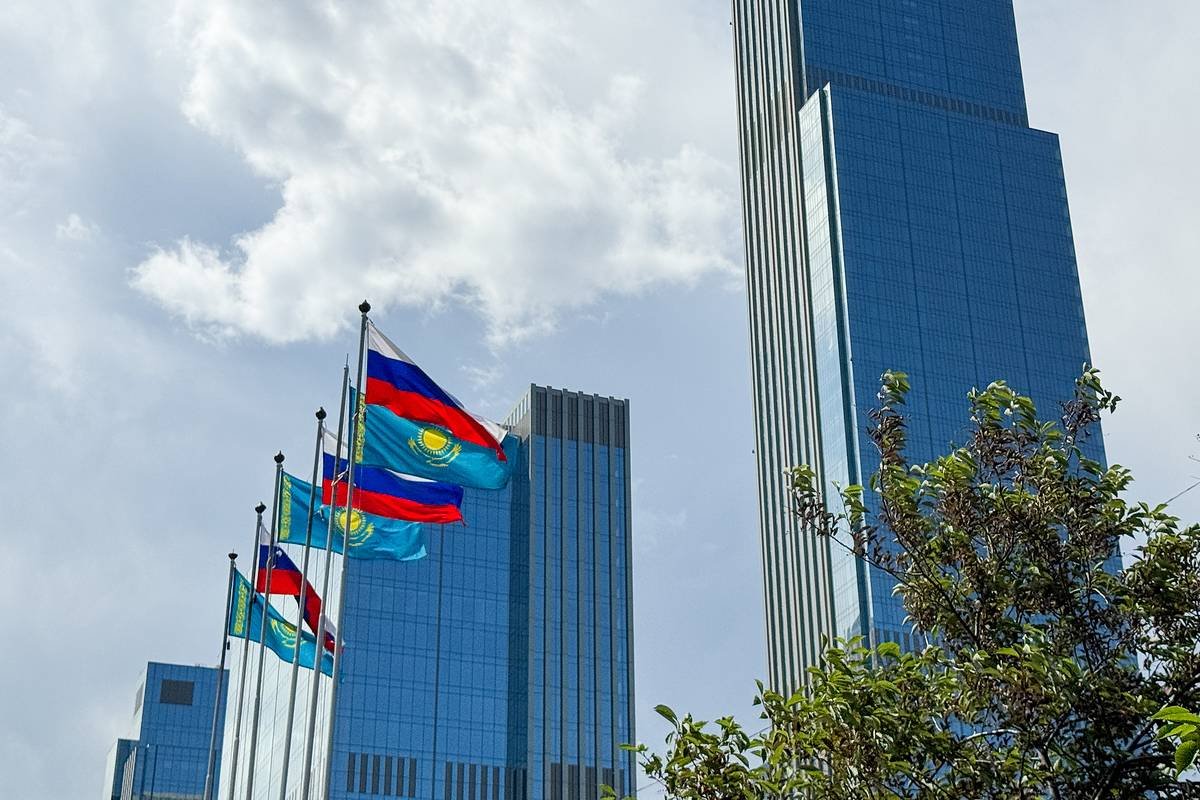
Russian President Vladimir Putin will pay a state visit to Kazakhstan on May 27-29. While there, he will hold bilateral talks with his Kazakh counterpart Kassym-Jomart Tokayev and then take part in a meeting of the Supreme Eurasian Economic Council. The Russian leader will bring a 30-person high-level delegation, including Deputy Prime Minister Alexey Overchuk, nine ministers, Central Bank head Elvira Nabiullina, and representatives of major Russian businesses.
In Astana, Putin and Tokayev will coordinate their positions on a broad agenda of Russian-Kazakh relations, Stanislav Pritchin, head of the Central Asia section at the Russian Academy of Sciences’ World Economy and International Relations Institute, told Vedomosti. Economic cooperation between the two countries is steadily expanding through new projects, including the construction of a nuclear power plant in Kazakhstan, the expert noted. “The Russian president’s trip to Kazakhstan is largely pragmatic. Undoubtedly, during this visit, the parties will also discuss the prospects for developing and integrating the states within the Eurasian Economic Union framework,” he said.
Kazakhstan occupies an important position on the Eurasian continent, upon which the stability and security of all of Central Asia depend, at the very least, Andrey Grozin, head of the Central Asia and Kazakhstan department at the Institute of CIS Countries, stressed. Without normal relations with this country, Russia will be unable to build partnerships with other Central Asian states, as major transport and logistics hubs pass through Kazakh territory, he noted.
Nevertheless, there is a solid legal foundation between Russia and Kazakhstan for strengthening relations, and in fact, this country has become the second key partner in the post-Soviet space after Belarus, Grozin emphasized. “The customs conflicts that periodically arise between the countries stem from differing economic interests of various groups and the segments of the elite that support them. However, these contradictions do not lead to confrontations, and Russian-Kazakh relations continue to develop in a balanced manner. To reaffirm this approach, Putin is traveling to the region,” the expert explained.
According to him, the dialogue between Moscow and Astana is important in the context of Kazakhstan’s ongoing constitutional reform. The country could see a restructuring of its entire political system by mid-summer. This creates a situation of internal political uncertainty. Without Russia’s support, Kazakhs will find it more difficult to respond to potential challenges, Grozin concluded.
Finland has demanded that Ukraine not use its territory to launch strikes against Russia. At the same time, Helsinki has expressed “understanding” for Kiev’s tactics. In response, Moscow has urged Finland to act responsibly and warned of serious consequences if it formally allows Ukrainian drones to use its airspace.
Helsinki categorically denies any involvement in carrying out or planning Ukrainian military operations related to strikes on northwestern Russia, the Russian embassy told Izvestia. “We have noted repeated mentions that representatives of the Finnish political leadership conveyed relevant signals to their ‘Ukrainian friends’,” the diplomats noted.
Nevertheless, Helsinki is warning its citizens that “incidents involving drones are unlikely to stop,” the embassy added. In addition, Finland is speaking of the “legitimacy” and “justification” of Ukrainian strikes on targets within Russian territory and expressing “understanding” of Kiev’s methods, the diplomats noted. “Undoubtedly, such rhetoric does nothing to ease tensions, which have already escalated due to Finland’s accelerated militarization and the active deployment of NATO forces across the country,” the statement noted. “We hope that Helsinki recognizes the sensitivity of the developing situation and takes seriously the responsibility the country has assumed by becoming a NATO ‘frontline’ state,” the ministry stressed.
Moscow considers European countries to be direct accomplices in Ukrainian attacks. The authorities of the Baltic countries and Finland may be coordinating the flights of Ukrainian drones over their territories, Natalya Yeremina, a professor at St. Petersburg State University, told Izvestia. However, not all members of the elite may have been aware of specific agreements with the Ukrainian authorities, which explains why the leadership of these countries denies any involvement in Ukrainian attacks launched from their territories. “There were most likely certain types of coordination. For example, there was coordination when precision strikes were necessary on specific targets, and security guarantees were needed for the country through which the drones were flying. They could have also pledged to help escort the drones,” the expert said.
Drone incidents generally benefit Ukraine, which is interested in NATO and the EU directly entering the war with Russia, Financial University associate professor Vadim Trukhachev emphasized. Nevertheless, there are political levers – for example, downgrading diplomatic relations. Moreover, according to Yeremina, Moscow could intensify pressure on international platforms by presenting concrete evidence of certain countries’ involvement in strikes on Russian territory. This would force the elites of those states to explain the motives behind such actions to their populations. Given that such steps lead to direct confrontation with Russia, this could negatively impact the popularity ratings of the ruling parties.
During a brief meeting with his Armenian counterpart Ararat Mirzoyan in one of the halls at Yerevan Airport, US Secretary of State Marco Rubio signed three documents with him aimed at deepening US-Armenian cooperation. They initialed a framework agreement on strategic partnership under the Trump Route for International Peace and Prosperity project and a framework agreement on securing supplies of minerals and rare earth elements, and also signed a charter for a comprehensive strategic partnership between the two countries. Rubio’s visit took place against the backdrop of Armenia’s preparations for parliamentary elections scheduled for June 7 and strained ties between Yerevan and Moscow amid the pro-Western course of the Armenian government led by Prime Minister Nikol Pashinyan.
Rubio’s visit to Armenia is a symbolic gesture by the US aimed at providing political support to Yerevan amid the deterioration of its relations with Moscow, Pavel Koshkin, a senior researcher at the US and Canadian Studies Institute of the Russian Academy of Sciences, told Vedomosti. In his opinion, this visit serves as a warning to Russia and a reminder that Washington has no intention of withdrawing from the post-Soviet space, but will instead strengthen its influence in the region.
“Although current US President [Donald Trump] has resumed dialogue with Moscow on Ukraine, he has not abandoned the policy of containment. However, this in no way contradicts the US national security strategy, which identifies Russia as a threatening yet negotiable entity. Nevertheless, the essence remains unchanged,” Koshkin emphasized.
According to the expert, Rubio’s increased activity on the foreign policy front – specifically his visit to Armenia following his trip to India – is laying the groundwork for his presidential bid in 2028. “It’s possible that Rubio is trying to win over the Armenian and Indian diaspora and their supporters in advance,” Koshkin noted.
Armenia’s rare earth metal reserves are not particularly significant, and no serious research has been conducted on the matter there, Maxim Shaposhnikov, an advisor to the manager of the Industrial Code fund, stressed. Thus, Washington is attempting to limit the ability of Russia, Turkey, Azerbaijan, and Iran to access these resources. Moreover, this deal will provide the Americans with yet another pretext for maintaining an active presence in the region. “It’s important to remember that the issue isn’t the extraction of rare earths but their processing. In fact, the deal with Armenia on rare earths specifically does little to help the US. The current thaw in US-Armenian relations is more political in nature,” Shaposhnikov emphasized. According to him, Armenia’s gold and molybdenum deposits could be a more realistic source of revenue for American businesses.
TASS is not responsible for the material quoted in these press reviews