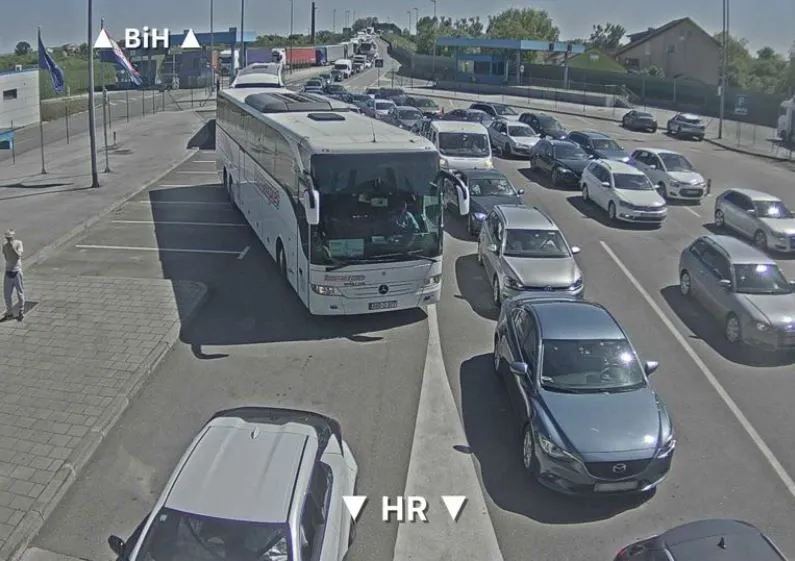
A large number of citizens of Bosnia and Herzegovina who spent the May Day holidays on the Croatian coast or abroad are today facing hours-long waits at border crossings, where the government is creating a traffic collapse.
The reason is not only the increased crowds, but also the introduction of the new Entry/Exit System (EES) of the European Union, which entails the biometric registration of passengers from countries outside the EU – including fingerprints and face scanning. Although the system was presented as a safety improvement, in practice it led to major delays and long queues.

At border crossings throughout Bosnia and Herzegovina, from Izačić and Velika Kladuša, through Gradiška, Brod and Orašje, all the way to Svilaj and the south of the country, waiting times lasting several hours are recorded. The situation is similar on the roads from Herzegovina to the interior, especially around Konjic.
At the same time, problems with the EES are escalating across Europe. According to foreign media and Airports Council International (ACI) data, passengers at airports in France, Germany, Belgium, Italy, Spain and Greece wait up to three hours at border controls.
ACI Europe Director Olivier Jankovec warned that the situation during the summer season could become “untenable”, while the airline industry is looking for the possibility of suspending the system during peak periods.
Cases of missed flights were also recorded at certain locations. According to reports, more than 100 passengers were unable to board the flight from Milan due to delays at passport control.
Airlines and the tourism sector are increasingly criticizing the system. Ryanair says that EES creates hours of waiting and unnecessary problems for passengers, while some airport managers warn of the risk of a “summer travel collapse”.

Meanwhile, some countries such as Greece have already relaxed the application of the new rules to protect the tourist season, while there is media speculation that Italy, Portugal and other Mediterranean countries could follow suit. The Greek authorities have decided that travelers (primarily Britons to whom the system applies after Brexit, but also citizens of other countries outside the EU) will again only go through a quick check and passport stamping.
What is of particular interest to the citizens of BiH is whether Croatia, as the most important transit and tourist destination for BiH. passengers, could make an exception or relax the application of EES during the peak season.
While Brussels claims that the system “works normally in most cases”, the reality on the ground – from European airports to border crossings in Bosnia and Herzegovina – shows a completely different picture: long queues, slow data processing and increasing pressure on governments to find a solution before the tourist season is seriously threatened.