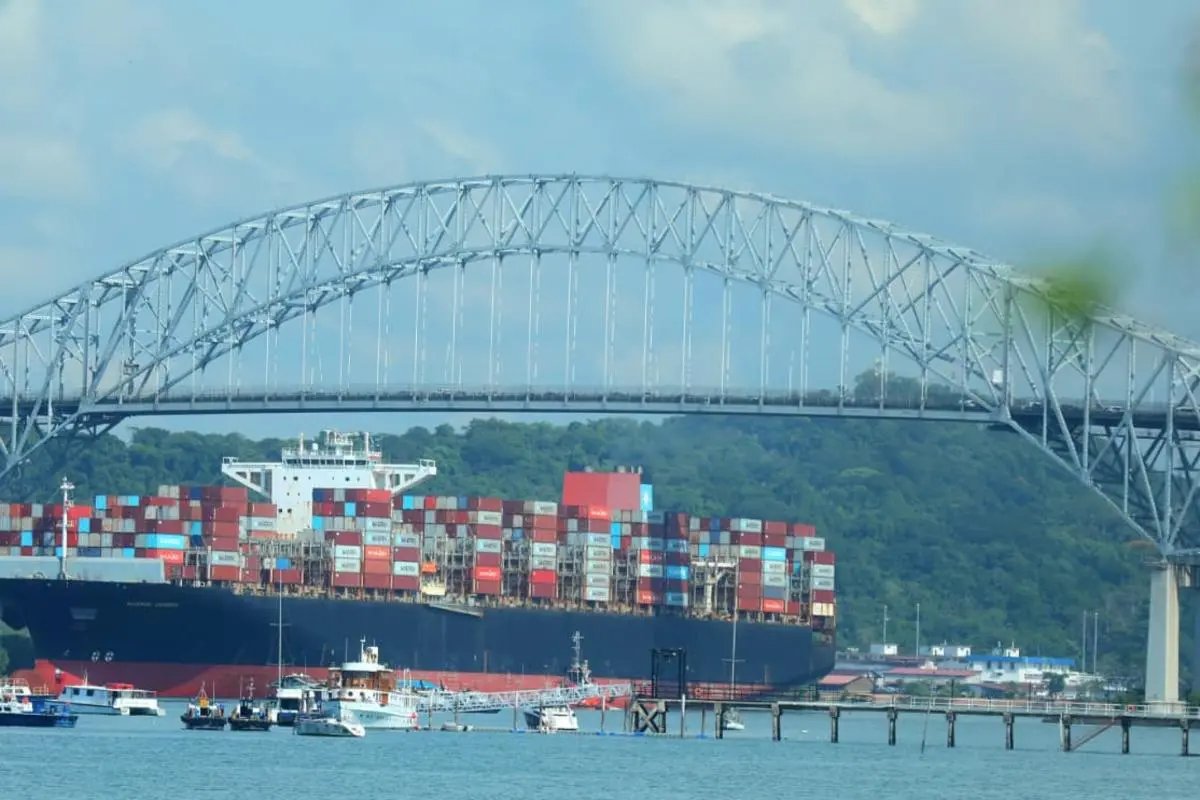
Panama’s maritime and port industry is going through a decisive moment. Although the country maintains its strategic position as hub global logistics, voices from the private and union sectors warn that the lack of digital infrastructure, the saturation of ports and the need to expand the dry canal could compromise competitiveness against regional rivals such as Mexico and Colombia.
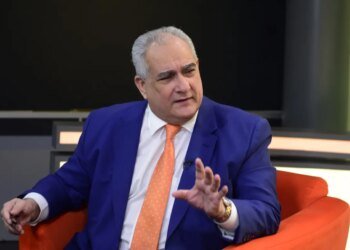
The president of the Maritime Chamber of Panama (CMP), René Gómez; the president of the National Maritime Association of Panama (MAPA), Ricardo Lince Boyd; and port expert Rommel Troesch agreed that Panama must accelerate investments and execute pending strategies to sustain its leadership in international trade.
The warning
René Gómez stressed that Panama faces a competitiveness challenge compared to neighboring countries. “Mexico, Lázaro Cárdenas has grown 127% in cargo movement; Cartagena, 70%. Panama, below 60%,” he noted, highlighting that the country cannot settle for its current position.
For Gómez, the problem lies not only in the physical capacity of the ports, but in the lack of digital efficiency.
He added that for 15 years, the private sector has proposed the implementation of a Port Community System, an information integrator that would allow shipping companies, importers and exporters to record data only once and share it with all public and private entities.
“If we want to move more cargo and decongest the roads, we have to seriously invest in digital infrastructure,” he insisted.
The president of the CMP warned that the current congestion will not be resolved with more ports, but with more agile systems. Today, he said, the movement of land cargo can take more than two hours, while in Cartagena it is completed in less than 40 minutes. “Added to this is the poor condition of the roads and the lack of coordination between authorities,” he criticized.
In addition, Gómez warned about the combined effects of the Strait of Hormuz and the El Niño phenomenon, which could generate draft restrictions in the Panama Canal and aggravate congestion. “If we do not unlock digital inefficiency, the picture becomes even more complicated,” he commented.
Country vision
The president of MAPA recognized that Panamanian ports operate close to 80% of their capacity, which generates signs of saturation. “Right now approximately 10 million TEUs are being moved and the capacity of the terminals is close to that figure,” he explained.
Although he considers it positive that there is high demand, Lince Boyd emphasized that Panama must expand its port system responsibly and under a national strategy. “We should not have terminals competing with each other with unequal advantages. The tender for Balboa and Cristóbal must be part of a country strategy,” he stated.
The union leader also highlighted the importance of port productivity as an attraction factor for shipping companies. If processes are slow, clients will look for alternatives in other countries. In that sense, he warned that the region is developing dry canal projects in Mexico and Colombia, which increases competition.
“Panama has an advantage to take care of: the infrastructure and connectivity between its ports. Today we have only one highway, and that is a very high risk. We need two or three roads to guarantee efficiency,” he said.
For MAPA, the key is not to change the strategy, but to execute it quickly and in coordination between the State, the Canal Authority and private companies.
More infrastructure and expansion of the dry canal
Port expert Rommel Troesch was categorical: “The shipping companies have sent the message that more port development is required. Panama currently has an offer of three new ports: Corosal in the Pacific, Telfers in the Atlantic and Margarita Island outside the waters of the canal. All three are necessary.”
Troesch explained that the transshipment business requires large volumes of cargo and, therefore, more infrastructure. When a shipping company decides to move, it can move up to two million containers, which requires immediate additional capacity.
In addition, he insisted on the need to expand the dry canal, made up of the railroad and the Panama-Colón highway. The latter, originally designed for passengers and cargo in the Free Zone, already transports more than a million containers a year and could double that figure. “If we don’t expand the highway, we will create a bottleneck. An eight-lane highway is needed in the short term,” he warned.
The expert also pointed out that the El Niño phenomenon will continue to affect the Canal for the next five years, until the Indio River project is ready. During that period, cargo that cannot transit will look for alternatives in the dry canal, which reinforces the urgency of investing in infrastructure.
Troesch acknowledged that government changes can delay projects, but he is confident that private companies will continue to insist on the needs of the sector. “This is a business that generates foreign currency and jobs. Panama must promote its unique product: the dry canal,” he said.
a consensus
The three leaders agree that Panama cannot waste time. The updating of the National Maritime Strategy, with technical advice from the IDB, is seen as an opportunity, but also as a process that requires greater transparency and participation of the private sector.
While René Gómez demands coordination in the Interinstitutional Consultative Committee (CISEN), Ricardo Lince Boyd calls for immediate execution of the strategies already defined, and Rommel Troesch insists on expanding port and road infrastructure.
For experts, the message is clear: Panama must act quickly to prevent the saturation of its ports, the lack of digitalization and regional competition from eroding its position as hub global logistics. The current situation, marked by international tensions and climate phenomena, requires firm and coordinated decisions between the State, private companies and civil society.
Ricardo Lince Boyd
President of MAPA
Panama has an advantage to take care of: the infrastructure and connectivity between its ports. Today we have only one road, and that is a very high risk. “We need two or three ways to guarantee efficiency,”
Rommel Troesch
Port expert
If we don’t widen the highway, we will create a bottleneck. “An eight-lane highway is needed in the short term,”
Rene Gomez
CMP President
Mexico, Lázaro Cárdenas has grown 127% in cargo movement; Cartagena, 70%. Panama, below 60%. If we want to move more cargo and decongest the roads, we have to seriously invest in digital infrastructure”