The debate on the rules that will govern the next electoral tournament entered a critical phase after the approval, in the National Assembly, of the bill that reconfigures the electoral circuits. The proposal, which redistributes the number of seats in some provinces, has raised questions about the criteria used for the distribution. Added to this are the most controversial aspects of the electoral reform contained in Bill 699, particularly the changes to campaign financing and restrictions on independent candidacies, still under discussion by deputies and which are already generating criticism regarding possible limitations to democratic participation and advantages for party structures.
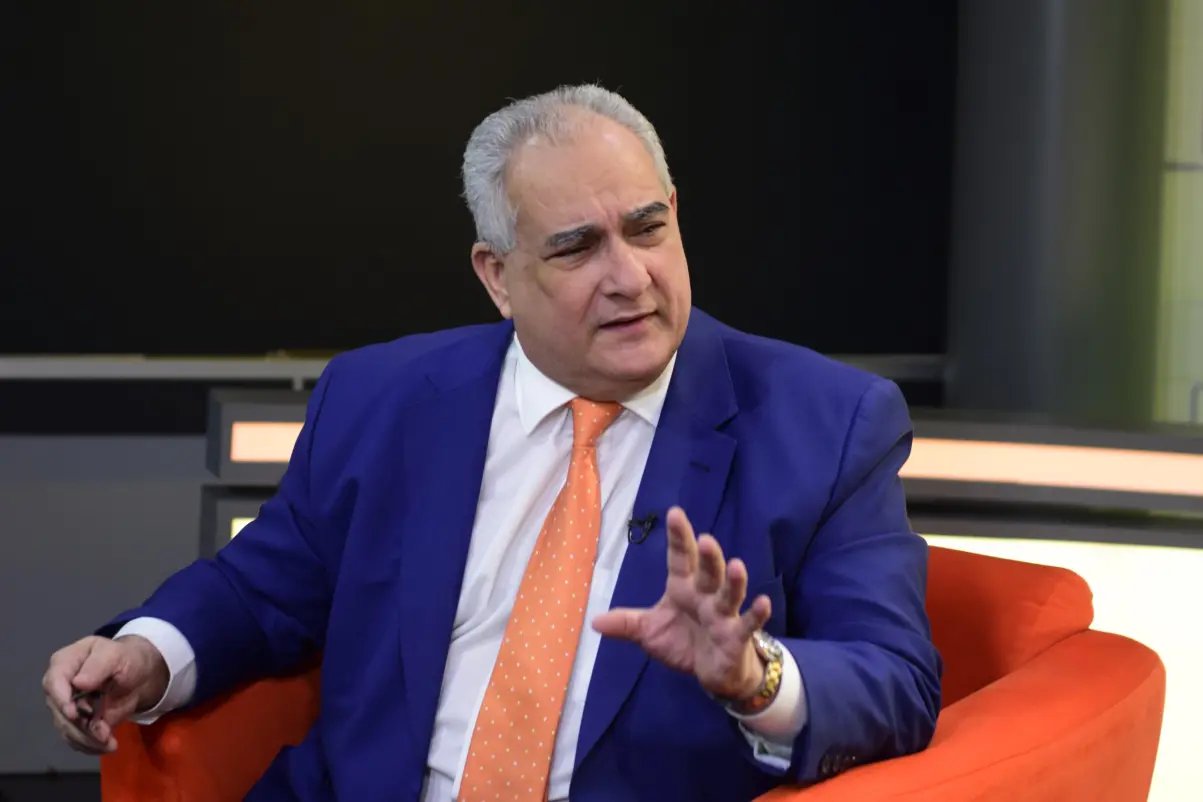
About this scenario, La Estrella de Panamá spoke with Guillermo Márquez Amado, former magistrate of the Electoral Tribunal between 1990 and 1996, who warns that, if this course continues, the reforms could deepen clientelism and deteriorate the conditions of competition for the 2029 elections.
Bill 699 initially included about 160 articles proposed by the Electoral Court, to which, after passing through the Government Commission of the Assembly, controversial proposals were incorporated, such as increasing the limits on private campaign financing, going from $300 thousand in circuits with more than 30 thousand voters to $500 thousand in circuits with more than 50 thousand voters.
For Márquez Amado there is no justification for the increase, which coincides with a complicated economic situation in the country. Considers that increasing the resources available under current conditions facilitates the practices of exchanging political favors for money during the process.
“Introducing these changes is an unmistakable sign of the greed and materialistic voracity of politicians, of those who aspire to disproportionately increase financing for candidates and parties,” he points out.
He maintains that these resources should be used mainly to inform citizens about the candidates’ proposals. His point suggests that, in addition, this would deepen the political culture that replaces the discussion of government programs with a struggle for personal sympathies.
“When those resources are not used for those purposes, but to hold dances, to distribute money, to distribute beer, to spend it on mercantilist advertising that what sells is the face of the person or pure propaganda, that is where the matter is distorted,” he points out.
For Márquez Amado, it is also not enough to discuss whether financing should be 100% state or if more space should be given to private money, but the central point is its control. “Whether it is public or private is not what makes the difference. The difference is in the use given to those funds and the oversight,” he says.
He questions the passivity of the Electoral Prosecutor’s Office, whose work, he assures, must be more aggressive and show a “real will” to investigate these crimes. “We need the will for oversight that truly exists and that truly affects the prevention of the commission of these types of acts,” he points out.
Deputies as representatives
In the case of the election of deputies, the former magistrate thinks that the discussion is based on the need to review how they are chosen.
He emphasizes that one of the main problems is the small size of the electoral constituencies, which enhances the dynamic of deputies dedicated to addressing local problems that correspond to other public positions, instead of addressing national issues.
“Nations do not progress based on the problem that the circuit has, but on the overall vision that is articulated in the formulation of laws. It is having the national perspective on ports, electrification, agricultural production or earthquake prevention.”
Márquez Amado even considers that the name “deputies” can be misleading compared to the type of representation they currently exercise. “What we have now, in reality, are deputies who act as representatives, it is a distortion,” he highlights.
He considers that, in the discussion about the possibility of returning to provincial deputies, a measure that would require a constitutional reform, the debate on clientelistic practices should also be incorporated. According to his interpretation, a system based on larger territories could make it difficult to exchange political favors that, in small circuits, would be easier to establish in small electoral constituencies.
“It cannot be ruled out that clientelism with provincial deputies will not occur, but it is harder to buy an entire province than a circuit,” he stressed.
It also questions the application of the mathematical formula of quotient, half quotient and remainder as a mechanism for a proportional distribution of seats. Although he does not see it as “necessarily incorrect,” he points out “distortions” in its application that alter the representation.
“The subtractions corresponding to the votes that were counted for the quotient are not made and then the same votes that are counted for the quotient are made with the remainder (…) It is a very important distortion. That is another problem that must be addressed,” he denounces.
He insists that there must be “more filters” for candidates for the Assembly, who in his opinion are “excessively lax.”
“According to the existing laws, you can reach the Assembly being completely illiterate. To be a deputy you do not have to know how to read or write (…) You may have even committed a crime many times, but as long as you have not been sentenced to more than five years in prison, you can opt to be a deputy. That must be reviewed,” he said.
The former electoral magistrate is not surprised by the gradual decline in citizen confidence in the Electoral Tribunal, an institution that once enjoyed a positive perception, but which in recent years has registered a sustained deterioration, recently evidenced in the latest VEA Panamá survey by La Estrella de Panamá, published last July.
In his opinion, the entity is failing to fulfill its “teaching work” by not adequately explaining to citizens the impact of the reforms on the democratic system.
“The Court does not go out to explain to the country whether it is better to have a system of circuits or provinces. It does not explain what is more convenient for a democracy, nor why it is important to have better-prepared people who reach public office, nor does it explain the damage that voters themselves do by accepting gifts or payment for votes. They do not explain why they do things or how that impacts democracy,” he points out.
He considers that part of the institutional problems of the Electoral Tribunal are related to the way in which its magistrates are chosen. He questions that some candidates are attracted by the “economic benefits and power” associated with the position, while the National Assembly, the Supreme Court of Justice and the Executive Branch, who are constitutionally responsible for electing them, can choose magistrates thinking that they “will cover their backs.”
“It happened to me once, with a president of the Republic, who told me: ‘I can have you appointed magistrate of the Electoral Tribunal, but I need you to commit to helping me’. I told him: I help everyone I can, always within the book, that is, the law, mainly for the country. After that meeting I knew that I would not be a magistrate because I was not committing to him. That president was Ricardo Martinelli,” he denounced. Marquez Amado.
Despite criticism of the revision of the electoral rules after each election, instead of maintaining a stable Electoral Code, especially from those who warn that these changes modify the conditions for the candidates and leave the regulations exposed to alterations promoted by those who exercise the power in power, Márquez Amado defends this mechanism.
He points out that updating the rules is necessary to “adapt” to the transformations in society.
“Societies are evolving, there are new things that need to be adjusted and incorporated into the legislation,” he explains.
He cites as an example the technological advances that allowed the incorporation of the unofficial transmission of results and the scanning of minutes. However, he warns that reforms should not respond to particular political interests.
“Everything must be contemplated in the laws with a sense of institutionality and benefit for the entire nation,” he maintains.
In this context, he is pessimistic about the result of the electoral reforms that are advancing in the Legislature.
“I have enormous distrust of everything that is done in the Assembly, especially of the deputies of the political parties; one passes a mop over there and there is nothing worthwhile left, pure bacteria is what is there,” he said.
Beyond his questions, Márquez Amado suggests that reforms must respond to changes in society without becoming tools to protect particular interests.
It is expected that today, Monday, discussions will resume in the second debate of Bill 699, which contains the controversial reform, a legislative phase in which modifications can still be introduced.