It is difficult to talk about topics other than the election results and the Soccer World Cup. But there are other issues. In the midst of the closing of the legislature, the responsible licensing bill that we had promoted from civil society and academia was sunk in the conciliation process in the House of Representatives, after completing four debates. This procedure normally does not present problems: there is an agreement between the conciliators and the texts are ratified by both chambers. But this time, representatives Octavio Cardona and John Jairo Berrío pushed for a negative vote “because the reconciled text negatively affected public transportation drivers,” in addition to other details.
Using the language of football, it was lost in extra time. Deep respect for the majority democratic decision of the lower house in compliance with established procedures; but it is still very unfortunate for road safety. Priority was given to the possible negative impacts on offenders and the victims were left aside in the worst year on record for preventable deaths due to crashes and road accidents. We have more than one road death per hour, and the aggregate number of fatalities, before decreasing, continues to grow.
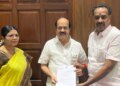
In the company of the “Drive to 50 Live to 100” program, of the Universidad de los Andes and the organizations “Red PaPaz” and “Fundación Ciudad Humana”, we promoted the presentation of the bill based on international evidence and data in our country. Two important causes of accidents are associated with inexperience during the first years of driving and recklessness of drivers who commit repeated violations. The concept of establishing a gradual rookie license and a point-based penalty system was embraced by Representative Daniel Carvalho, who recruited other parliamentarians to present the bill in 2025. Co-authors are Senator Angélica Lozano and Representatives Katherine Miranda, Hernando González, Diego Fernando Caicedo, Catherine Juvinao, Jaime Raúl Salamanca, Cristian Danilo Avendaño, Alejandro García, Juan Sebastián Gómez and Luis Carlos Ochoa.
The project advanced in the legislative process in 2025 (second debate in the House of Representatives) and 2026 (Commission and plenary session of the Senate). Many modifications to the bill were accepted through proposals in the House of Representatives, and the text was adjusted for greater order and to avoid inconsistencies in the debates in the Senate. A driver insurance proposal, incorporated by speaker Julio Elías Vidal in the presentation for the last debate in the Senate plenary, aroused much interest, but he accepted several proposals that requested its elimination from the bill. The plenary welcomed the text, highlighting that additional charges should not be generated for drivers, an issue promoted by Senator Diego Guevara.
The text generated a special regime for public service drivers, accepting a greater number of points than for drivers of private vehicles. Even so, the conciliation vote was unfavorable. It is necessary to start the entire process again, in a congress renewed by more than 60 percent. There are learnings from these two years (losing is gaining a little). The first is that it is difficult to advance low-popularity issues, which include sanctions and limitations, even if there is justification. The second is that it is important that these issues do not generate greater costs. The third, that those who know the legislative process well and have influence over different benches are very important in the process.
We know that data and evidence are important, but personal stories are more impactful. We hope to return to the debate on an initiative based on what was approved in four debates and this time find echo in the Legislature and, hopefully, greater support from the Executive.
The Minister of Transportation in 2024, María Constanza García Alicastro, supported the first debate in the Chamber; but later the bill did not get any attention from the government. Although the discussion belongs to Congress, the priority indicated by the Government is also important in the debates. Not only was the opportunity to have the tools to protect people against the risks of negligence and recidivism lost, but a goal of the National Road Safety Plan was also failed to be met.
This fall of the bill also marks a negative signal regarding the challenge of road safety. The danger that the narrative of the poor offender and the citizen “persecuted” for breaking traffic rules has gained momentum and paralyzed responsible political decision-making. This was also reflected in the elimination of the immobilization of motorcycles in the face of some behaviors for which there was no immobilization of other vehicles: red traffic lights and speeding. We now see less respect for these rules, which may be associated with higher accident rates observed in 2025 and 2026.
Electronic violation detection devices (cameras and radars) have also been demonized as tools to “abuse drivers,” when those who speed excessively are reckless drivers. The cameras must comply with procedures, but they are useful to reduce fatal accidents as has been demonstrated in Bogotá, Cali, Medellín and Barranquilla. It is possible that the new Congress will insist on initiatives that could make cameras useless, with concepts such as driver identification and other guarantee elements against the offender. And it could be serious if ideas like increasing speed limits gain traction again.
Perhaps we need to think first about the victims of road violence and apply the ideas we know work, such as graduated novice licensing and the penalty points system. We will insist again, no one deserves to die on the road.
DARÍO HIDALGO