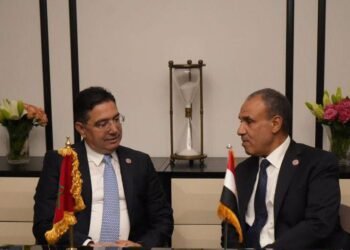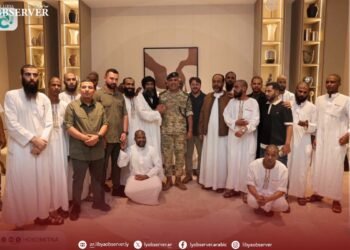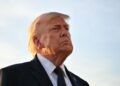
The Foreign Affairs Committee of Libya’s House of Representatives (HoR) has condemned remarks made by US Vice President JD Vance regarding Libya, after he stated that the United States does not intend to turn Iran into a failed state like Libya.
In a statement, the committee described the remarks as an unjustified and unacceptable insult to Libya and its people, arguing that they reflect a poor understanding of the Libyan reality.
The committee added that the US official’s comments overlook historical and political facts, stressing that such statements do not serve the course of bilateral relations between the two countries.
It further noted that reducing Libya to stereotypical images of failure and instability distorts reality and undermines the standing of the Libyan state. The committee called on the United States to adopt a more balanced and respectful discourse that promotes cooperation, serves mutual interests, and reflects due respect for state sovereignty and the dignity of peoples.
The committee also emphasized that Libya’s crisis over the past years was not the result of the Libyan people’s will, but rather followed the international military intervention that led to the fall of the former regime without the international community fully carrying out its responsibilities in supporting state-building and preserving stability.
It said that it is unacceptable to ignore these facts or place the burden of that period solely on the Libyan people, given that it was the outcome of well-known international decisions and interventions.
In a related development, US Ambassador to NATO Matthew Whitaker said that Washington is not seeking to destabilize Iran or repeat the scenario that followed the 2011 military intervention in Libya, stressing that the United States does not want Iran to become “another Libya.”
Speaking to Fox News, Whitaker said the US administration believes the Iranian issue must be handled cautiously. He argued that the “Western intervention against Muammar Gaddafi in 2011 was not accompanied by sufficient planning for the post-regime period, resulting in a political and security vacuum that lasted for years.”