Business associations are awaiting the official results of the ONPE, after the results of the exit polls and the quick counts reflected two different panoramas.
According to Felipe James, president of the National Society of Industries (SNI), what is observed so far are two possible scenarios: one where Keiko Fujimori of Fuerza Popular faces Rafael López of Renovación Popular and another where the presidency is disputed against Roberto Sánchez of Together for Peru.
“In the first case, the economic agents would feel a little calmer because the next president is going to have a more pro-market ideology. On the other hand, in the second case, if Roberto Sánchez, who is a person from the radical left, goes, things would be very worrying for the business sector,” he said.
For this reason, Gabriel Amaro, president of the Association of Agricultural Producer Guilds of Peru (AGAP), considered that “it is better to wait calmly for the final results of the ONPE and after that, for each one to carefully analyze their vote to make the best decision in the second round for the development of the country and the well-being of the citizens.”
Along the same lines, Ramiro Salas, president in charge of the Lima Chamber of Commerce (CCL), considered that both alternatives “reflect a scenario of caution for economic agents,” but at the same time it is an opportunity for the candidates “to make clear and firm commitments to macroeconomic stability, respect for institutions and the promotion of private investment.”
César Tello, president of the Association of Exporters (ADEX), agrees, and adds that the scenario shows dispersion, which makes it difficult to “clearly anticipate the direction of public policies in the short and medium term.”
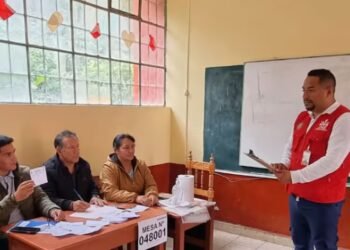
The electoral process overshadowed
That tables could not be set up on the same Sunday and the extension to vote given by the National Elections Jury (JNE) also generates criticism.
Gabriel Amaro, from AGAP, considered that these types of problems cannot happen again. “The State spends a lot of money on the electoral system and the ONPE is supposed to be an efficient office,” he highlighted.
These events were described as “negligence” by James of the SNI, who considered that the president of the ONPE, Piero Corvetto should not continue in office.
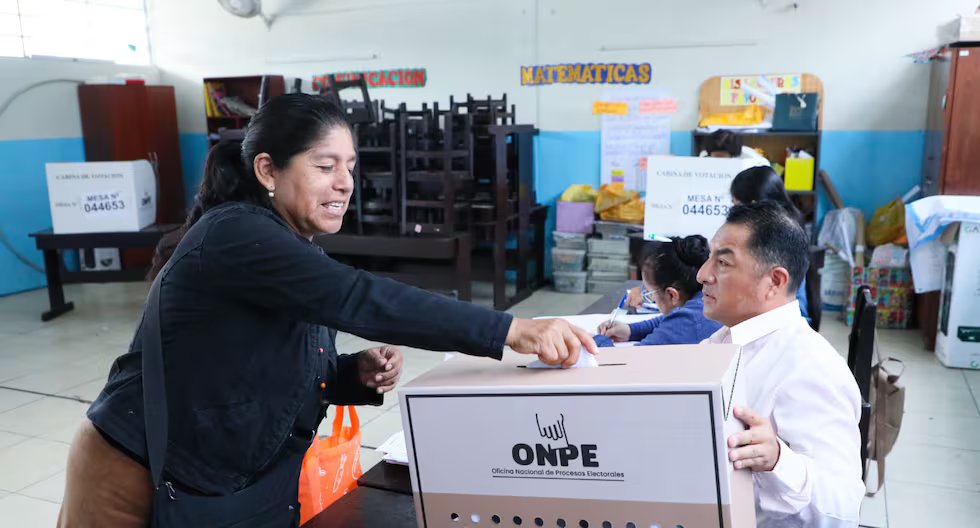
Elections 2026: JNE continues to supervise extraordinary voting in 13 locations in Lima. Photo: JNE.
ADEX considers that for the second round it is essential to guarantee total transparency. And although the head of the ONPE can only leave office due to specific situations, any decision on his continuity “must strictly adhere to the Law and the competent bodies. However, beyond the people, the priority is to strengthen the electoral institutions and ensure an unquestionable process that generates trust in the citizens,” he highlighted.
From another perspective, the CCL assures that the legitimacy of the electoral process not only depends on correcting contingencies, but also on ensuring that these decisions do not generate additional doubts. “For investors, trust is built on the basis of clear rules, predictability and institutional solidity. In that sense, it is essential that the electoral authorities act with maximum rigor and strengthen the credibility of the process,” he said.
The parties that did not pass the fence
What is also discussed about the races is the number of parties that did not pass the fence and that, for this reason, will have little representation in Congress.
“That is good for the country because it is going to be a Congress, both in senators and deputies, with many fewer parties, where consensus will have to be sought in an easier way. On the other hand, there are a lot of tiny parties that confused the electorate and all that has been erased once and for all,” says James.

Housing Commission Session falls due to non-attendance of parliamentarians. (Photo: Andina)
In this way, Adex believes that “it is important to move towards a system that promotes greater party institutionality, reduces fragmentation and allows the construction of consensus, key elements for governability and economic development.”
A country with better institutions, says the CCL, “is key not only for political stability, but also for generating a favorable environment for investment and economic development.”
AGAP considers that the problem of having a high number of parties causes dispersion in the vote and generates confusion among citizens, which should lead the authorities to adjust the electoral political system.
“Along these lines, such basic adjustments must be applied as establishing requirements to be a congressman and president of the Republic, aspects that are currently minimal. There is no professional, knowledge or experience requirement,” said Amaro.

According to the unions, the reduction of parties was necessary because it generated vote dispersion and confusion in the electorate. (Image created with AI)