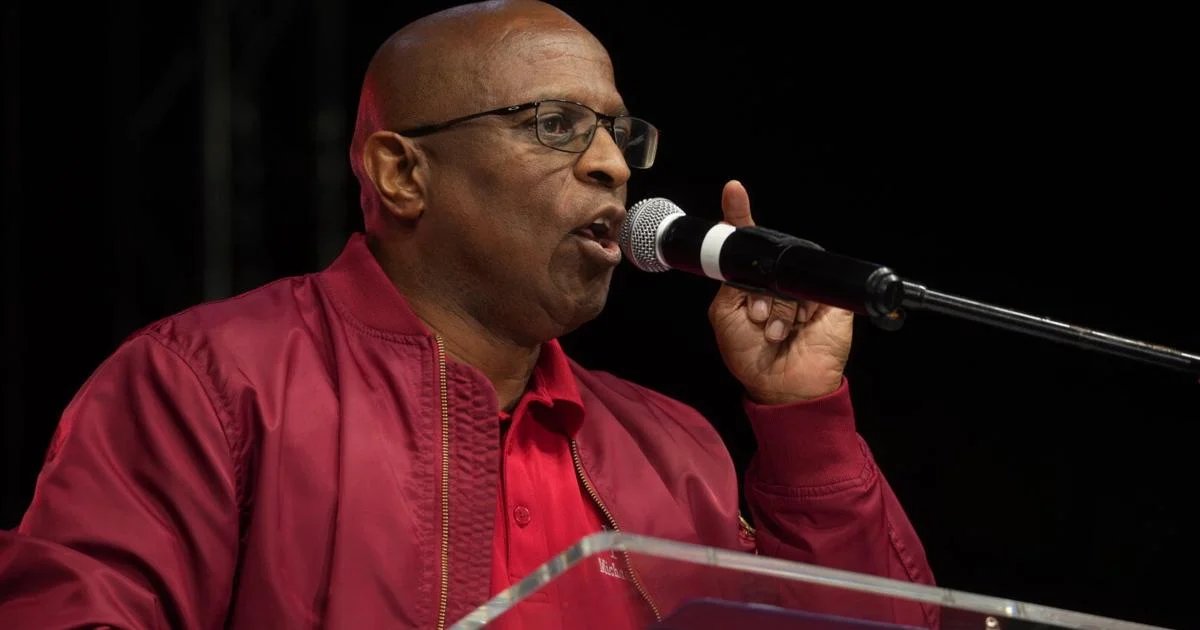
Free National Movement (FNM) Leader Michael Pintard last night pushed back against criticism to his party’s proposal to introduce a national lottery if it is successful at the polls on May 12.
On Monday, Prime Minister Philip Brave Davis called the FNM’s idea “desperate” and said it was a “gimmick” meant to grab headlines.
But during the FNM’s southern New Providence rally last night, Pintard said he found it strange that Davis, who was part of the government that went against the wishes of the electorate to regularize web shop gaming, is speaking out against a national lottery.
“Why would something that is potentially good for young people, for culture, for the environment, why would it be so troublesome to this prime minister and his government since it was them who gave birth to the regularizing of gaming,” Pintard asked.
“Why would it be a problem for them all of a sudden to have a national lottery where the bulk of those resources are being administered through the government system? We can leave you to decide.”
The Marco City MP said he believes the revenue from a national lottery can help a number of people better their lives.
On Sunday, as the FNM launched its manifesto, it promised to “introduce a national lottery for the benefit of the people of The Bahamas, a public initiative designed to generate dedicated funding for the advancement of education, sports, youth development, social intervention and culture”.
Pintard said this plan seemed to “have bothered the PLP even though we said it will be transparent”.
“Despite the goals of this initiative, the PLP, they start freaking themselves out,” he said.
“They don’t really care that there is a potential for millions more dollars to flow into areas that badly need funding. They didn’t seem to care that it could fund students with scholarships, even though many Bahamians tell the story of knocking on this government’s door and because they weren’t the right, they believe color, they couldn’t get help.
“What they decided to do is to play games, to label the initiative by something that truly applies to them. So they started talking about gimmicks. The prime minister, the chief architect of gimmicks. They started talking about slush funds. If you look in the dictionary next to slush funds, you will see the picture of the prime minister.
“We went further. We said that our proposal includes accountability, and independent oversight so that your money cannot be redirected and misused by politicians. We went further to say we would not allow politicians to spend the money without specific instructions that they would have obtained from the protocols that we set up to run this lottery.
“Despite that fact, the government began to be bothered because they heard from you. They heard from you when you made the point that if people are going to bet, and most times we wish they won’t, at least they should bet on themselves. At least they should pay into a fund where the proceeds are in fact being used every single day to transform many of the conditions that they are experiencing, and the long promised rehabilitative services that ought to go with it should finally be implemented for those who can’t help themselves.”
Pintard said the proceeds from the lottery would not be put into the consolidated fund but into a specially established legal structure.
In January 2013, the Christie administration held a gambling referendum. It asked voters whether they support the regulation and taxation of web shop gaming and whether they support the establishment of a national lottery.
Those who voted overwhelmingly voted against the measures, but the then-government ignored the will of the voters and regularized web shops.
The Christie administration said that consultants had advised that a national lottery would not be successful in The Bahamas given the size of the population.