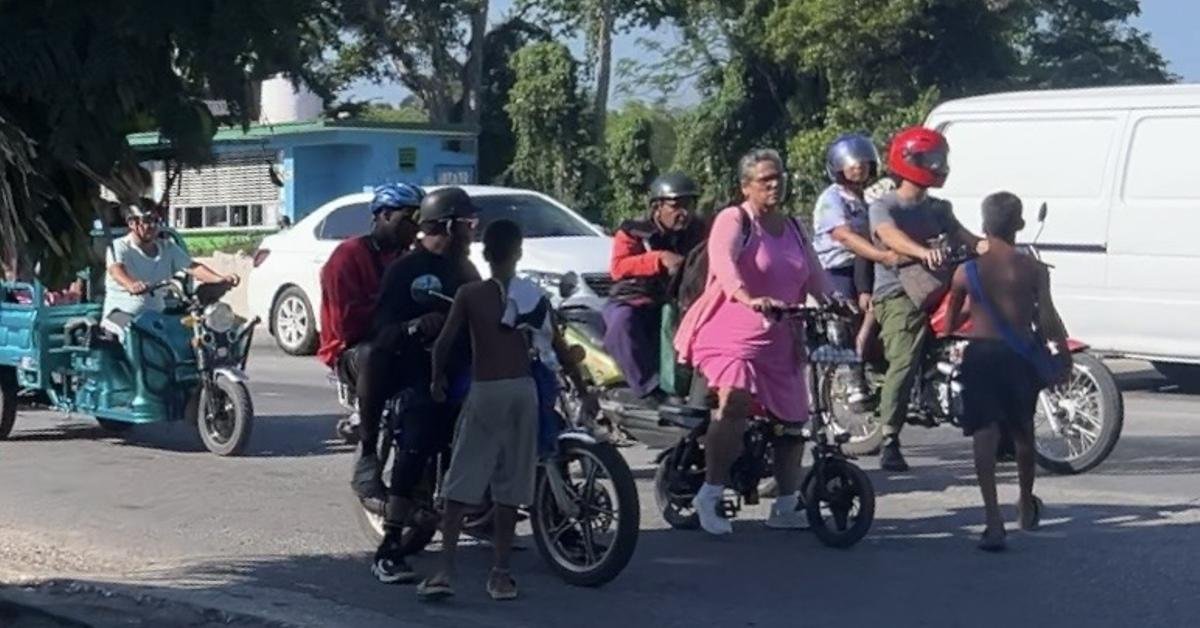
Havana/A scene begins to repeat itself more and more in Havana at the central traffic lights: as soon as the red light turns, several children rush to the vehicles to offer to clean the windshields and mirrors of motorcycles, tricycles and cars. They ask for some money, at will.
“And not only children, but also the elderly and people with disabilities,” says the delivery driver from a private business. “At any busy intersection, there is almost always someone begging.”
Nobody remembers anymore, but there was a minister in Cuba, Marta Elena Feitó, who He denied that these types of needy people were beggars.. It was in July 2025. For her, they were “people who have found an easy way of life at a traffic light, cleaning a windshield” and that money would possibly be spent on “drinking alcoholic beverages on the corner.” That intervention, which included the sentence “in Cuba there are no beggars”, only “disguised ones”, cost him his job.
“What are you doing there? Be careful! They’re going to run over you!”
The authorities were clear, by then, about something that the regime had denied for decades: that begging exists in the Revolution. Within it, the case of minors is especially hurtful, something that the independent press documents for years.
Just a year ago, it was revealed that several children were begging and sleeping in cardboard boxes. on the ground floor of the Gran Muthu Habana luxury hotelright next to the first store that opened in dollars on the Island, the Supermarket on 3rd and 70th. Given the enormous dissemination of the case on social networks, the authorities were forced to speak out. Thus, Carlos Miguel Pérez Reyes, deputy to Parliament for the Playa municipality, confirmed that it was “a recurring problem that requires a comprehensive response” and that, in addition, it had spread “to several points, where children ask for money daily, even late into the night.”
Not everyone gives alms to the children at the traffic lights in Havana. Sometimes they simply give them a warning: “What are you doing there? Be careful! They’re going to run over you!” Poverty is leaving fewer and fewer gaps in an exhausted country.