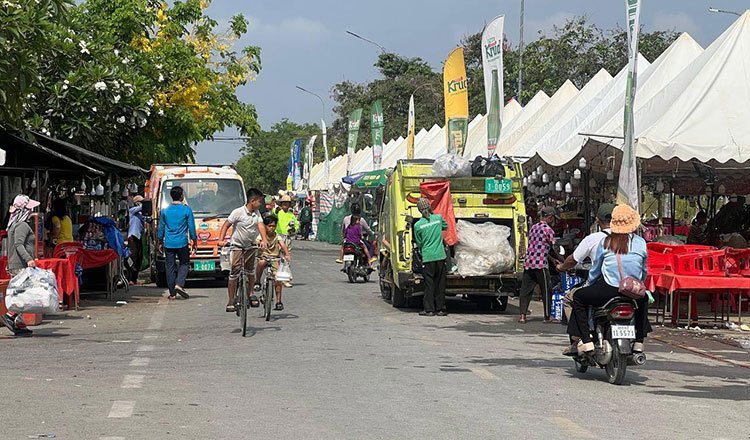
Phnom Penh authorities collected and transported around 7,000 tonnes of waste to landfills over the three-day Khmer New Year holiday, from April 14-16.
Data from the Ministry of Environment (MoE) indicate a positive trend, with a significant reduction in waste volume compared with the city’s typical output. While the capital usually generates between 4,000 and 4,500 tonnes of refuse daily, the three-day holiday period averaged only 2,378 tonnes per day—roughly half the normal rate.
Three waste management companies handle the capital’s waste collection. Nationwide, Cambodia produces more than 10,000 tonnes of waste every 24 hours, with plastic accounting for approximately 20% of the total. MoE spokesman Khvay Atitya attributed the decline to “active public participation and cooperation from relevant stakeholders in properly managing waste and reducing plastic bag usage.”
The ministry noted that improved waste management enhances public order in urban centres and protects the environment along national roads. These efforts align with the government’s broader environmental strategy, which is supported by high-profile campaigns such as “Today I Will Not Use Plastic Bags,” “Clean Cambodia, Khmer Can Do It,” and “National Roads Without Waste and Plastic.”
Atitya emphasised that although the holiday figures are encouraging, the goal is to transform these individual actions into a permanent nationwide movement.
He urged citizens to adopt long-term behavioural changes, specifically focusing on waste separation, recycling, and a sustained reduction in plastic consumption to ensure a cleaner future for the kingdom.
Progress at this year’s festival suggests that the message is beginning to resonate with the capital’s residents, marking a shift towards more sustainable waste-management habits during major national celebrations.