OPPOSITION Leader James Nomane’s recent scathing criticism of the Government’s K156 billion spending spree over the last seven years can not be ignored.
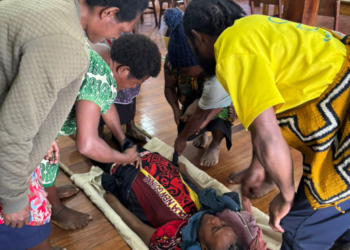
The Chuave MP’s criticism arose from the droves of people that lined up in the early hours of the morning for a chance to board a Chinese navy medical ship that docked in Port Moresby last week to offer free healthcare services.
“We can see a sad picture of mothers carrying infants, the elderly, and the chronically ill queuing up to receive healthcare from a Chinese medical ship. This is the result of debt-driven fiscal paralysis,” Nomane charged.
“Broken hospitals, empty medicine shelves and underpaid health workers are what we can see all throughout the country even after K156 billion has been spent since 2019 by the Government.”
According to Nomane, the Government has appropriated and spent this huge amount through the seven national budgets passed by Parliament since 2019.
That means that approximately K16.1 billion was spent in 2019, K17.6 billion in 2020, K19.6 billion in 2021, K23.4 billion in 2022, K24.6 billion in 2023, K27.3 billion in 2024, and K28.4 billion last year.
These are not figures Nomane plucked out of the air. They are the budget figures for each year named.
The Government has yet to respond to this claims by the Opposition and it is hard to see how it can because the Prime Minister himself has also expressed disappointment in the performance of his government across these years.
We do echo the Opposition Leader’s sentiments as regards the state of affairs with the health sector at the moment.
Health Minister Elias Kapavore told Parliament on March 18 that the country’s increasing population continues to put a strain on the health system, which has one health worker for every 1,000 persons.

“This is well below the World Health Organisation’s standard of a minimum of four healthcare workers for every 1,000 people,” he said.
The high population growth, at an average annual growth rate of 2.7 per cent is creating a demand for services that far outstrips the country’s capacity and availability of resources for services.
It is a cruel reality while 87 per cent of the people live in rural areas, only 34 per cent of the workforce serves there.
“This imbalance continues to deny rural communities fair and equitable access to healthcare as it cannot be delivered without people.”
He said that the Government, among its other initiatives to improve the country’s healthcare system, was committed to addressing the issue of the workforce shortage.
“Of the 32,064 established positions in the health sector, 11,135 remain unfilled, highlighting the urgent need for stronger recruitment, deployment, training and retention strategies,” Kapavore said.
“A 2024 analysis projected that by 2032, PNG will need at least 44,061 health workers to meet the increased demand for primary care services of our growing population.”
Recruitment is currently underway to recruit 7,000 to fill mont of these vacancies, particularly for rural and underserved areas.
We agree with the minister that sustainable investment in improving infrastructure, workforce, medical supply systems and public health programmes is crucial for national development.
And that means not only allocating massive amounts into the sector such as the K3.21 billion allocated in 2026 but by following funding with implementation, programme management and programme reviews and reporting.
Only such efforts can produce the results required.
The reality on the ground, such as last week’s long lines to the Chinese floating hospital ship, does not indicate that the government’s efforts has touched the basic health care needs of the majority of our people.
Proper healthcare is still plagued by the many challenges that include inadequate infrastructure, lack of human resources, insufficient funding and more.
These challenges, along with other socio-economic factors, are then exacerbated by diseases such as malaria, tuberculosis, HIV/AIDS, which are still prevalent in many parts of the country.
The people must know how the K156 billion has translated to tangible development for the nation and the health sector is a very good one to begin with.