This Friday was, for some secretaries of State consulted by The Observerone of the most forceful Council of Ministers. Yamandú’s government Orsi shielded the cabinet from possible fissures and sent a wink to the ruling party by granting greater spending on the Accountability so that the Broad Front bench closes ranks when it comes to seeking the two opposition votes in the Chamber of Deputies.
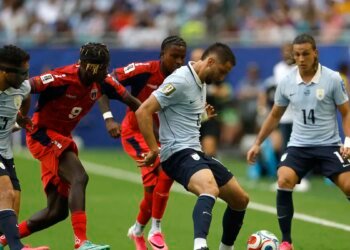
The meeting at the Executive Tower lasted more than four hours and allowed the government to make central announcements on the eve of a match between Uruguay and Spain that hours later would concentrate all of the public attention.
A month after having stated that the fiscal perimeter established last year in the Budget Law would remain “unaltered,” the minister Gabriel Oddone announced this Friday that there will be an “additional to the Budget” of US$31 million. Between that amount – intended to finance the strengthening of the unified transfer system – and the US$ 50 million increase already provided for in that regulation, the government celebrated that there will be an investment of US$ 81 million in the four priorities established for Accountability: childhood, security, education and homelessness.
The request for greater resources had been a proposal reiterated by legislators from the Frente Amplio in recent weeks. One of the keys in this line was a meeting last week with the Secretary of the Presidency, Alejandro Sanchezwith the deputies of the MPP who make up the Budget Commission integrated with the Treasury, who sought a gesture from the Executive Branch to be able to buckle the official party itself.

They closed ranks on the armored vehicles
On the other hand, the government managed to approve with the signature of all the ministers the new agreement between the Ministries of Defense and Interior to transfer up to 12 military armored vehicles for the Police for a period of six months.
The Council of Ministers took place just two days after the head of Labor, Juan Castillodeclared in Arriba Gente – after an elliptical response – that “for society the image of the streets being patrolled by Army trucks is not a good thing.” President Orsi himself responded that afternoon from Treinta y Tres that “it is not a matter of image,” that “people need their right to security resolved” and that it was a “decision made.”
During this Friday’s meeting, as he was able to reconstruct The ObserverCastillo spoke that the headlines on networks implied a disavowal of the president and that he had not made statements in that regard.
Orsi asked his ministers to continue with coordinated work and on that point they reflected that they should avoid entering into controversies when the statements of origin themselves did not make a proposal in that sense.
The agreement approved between both portfolios – and which ended up being supported by Castillo – implied a mandate from the minister Sandra Lazo this Friday to the National Army to provide the General Directorate of Special Operations of the Police with a quantity of four RPZ Cóndor vehicles “in order to provide adequate armored protection.”
The finalized agreement makes it clear that the Interior Minister’s announcement was inaccurate Carlos Black last week in a commission of Deputies regarding that there will be “twelve in total” the armored vehicles Mamba MK7 that will begin “to circulate through some neighborhoods of Montevideo” in “collaboration and under the command of the National Police.”
The eventual use of these vehicles immediately raised dust given that it was a donation of 13 units by the United States in order to constitute a Rapid Response Force on missions authorized by the United Nations. The idea fell by the wayside after the victory of the Frente Amplio, since their program explicitly states that they are against this type of deployment.

However, the Ministry of Defense had already planned for some of these Mamba to leave for the Congo in the relief of troops next December.
The mobilization of the Condor confirms that the Mamba are relegated. If required for police operations, government sources explained to The Observera formal note must be sent to the United States Embassy to notify of the change.
Unlike other Army armored vehicles, the Mamba does require a military driver. If necessary, Negro reported that they will use the commission pass mechanism to equate them to the police function.
The other military armored vehicles that will be at the disposal of the Ministry of the Interior are the Vodnik, Urutu and Mowag. Police sources confirmed to The Observer that these options are not “so operational” depending on their objectives, but that they will use the units that Defense presents to them.
Both Lazo and Negro refuted the idea that with this there will be “militarization.” “This is a way to better police or protect the police. In no way does using a military vehicle for police use mean militarization. These are vehicles, not other types of weapons,” Negro defended, and clarified that for extreme cases they will have weapons for “civil use” and not military.