Mujahid bin Aboura Muhammad died today at the age of 94, in the hospital on November 1, 1954 in Oran.
The deceased was born on September 8, 1932 in the New Medina neighborhood, obtained his primary education certificate in 1946, and joined the Algerian Islamic Scouts.
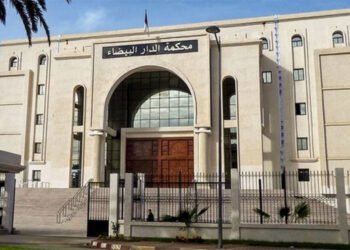
The deceased narrated in his autobiography entitled “The Path of the Oran Resistance” that, during the liberation revolution, he worked with the redemption networks affiliated with the National Liberation Front in Algiers, and transported the guerrillas, using his work in the police to cover up his revolutionary activity. However, the police interests quickly became aware of him and he was arrested on February 5, 1957 in Oran, and tried on June 30, 1957 by the Permanent Court of the Armed Forces in Oran in the framework of the network trial. Fedayeen fighters in the city of Oran. He was convicted of five years in prison, which he spent between Oran and Chlef prisons, until his release on July 25, 1961. This is the period to which he devoted another book, entitled “The Ordeal of Prison,” to narrate the suffering of his fellow prisoners in colonial dungeons.
Immediately after his release from prison, he joined the Front in Oran to confront the criminal actions of the secret military organization “Lwas” until independence. He held several positions after independence, including director of youth and sports for each of the states of Oran and Mostaganem by virtue of his practice of swimming, and he contributed to establishing the first swimming federation in the state of Oran. He also took an interest in the affairs of the city of Oran by being elected as a member of the Oran State People’s Assembly.
The deceased left behind several books about the revolution and a book summarizing the path of the Mujahideen, Khayra Bint Bin Daoud, and her contribution before the revolution by taking care of the orphans of the massacres of May 8, 1945, and during the revolution by helping the mujahideen and the struggle for independence, which cost her being targeted by colonial police services and placed under heavy guard.