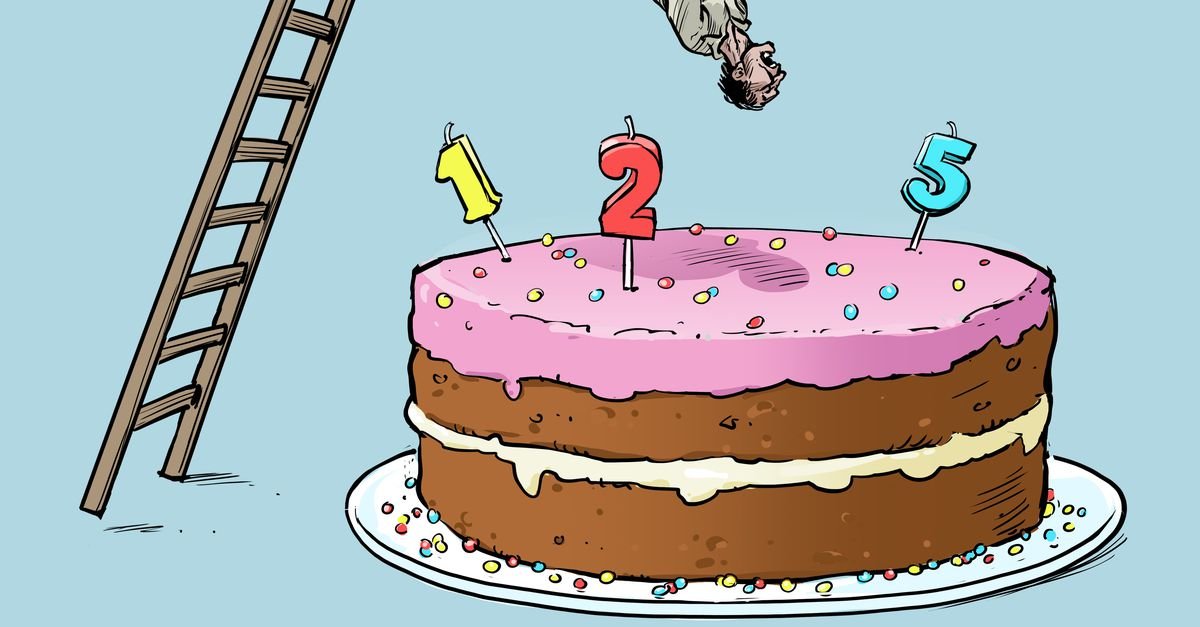
This year the Netherlands is celebrating 125 years of social security. The 1901 Accident Act was the first law to establish state-mandated insurance, entitling workers to benefits if they were unable to work due to an accident at work. In 125 years, the Netherlands has built up a system that is the envy of many countries, but distrust was also part of it from the start.
Well-known caricaturist Albert Hahn Jr. made a famous cartoon in 1908 about the Accident Act of a worker who falls upside down from a ladder. In the background are two clergymen, one Protestant and one Catholic, who make the comment: “Look, there goes another crook from the State.” The sentiment that social arrangements mainly provoke abuse, which Hahn Jr. mocked, is therefore as old as social security itself.
There is a direct line between this cartoon and the 2013 Fraud Act, which established a regime of draconian fines and recoveries for abuse. Later it turned out parliamentary inquiry that this law was not based on figures of large-scale fraud, but on the conviction of Minister Kamp that people ‘felt’ that fraud was taking place.
In addition to the fear of abuse, there has always been a second source of doubt about Social Security: the idea that it is too expensive. This year a cabinet took office that consistently promotes that statement. In a year when we are supposed to celebrate social security, this really spoils the party atmosphere, because just like Henk Kamp’s views on large-scale fraud, this statement also seems to be based more on feeling than on reality.
Funds are bursting with money
In the Netherlands we spend just over 25 percent of our domestic income on social benefits. That may seem like a lot, but it’s not that bad. According to the most current data from Eurostat The Netherlands has been below the European average for several years. Countries such as France, Germany, but also Sweden and Denmark spend more on social security than the Netherlands.
Moreover, the Unemployment Fund and the Disability Fund are overflowing with money. Together they have more than 50 billion euros saved up. That is good news, because if an economic crisis unexpectedly breaks out, there is a nice buffer to absorb any rising unemployment.
In short: social security has rarely been in such good financial shape. The unions are therefore absolutely right that they do not want to talk about cuts when the conversation is being conducted on improper grounds.
But that doubt – about abuse and financial sustainability – has its price. Because while the cabinet and the unions are arguing about money, another problem is festering in social security. Trust is indeed eroding, but not among those who contribute, but among those who are entitled to it.
Implementation problems are so serious that they seriously affect citizens’ confidence in the government
The implementation problems in the disability system are so great that they seriously affect citizens’ confidence in the government. Due to complex regulations and a chronic shortage of insurance doctors, many people have to wait a very long time for a decision on WIA benefits. If, in that climate, the impression also arises that the system is unaffordable, this will not strengthen confidence.
What should worry this government just as much is the non-use of schemes. Social security is a right, but many people do not take advantage of it, sometimes out of ignorance, but now more and more fear of a chargeback. Of the people entitled to a supplement to their WIA or WW benefit through the Supplementary Benefits Act, almost half do not take advantage. What does not help is that the Benefits Act has almost the same name as the tax authorities’ benefits system.
This problem also applies to the lesser-known AIO, the social assistance supplement for retirees with a state pension gap, a scheme that is especially important for people who once came here as labor migrants and are now growing old in poverty. One in three claimants does not apply for this benefit. Here too, the fear of having to pay back appears an important role to play.
That mistrust is a major problem, because it creates unnecessary and preventable poverty. 125 years of social security deserves a celebration. But a party starts with trust, and that must be earned. Sometimes a symbolic act is the most powerful way to regain trust. Then start with the Fraud Act of 2013, which was partly the basis for the benefits affair. It is essentially still there. There have been discussions about changes to that law for years, but little has come of it. Reverse most of that law. That would be a nice gift for 125 years of social security.