Simon Casson
BBC sport
The essence of the World Cup is in numbers.
Which team scored the most goals?
Who has collected enough points to advance to the knockout stage?
The same goes for marketing – which brand has the highest market capitalization?
In simple terms: who sells the most stuff?
It always comes down to numbers.
World Cup commercials
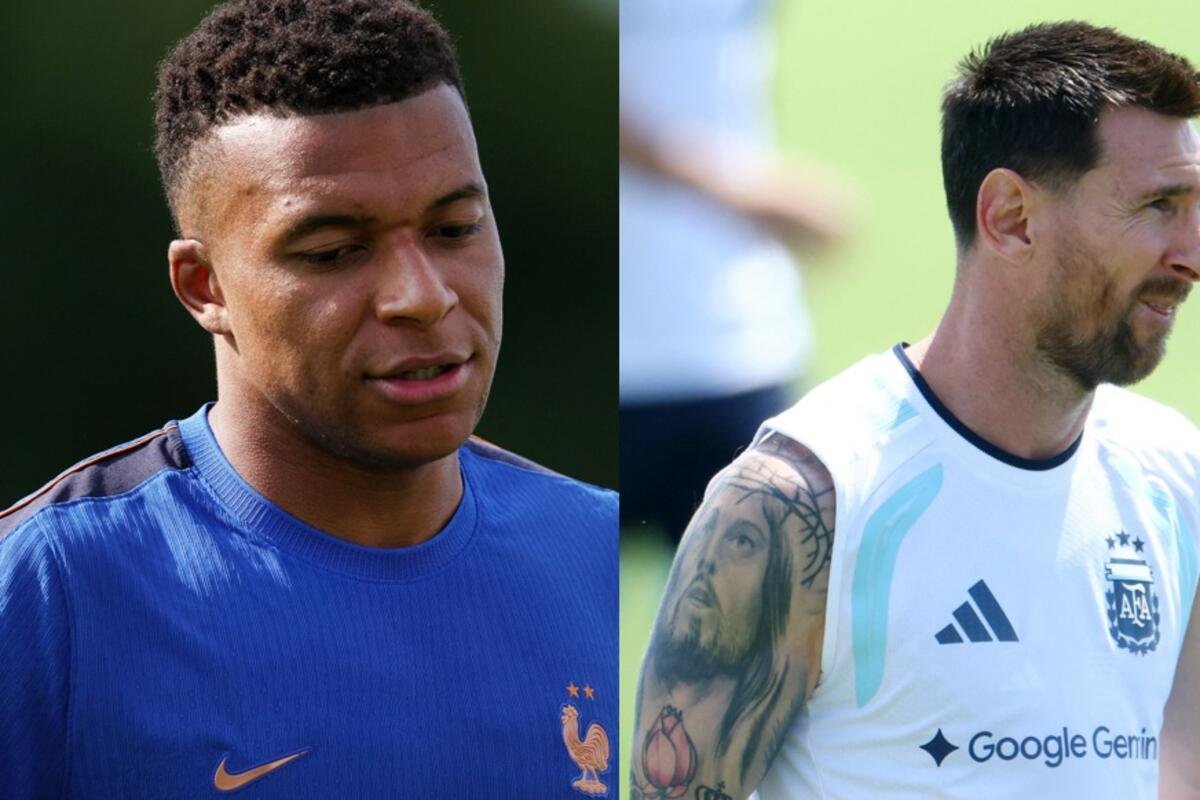
Kylian Mbappe, Erling Haaland, Cristiano Ronaldo and LeBron James are just some of the names appearing in Nike’s ‘Tear Up the Script’ World Cup ad.
Adidas’ Backyard Legends ad isn’t short of first-class talent either, with Lamin Jamal, Jude Bellingham, Lionel Messi and Zinedine Zidane.
Even David Beckham makes an appearance in an AI version.
They look more like Hollywood blockbusters than traditional commercials, and the appearance of those stars in them did not come cheap.
The German brand spent a whopping €58 million on making its own, according to reports.
Neither company is releasing exactly how much they’ve spent (we asked them), but you can bet the bills will be in the tens of millions.
Skyrocketing budgets are nothing new, but this year both Nike and Adidas went further and further than ever before.
Judging solely by YouTube views, there is only one winner at the time of writing.
Nike’s ad gained 76 million views, while Adidas managed to attract around seven million.
“What has changed is the speed and shape of culture. In the digital age, stories travel faster, are taken apart faster and reinterpreted faster. That means the old model of one ironed film that does all the work is no longer enough,” said Camilo Andrade, vice president and general manager of Nike’s global soccer division.
“With ‘Tear Up the Script’, we’ve built something bigger: a football universe that lives both digitally and in real life.”
“With this campaign in particular, success would never be measured by just how many people watched the film, but how we open up the world to give fans, players and creators something they can interpret, remix and carry on their own.”
“When that starts to happen, you know that the work goes beyond mere advertising and becomes part of football culture,” he added.
Adidas has been associated with the World Cup since 1970 when they created the legendary Telstar ball for the tournament.
Florian Alt, their vice president of marketing communications, brand and performance, said: “Our campaign, ‘Legends from the Backyard’, features a scene well known to anyone who has ever played football – the local ground, an unbeatable team and some stories that become legends.
“And with that campaign, we’re meeting consumers where they are – whether they’re watching on television, following their favorite athletes on social media, or participating in the culture created by sports.”
Adidas on top in New York?
With the battle for attention at the World Cup well underway, adidas appear to have made a stronger early impression in New York.
In Soho, the contrast between the two sports shoe giants is striking.
Adidas and Nike’s key stores are across the street from each other, but only one seems fully dedicated to the tournament.
Adidas has covered its own store in World Cup branding, with soccer jerseys and tournament memorabilia prominently displayed.
Across the street, Nike is still focused, understandably, on the New York Knicks after their recent success in winning the NBA title.
However, that difference is also visible when you step away from the action.
Throughout Manhattan, Adidas branding is hard to miss, from themed pop-ups dedicated to the World Cup, to smaller promotional stands and advertisements throughout the city.
His activations also seem more ambitious, creating a stronger impression that the tournament is present.
Part of that could be due to how Adidas has managed to connect with football culture off the pitch.
His recent away kit designs have found an audience in fashion and streetwear circles, particularly among younger fans from football’s diaspora communities.
Jerseys such as the Japanese or Curacao national teams have become expressions of identity as much as team memorabilia, helping Adidas to blur the line between football apparel and everyday fashion.
On the field, those jerseys seem more visible than Nike’s equivalents, despite the Oregon-based company producing the U.S. national team jersey.
This is just an early glimpse, but on Nike’s home turf, it looks like Adidas is currently ahead in the race for attention.
Who’s Winning the Battle of the World Cup Ads?
‘Long Lost Friends’
World Cup commercials have entertained us – and helped boost brand revenue – for years.
There was the striking commercial with scenes of the Brazilian team at the airport from France in 1998, and let’s not forget Adidas’ Jose +10 commercial from 2006, in which two children make their dream teams by choosing their favorite footballers.
Sports branding strategist James Kirkham says ads like these still stick in fans’ minds.
“We talk about these older ads like they’re long-lost friends, like movies or television shows — they have a nostalgia attached to them,” he explained.
“These days it’s completely normalized to see Hollywood actors like Timothée Chalamet driving a taxi in an Adidas commercial.”
“Football is the ultimate common content. It is located somewhere where music is. It is the ultimate connective tissue.”
“It can be incredibly unifying, but at the same time it’s at the center of popular culture. Right now, music, fashion, basketball, gaming and design – they’re all around and orbiting around what football is.”
Social networks also play a huge role.
“Everyone says television is dead, but the reality is television is everything. Television is everywhere. Now it’s like we have a million micro TVs. With Instagram reels, short videos, YouTube, TikTok and so on, we have a video culture.”
“It used to be about duration and viewing time. I think it’s different today. Something gets transferred to you and now you’re probably only going to see parts of it.”
Jerseys, sneakers and signatures
When it comes to World Cup kits, Adidas has a slight lead with 14 to Nike’s 12.
Puma is one place behind with 11, while other brands such as New Balance make up the remainder.
“It’s very normal for young fans to follow at least four different countries – they definitely follow individual players and that translates into shirt sales,” says Kirkham.
“Football and fashion are now completely intertwined. Whether it’s players going out in Hugo, or Jude Bellingham in Gucci or whatever, that crossover is everywhere. It’s expected and normal – and football shirts are at the center of it all.”
Boot endorsements are huge business for both brands – and indeed many others – eager to sign big names for them.
All of this translates into massive payouts for top players.
According to financial information and media firm Bloomberg, Cristiano Ronaldo has a decade-long contract with Nike worth almost $18 million (about €16 billion) a year.
Can anything top the World Cup?
“The World Cup is the biggest sporting event on the planet, so it’s very important for us as a sports brand to perform at our best,” says Adidas’ Alt.
“But success for Adidas is about supporting athletes in different sports, from the grassroots to the big stage.”
Football is obviously important to Nike.
“When soccer’s biggest tournament starts, the data is always a reminder of the same thing: soccer is still the world’s most obvious universal connective tissue. Billions upon millions,” says Nike’s Andrade.
“The world stops with everything else when these moments begin. So, on a purely global scale of emotional intensity and cultural reach, football remains in a world of its own.”
And let’s not forget, both Nike and Adidas are companies with market share and revenue at the heart of what they do.
The question of who sells the most sportswear is something we still cannot accurately measure.
It won’t be possible to find out until long after the World Cup trophy has been handed out.
In the end, it always comes down to numbers again.
Images: Nathan Edwards
BBC is in Serbian from now on and on YouTube, follow us HERE.
Follow us on Facebook, Twitter, Instagram, YouTube and Viber. If you have a topic suggestion for us, please contact us bbcnasrpskom@bbc.co.uk
Download the application and follow the news


FOLLOW US ON

News