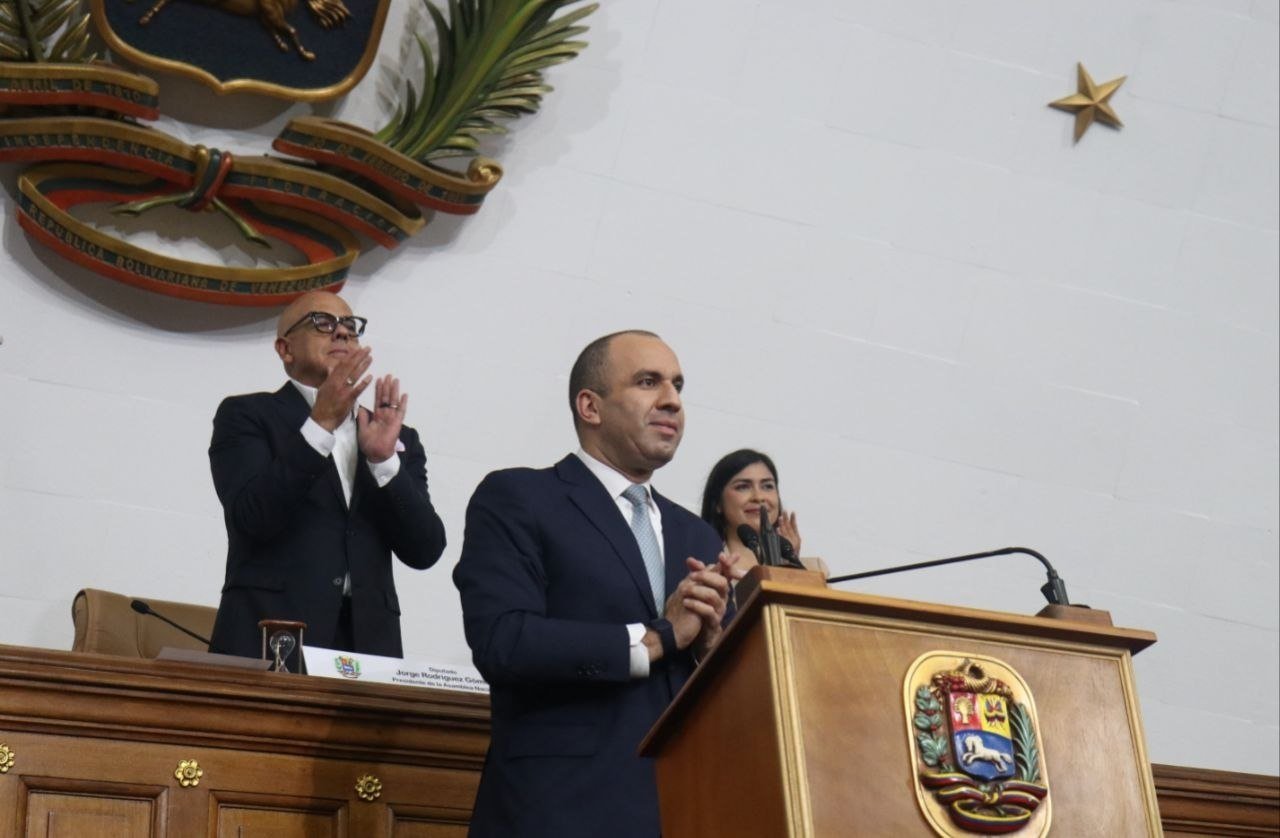
This Thursday, April 9, the National Assembly appointed Larry Daniel Devoe Márquez as Attorney General of the Republic and Eglée González Lobato as Ombudsman, for a period of seven years.
Devoe Márquez, who held the position of prosecutor in charge since February after the resignation of Tarek William Saab, received the support of the ruling majority. González Lobato replaced Alfredo Ruiz in the Ombudsman’s Office.
Non-governmental organizations expressed harsh criticism against both appointments and described them as a continuation of Chavista control over the key institutions of Citizen Power.
The NGO Justice, Encounter and Forgiveness (JEP), through its general coordinator Martha Tineo, considered that the designations “finish blurring the border between political power and Justice in Venezuela.” The organization stressed that “we did not look for independent profiles, but rather figures who have validated the official management in the most critical moments.”
He added that it is “very difficult for the victims to feel trust” because Devoe defended the regime in UN and IACHR hearings, where he qualified or denied serious complaints such as the existence of political prisoners. “This situation generates a feeling of legal orphanhood,” stated the JEP.
The NGO Provea indicated, through its general coordinator Oscar Murillo, that Devoe Márquez constitutes “an official of absolute trust” of the acting president Delcy Rodríguez. Murillo described him as a “multi-position official” and denounced his “disdainful attitudes” toward organizations that document state abuses.
“His approach to the world of human rights has been from the arrogant position of someone in power,” said Murillo, and concluded that Devoe “does not represent the profile” that Venezuela needs from a human rights perspective.
The NGO Mundo Sin Mordaza released an official statement in which it denounced that the appointments represent “the consolidation of the political capture of Citizen Power and the demolition of institutional independence in Venezuela.”
The organization warned that, under the pretext of a supposed “institutional normality,” the ruling party appointed figures who “do not guarantee autonomy from power.” Specifically, he pointed out that Devoe symbolizes “the continuity of impunity and political control of the Public Ministry,” while González Lobato’s profile “does not satisfy the constitutional requirement of manifest competence in matters of human rights.”
For its part, the Justice and Peace Center (Cepaz) warned that these appointments do not constitute an “institutional renewal, but rather a rotation of power.” The entity criticized that the person who carried out criminal prosecution functions now becomes a guarantor of citizen rights, which “compromises public trust” and “investigates institutional independence.”
Likewise, the organization Access to Justice demanded greater transparency in the selection process and regretted that the voices of civil society or academic sectors that demanded independent profiles were not heard. Opposition leaders also rejected the appointments.