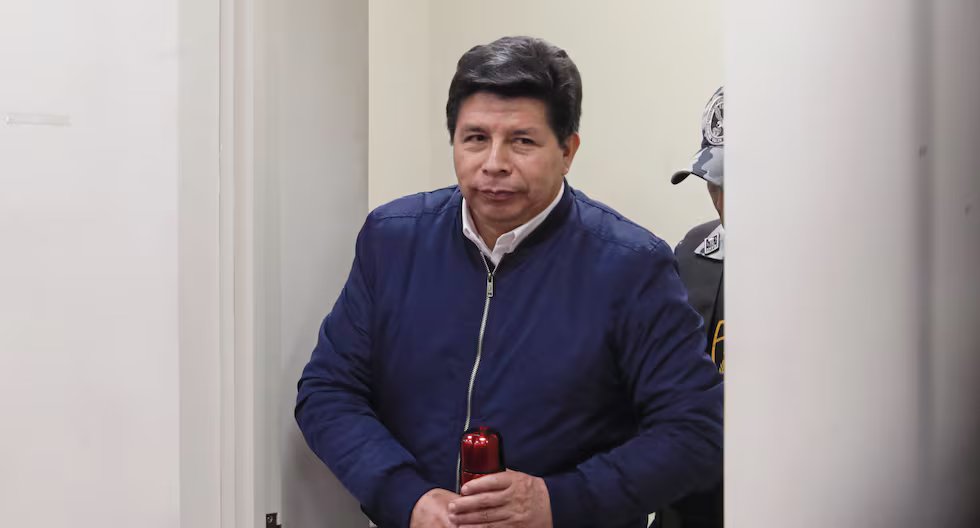
He Judiciary rejected the appeal (previous question) of the defense of the former president of the coup Pedro Castillo Terroneswhich sought to annul the entire process against him for criminal organization, aggravated influence peddling and collusion to the detriment of the State.
He Judiciary rejected the appeal (previous question) of the defense of the former president of the coup Pedro Castillo Terroneswhich sought to annul the entire process against him for criminal organization, aggravated influence peddling and collusion to the detriment of the State.
The appeal was resolved by the supreme judge Juan Carlos Checkleyin charge of the Supreme Court of Investigation of the Supreme Court.
In its arguments, Castillo’s legal defense argued that the process should be annulled because the legal requirements for its initiation had not been met, mainly questioning the appointment of the judge and the formation of the Supreme Preparatory Investigation Court.
According to him, this violated the right to the natural judge and the principle of legality.

Resolution of the Supreme Court Court.
“The process began without meeting the procedural requirements provided for in article 450° paragraphs 2 and 3 of the CPP; it added that the prosecutor of the Nation did not go to the Criminal Chamber of the Supreme Court for it to designate the supreme judge of preparatory investigation and the Special Criminal Chamber; said chamber did not make those designations either,” the order states in relation to the defense arguments.
Castillo requested the annulment of everything that took place in the file, including the 28 incidents.
Judge Checkley concluded that Yes, the procedural requirements required by law were met.such as the constitutional complaint, the political pretrial and the authorization of Congress to initiate criminal proceedings against the former head of state.
“The question raised is not linked to the verification of a procedural requirement,” the resolution states, specifying that the defense arguments refer to later aspects of the process, such as rules of action or designation of authorities, which do not invalidate the beginning of the investigation.
Along these lines, the court stressed that the “preliminary question” only applies when an essential legal requirement is missing before starting the criminal process, which does not happen in this case. Therefore, it determined that it is not appropriate to annul what was done or stop the progress of the investigation.