
– Advertisement –
By Peter Richards
BRIDGETOWN, Barbados, Jun 9, CMC -More than a decade after it warned that the Caribbean had some of the highest homicide rates in the world, particularly in countries as Jamaica, Trinidad and Tobago and Belize, the United Nations Development Programme (UNDP) has released a new report highlighting a disconnect between security policies and the structural causes of violence.
The UNDP, Monday launched its report ”Democracies Under Pressure: Reimagining the Futures of Democracy and Development in Latin America and the Caribbean” in the Dominican Republic in which it also noted that violence against women is a critical concern throughout the region.

The 323 page report notes that the Caribbean faces an epidemic of crime and violence, driven by organized crime and drug trafficking. In 2022, 12 of the 20 countries with the highest homicide rates globally were Caribbean States.
The report notes that in that same year, the homicide rate in the Turks and Caicos Islands reached 77.6 per 100,000 inhabitants, doubling the previous year’s figure, while St. Lucia recorded 42.3, surpassing its previous record, and Trinidad and Tobago reached 39.4, representing an increase of more than 22 per cent compared to the previous year.
It said that a significant share of this violence is linked to gang-related disputes, and although data availability is uneven, it is estimated that between 20 per cent and 40 per cent of intentional homicides are associated with organized violence, well above the global average. Most of the victims are young men between the ages of 18 and 30, living in conditions of poverty and marginalization.
The report notes that while Jamaica and Haiti have long faced a crisis of crime and violence, the spread of violence across the region has severely affected the well-being of Caribbean populations and threatens to cripple already fragile and weakened economies and institutions.
It said despite declines recorded in 2023 and 2024 compared to 2022, the increase in violence in Jamaica can be explained by the combination of three factors, namely the spread of gangs recruited from among poor suburban youth, the rise of drug trafficking and the growth of arms smuggling in the region.
“The nature, size, capacity and dynamics of gangs and criminal groups in the region vary substantially: a few, the most highly organized, are involved in transnational drug, arms or human trafficking networks that pass through North and South America, Europe or Asia; others, equally sophisticated but smaller, operate locally, either in competition or in alliance with State actors to secure territorial control that allows them to expand their criminal activities as links in broader crime chains.”
The UNDP report notes that the gang phenomenon, beyond its impact on homicide and crime figures, has become a challenge to state sovereignty, the rule of law and the very functioning of democracies and electoral processes in the region
It said efforts have been made to stem the tide of crime in the region. The two most populous Caribbean countries, Jamaica and Trinidad and Tobago, have declared “states of public emergency” in response to rising gang violence and organized crime.
In addition, anti-gang laws have also been enacted in the region to combat crime and violence, especially organized crime. However, many security institutions, including the police, lack the capacity and forensic resources to eradicate crime and continue to be hampered by outdated legislation and inefficient justice systems.
The report notes that low levels of trust in the police forces and the government further aggravate eradication efforts.
“Beyond being a security issue, there is evidence that some political and economic elites rely on gang services to, among other things, influence electoral outcomes in strategic districts, in exchange for benefits such as privileged access to public contracts or judicial impunity.”
The report states that in face of these challenges, the share of people willing to sacrifice democracy for security reflects growing public disillusionment with outcomes in crime control and criminal justice.
“In that sense, citizens appear to be signalling that if gangs and other criminal actors cannot be effectively controlled through democratic means, it may be time to consider more forceful approaches, even if they carry greater risks.”
The report notes that in 222, the direct costs of crime amounted to 3.44 per cent of gross domestic product (GDP) in the Latin America and Caribbean (LAC) region, roughly equivalent to 78 per cent of the public budget for education and twice the budget for social assistance
It said in Jamaica, it is estimated to incur annual labour productivity losses exceeding US$38 million due to the killing and incarceration of men. In Trinidad and Tobago, the cost of violence was estimated at 4.07 per cent of GDP in 2022, approximately one billion US dollars, and by 2024, the total cost of crime increased to an estimated five billion US dollars.
“Overall, the costs of crime are likely even higher, as high crime rates constrain economic growth, reduce both foreign and local investment, drive migration and widen inequalities.
The UNDP said that beyond these direct costs, violence generates effects with profound economic, social, and democratic implications.
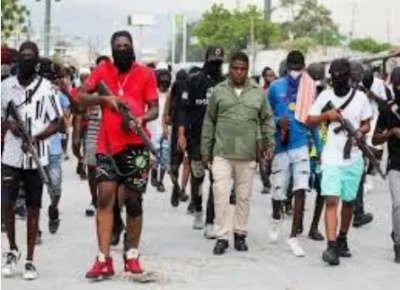
In the Caribbean, the expansion of gangs and criminal organizations has given rise to forms of parallel governance, in which non-state actors control territories, regulate access to basic goods and services, and perform functions typically associated with the state, as seen in parts of Jamaica and Haiti.
“This territorial capture not only erodes State authority, but also restricts mobility, fragments the social capital, and distorts the functioning of markets and communities. In these contexts, economic activity becomes subordinated to systems of coercion, extortion, and social control, limiting productive opportunities and reinforcing patterns of exclusion.
“Moreover, these structures affect democratic functioning, as criminal leaders often establish links with political actors, influencing – and in some cases controlling- electoral processes and local decision-making.”
The report also notes that violence also creates short-term incentives for adopting punitive approaches, such as deploying military forces for internal security tasks or implementing “tough-on-crime” policies.
“While these measures may provide temporary control, they tend to delay the implementation of comprehensive, multisectoral responses that address the structural causes of the problem. This generates a feedback loop between immediate social demands and political responses, in which governments prioritize visible short-term results—often associated with electoral gains—over sustainable long-term strategies,” the report added.
– Advertisement –