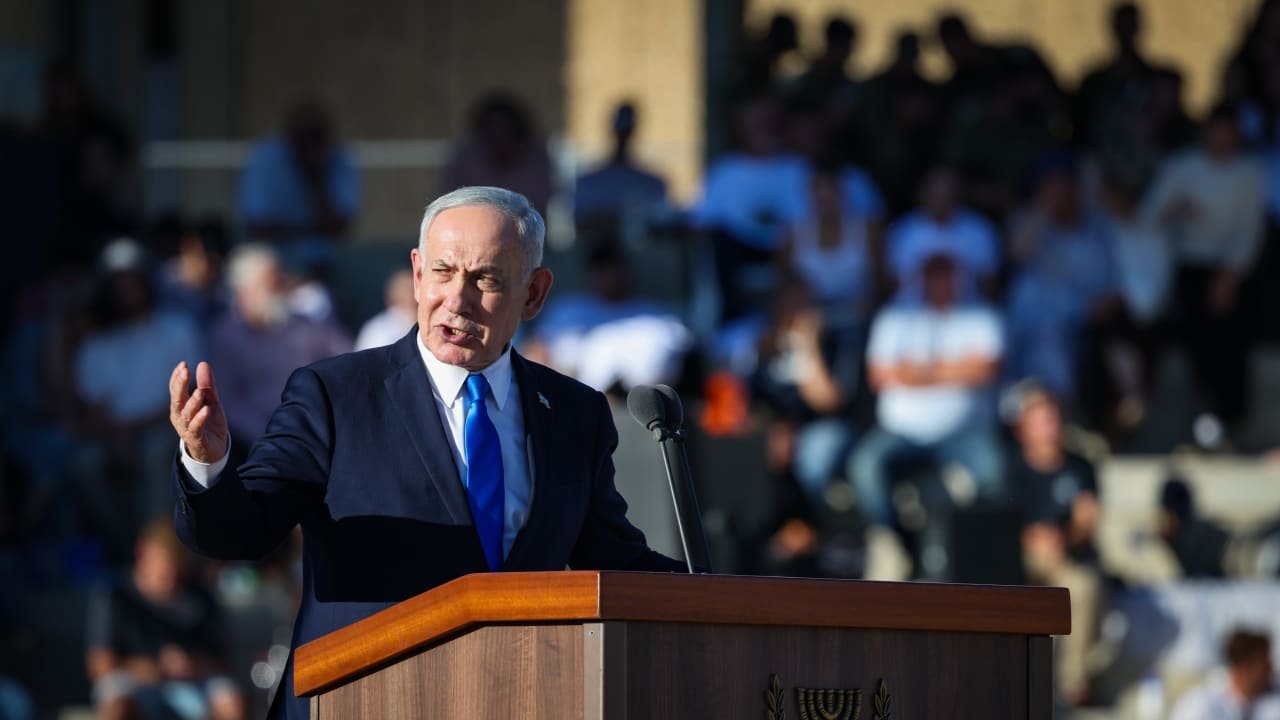
Prime Minister Benjamin Netanyahu’s declaration on Saturday night that he intends to form a broad national government after October’s election is, in principle, exactly what Israel needs. In fact, it is what The Jerusalem Post has repeatedly argued since the October 7 massacre.
Israel faces enormous security, economic, and societal challenges that demand a broad Zionist consensus rather than narrow political majorities.
“I intend to establish a broad national government,” he said. “Not a narrow government, not a left-wing government that would be dependent on Arab parties, but a broad national government. Because only in that way, I believe, can we reach agreements among ourselves.”
The problem is not Netanyahu’s idea, but rather his timing.
Why many Israelis remain skeptical
For three years, Israel has lived through one of the most divisive periods in its history. The judicial-reform battle split Israeli society, reservists threatened to stop reporting for duty, protests filled the streets week after week, and political discourse deteriorated into mutual suspicion. Then came the October 7 massacre, forcing Israelis back together through tragedy rather than leadership.

Even after Hamas’s massacre, opportunities existed to reshape Israeli politics around national unity. Instead, temporary wartime partnerships gave way to familiar coalition calculations, renewed political confrontation, and legislative battles that again placed domestic divisions at the center of public life. Throughout that period, there was little sign of an effort to build the broad political consensus Netanyahu now says is his goal.
That is why many Israelis greeted Saturday’s remarks with skepticism.
Netanyahu spoke about ending boycotts between political camps. He warned against deepening divisions and spoke about the need to avoid internal conflict. He said Israelis agree on far more than their politicians suggest and promised a government built around broad Zionist principles rather than narrow political interests.
Those are sentiments few could reasonably oppose, and they should have guided Israeli politics from the outset. Calls for dialogue carry greater weight when they accompany difficult decisions – not when they so obviously arrive on the eve of an election campaign. But that does not mean Netanyahu’s proposal should simply be dismissed.
A broad coalition could face national challenges
Israel’s next government, whoever leads it, will inherit challenges that cannot realistically be addressed through razor-thin coalitions dependent on every parliamentary vote. The war in Gaza continues to demand difficult strategic decisions. The confrontation with Iran has entered a new phase, and Hezbollah remains a long-term threat.
The haredi (ultra-Orthodox) enlistment issue also remains unresolved, and Netanyahu has repeatedly failed to provide an answer.
Again and again, he also has found himself relying on the same bedfellows that have sustained him politically for much of the past decade: a narrow coalition built around Likud, the haredi parties, and the right-wing National-Religious.
That model has repeatedly delivered Netanyahu the premiership, but it has also left successive governments vulnerable to the demands of small coalition partners whose priorities do not reflect those of the broader Israeli public.
The repeated crises surrounding haredi military service have now reached a turning point. Saturday’s remarks could be viewed as Netanyahu’s attempt to rid himself of his dependency on the haredi parties, because he knows the toll the war has taken on the majority of Israeli society, which will no longer stand for the status quo to continue.
Turning rhetoric into reality
A government representing a broad Zionist majority would be better placed to make difficult national decisions with greater public legitimacy. Such a coalition would also send an important message abroad that Israel’s democratic system remains capable of finding common ground.
Personal rivalries and campaign promises should not automatically prevent serious discussions if election results create an opportunity for a genuinely broad government. Israeli voters deserve leaders prepared to place national interests above political convenience.
The Post has long argued that Israel functions best when its governments reflect the widest possible Zionist consensus, particularly during periods of war and national crisis. That conviction has not changed.
Netanyahu deserves credit for articulating that aspiration. But aspirations alone cannot erase years of political polarization or convince a skeptical public overnight.
If he truly believes Israel requires a broad national government, then he should begin laying the foundations for one through his conduct, his rhetoric, and his willingness to pursue genuine consensus rather than simply promise it.