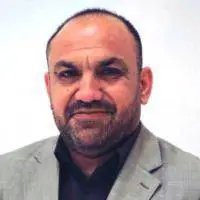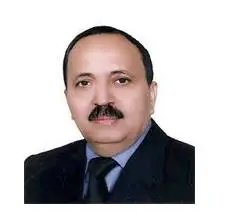


Academic writer Jabbar Gamal El-Din – Ahmed Abdel Majeed
The first Arabic poem eulogizing Castro, Mandela and Chavez
I inherited from my brother the relationship with the symbols of the Lebanese poetic movement
Ahmed Abdel Majeed
My presence at the Al-Alamein Institute for Graduate Studies in Najaf provided me with a deep knowledge of the professor of political science, Jabbar Jamal al-Din, and I discovered in his biography the richness of poetry and the richness of belonging to the ancient Jamal al-Din family and to the heritage of the city of Najaf, from whom Dr. Jabbar draws his knowledge, nourishes the perceptions of his mind, and develops his literary skills.
Three years have passed since my first meeting with him, which was enough to strengthen my relationship with him, as he shares some of my interests and most of my personal convictions about individuals and trends. A week ago, I decided to interview him about the almost unknown aspects of his life and his inclinations, especially his close relationship with the Christian community and its pillars in Lebanon. Perhaps it is a unique case in that I do not meet him without him bombarding me with reports about his latest correspondence with Lebanon. And his memories extracted from his many visits to Beirut, its mountains and the sea, to the point that I saw him as Lebanese in love par excellence, negating human identity, to the point that he mourned the leaders of foreign countries over their departure.
Here is part of this dialogue:
□ Doctor.. What led you to the seas of poetry even though you are from a conservative religious family?
I do not find any conflict or harm between poetry compositions and class or religious decline. It is a heavenly talent given to us by God, and it now flows through our veins. We find no place to write and let the springs of our emotions explode, which we translate into poems, feelings, and ideas. The Jamal al-Din family has been a family of poetry, literature, jurisprudence, and knowledge for many years.
First school
□ How influential is the great poet Dr. Mustafa Gamal El-Din on your poetry?
– He is, may God have mercy on him, and without a doubt, my first teacher and my first teacher, whom I was influenced by since the beginning of my writings in my early youth. I used to read my poems in his ears, and I found comfort in his face, which encouraged me to continue writing poetry. It is no secret to the reader that the poet, Dr. Mustafa Jamal al-Din, was the poet of the rhymed palm trees, but rather one of the most prominent Iraqi poets in the twentieth century, who were produced by the city of Najaf, the city of Najaf, the city of Najaf, the city of Najaf, the city of Najaf, the city of poetry, thought, culture, and literature it gave birth to. A group of distinguished Iraqi poets, such as the poet Mr. Muhammad Saeed Al-Haboubi, His Eminence the late scholar Mr. Dr. Muhammad Bahr Al-Ulum, may God have mercy on him, the greatest Arab poet Muhammad Mahdi Al-Jawahiri, the poet Ali Al-Sharqi, the poet Sheikh Muhammad Reda Al-Shabibi, and other masters of modern and contemporary Iraqi poetry.
□ Tell me about the roots of your relationship with the Lebanese poetic movement?
I inherited this relationship from my late brother, Professor Dr. Mohsen Jamal al-Din, professor of Andalusian literature at the College of Arts, University of Baghdad, who lived for many years in Lebanon and graduated from Saint Joseph University in Beirut in the mid-fifties of the last century, after which he completed his doctorate specializing in Andalusian literature at the University of Barcelona, Spain. He had close cultural relations with the great poets of Lebanon, the most prominent of whom were Elia Abu Madi, Mikhail Naima, Amin Nakhleh, Maroun Abboud, and George. Sidah, Elias Farhat, Halim Damous, Elias Abu Shabakah, Issa Iskandar Al-Maalouf, and his sons, the great poets Shafiq Al-Maalouf, Riyad Al-Maalouf, and Fawzi Al-Maalouf, and most of them, in fact most of them, are from Christian families. Fate wanted me to complete the message of my late brother, so I established close relationships with great Lebanese poets such as Michel Trad, Joseph Harb, Joseph Al-Hashem, and the poet, writer, and visual artist Melvyn Tawfiq Abu Murad. And great poets and dear brothers from the Unitarian Druze sect, led by His Eminence Sheikh Akl of the Unitarian Druze sect, the honorable brother and creative poet Dr. Sami Abi Al-Munna, my brother and loyal friend, and the great poet, Professor Dr. Muhammad Shea, an experienced professor of philosophy at the Lebanese University and Dean of the Institute of Social Sciences, who published dozens of fine poetry collections that left a wide resonance in Lebanese poetic and cultural life.
□ You have written for many poetic purposes. Who among the world leaders did you eulogize in your poetry?
– I wrote for many purposes, such as description, poetry, lamentation, national and humanitarian poetry, and poems from the Muslim Brotherhood. My poems went beyond the Iraqi sphere and the sphere of the Arab world to global spaces. I was the first Iraqi and perhaps Arab poet to write a poem on the centenary of the massacres and genocide to which the Armenian people were subjected under Ottoman domination in 1915. I was also the first poet to write poems of lamentation about international figures who were supportive of legitimate Arab rights in all matters. International forums and organizations, such as the late Cuban President Fidel Castro, the late Venezuelan President Hugo Chavez, the late South African national leader Nelson Mandela, and the late Pope Francis, Pope of the Vatican. These poems were published in Iraqi and Arab periodicals and on international electronic sites and gained the admiration of many readers. The main motivation for writing these poems was my feeling and my desire to return the favor, even if just a small part, to these international figures who supported Arab rights for a humanitarian and moral motive despite The power of imperial hegemony and arrogance that stands strong in the face of everyone who supports our just causes.
Enchanting nature
□ If you were given the choice to soar high in the worlds of poetry and write a poem, what are the places that are most dear to your heart and where your soul begins?
– Without hesitation, I will talk to Lebanon and flirt with its beauty and charming nature from north to south, especially what is known as the northern Matn and the picturesque tourist places in the Chouf, Baakline, Jezzine, Niha, Bhamdoun, Aley, Sofar, Keserwan, and Jbeil, the first inhabited city since the dawn of human civilizations.
□ You are a professor of political science, but which is better for the nation, politics or poetry?
Politics and poetry, for me, both complement each other. For many generations, poetry has been the mouthpiece of the nation and the expression of its concerns and aspirations, to the point where poetry was described as the collection of the Arabs. It is sufficient for us to mention the role of the Iraqi poets who inflamed the spirit of enthusiasm and patriotism in the souls of the masses since the twentieth revolution, through the May 1941 uprising, and the leap of December 1984. Al-Jawahiri’s immortal national and political poems are the best evidence of this, which will remain firmly established in the conscience and conscience. The Iraqi throughout the generations and eras. Therefore, based on the above, we will find that politics and poetry spring from one river and will never separate.