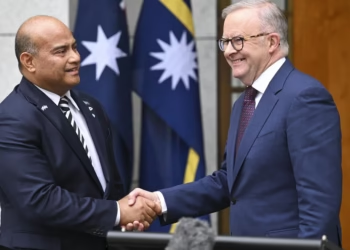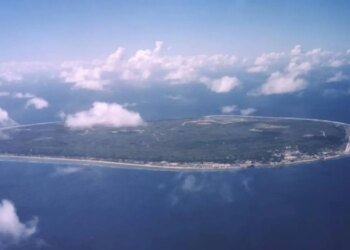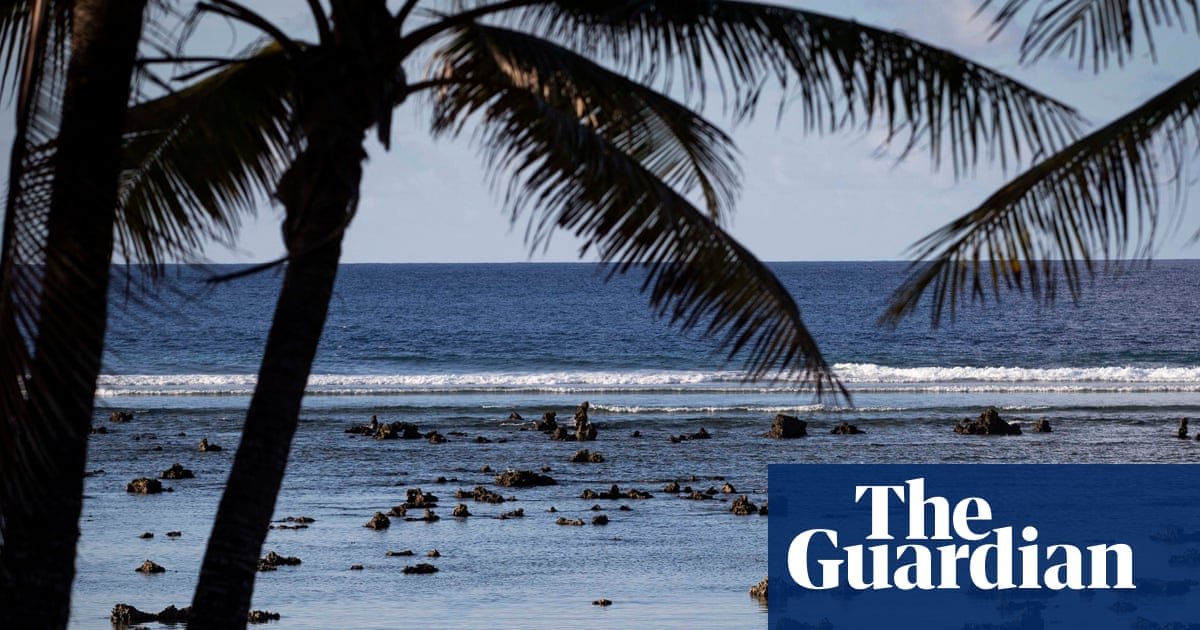
Nauru, renowned as the world’s smallest republic, is on the verge of potentially significant transformation with a proposed name change to “Naoero.” This shift aims to honor the nation’s cultural heritage and linguistic identity, as articulated by President David Adeang during a parliamentary address in January.
Following the parliament’s unanimous approval, the island, which has a population of approximately 13,000, is set to hold a referendum to determine if the name change will be officially enacted. The name “Naoero” (pronounced Now-ero) reflects the term used by Nauruans in their native language. The existing name, “Nauru” (typically pronounced Now-roo), was adopted because the Indigenous designation could not be adequately pronounced by foreigners, according to government statements, illustrating a broader historical context of colonial influence on place names.
Nauru’s history with nomenclature dates back over two centuries. In 1798, a British seafarer dubbed the island “Pleasant Island” due to its scenic beauty and the hospitality of its inhabitants. With Germany’s annexation of the island in 1888, it became officially recognized as “Nauru,” though several variations like “Nawodo” were also noted. Australia took administrative control under a League of Nations mandate in 1919 and retained “Nauru” as the official name, which continued after the island gained independence in 1968. The island has also gained notoriety in more recent years as an offshore detention center for Australia.
Changing place names often extends beyond mere words; it reflects power dynamics and colonial histories. Geography and Native American studies professor Zoltán Grossman remarks that such adjustments historically symbolize efforts to erase Indigenous presence, asserting the need for self-identification through native nomenclature.
In advocating for “Naoero,” Nauru’s government draws parallels with other nations that have altered their official names to better reflect local languages, such as Türkiye (formerly Turkey) and Eswatini (formerly Swaziland). The change is seen as part of a larger movement toward “re-Indigenisation” of placenames, allowing formerly colonized peoples to assert their sovereignty and cultural identities.
Jordan Engel, founder of the Decolonial Atlas, emphasizes that decolonization pivots around self-determination, with language and place names serving as fundamental expressions of this autonomy. The island nation is also invoking this momentum, joining other postcolonial nations that have redefined their geographic identity—examples include the de-russification movements following the fall of the Soviet Union, which changed names like Byelorussia to Belarus.
Nonetheless, name changes can be contentious. Previous petitions, such as one seeking to rename New Zealand to Aotearoa, have garnered substantial public support yet met resistance in legislative forums. Similarly, the Cook Islands has struggled with debates over its name linked to British explorer James Cook.
While Nauru’s government has refrained from commenting on the name change when approached, community voices express support for “Naoero.” Wrestler Arcmen Willis represents a generation hopeful for correct pronunciation and pride in their identity. He believes that properly recognizing the name will help preserve Nauru’s uniqueness, emphasizing that losing this identity would mean losing the essence of Nauru.
Currently, UNESCO categorizes Nauru’s language, Nauruan or dorerin Naoero, as “severely endangered.” Although spoken informally among friends and family, it is not part of the educational curriculum. Advocates see the potential name change as a catalyst for language preservation and revitalization, contributing to a stronger cultural continuity for future generations.
As the name “Naoero” begins appearing in various public services—from the postal service to the national health and utility sectors—the Australian high commission has taken to using both names in communications. For many Nauruans like Willis, the prospective change is a matter of national representation, though personally, he feels that the essence of identity transcends such labels. “It’s only the name change,” he states, reflecting a perspective that the core of one’s identity remains constant despite alterations in nomenclature.

![List Of 10 Least Forested Countries In The World [2026]](https://agentially.org/wp-content/uploads/2026/06/list-of-least-forested-countries-in-the-world-1781172279270-350x250.webp)