Thursday, June 11, 2026
    The GeoStrategic Consensus
    No Result
    View All Result
    • Login
    • HOME
    • AMERICAS
      • Argentina
      • Brazil
      • Canada
      • Chile
      • Colombia
      • Costa Rica
      • Cuba
      • Dominican Republic
      • Ecuador
      • El Salvador
      • Greenland
      • Guatemala
      • Honduras
      • Mexico
      • Nicaragua
      • Panama
      • Paraguay
      • Peru
      • United States
      • Uruguay
      • Venezuela
    • ASIA-PACIFIC
      • Australia
      • Brunei Darussalam
      • Cambodia
      • China
      • Federated States of Micronesia
      • Fiji
      • Indonesia
      • Japan
      • Kiribati
      • Laos
      • Malaysia
      • Marshall Islands
      • Mongolia
      • Myanmar
      • Nauru
      • New Zealand
      • North Korea
      • Palau
      • Papua New Guinea
      • Philippines
      • Samoa
      • Singapore
      • Solomon Islands
      • South Korea
      • Taiwan
      • Thailand
      • Timor-Leste
      • Tonga
      • Tuvalu
      • Vanuatu
      • Vietnam
    • CARICOM
      • CARICOM – Non-English
        • Haiti
        • Suriname
      • CARICOM Associates
        • Anguilla
        • Bermuda
        • British-Virgin-Islands
        • Cayman-Islands
        • Curacao
        • Turks-and-Caicos
      • CARICOM English
        • Antigua and Barbuda
        • Barbados
        • Belize
        • Dominica
        • Grenada
        • Guyana
        • Jamaica
        • Montserrat
        • Saint Kitts and Nevis
        • Saint Lucia
        • Saint Vincent and the Grenadines
        • The Bahamas
        • Trinidad and Tobago
    • EURASIA
      • Armenia
      • Azerbaijan
      • Balarus
      • Georgia
      • Kazakhstan
      • Kyrgyzstan
      • Moldova
      • Russia
      • Tajikistan
      • Turkmenistan
      • Ukraine
      • Uzbekistan
    • EUROPE
      • Albania
      • Andorra
      • Austria
      • Bosnia and Herzegovina
      • Bulgaria
      • Croatia
      • Cyprus
      • Czech Republic
      • Denmark
      • Estonia
      • Finland
      • France
      • Germany
      • Greece
      • Holy See
      • Hungary
      • Iceland
      • Ireland
      • Italy
      • Kosovo
      • Latvia
      • Liechtenstein
      • Lithuania
      • Luxembourg
      • Malta
      • Monaco
      • Montenegro
      • Netherlands
      • North Macedonia
      • Norway
      • Poland
      • Portugal
      • Romania
      • San Marino
      • Serbia
      • Slovakia
      • Slovenia
      • Spain
      • Sweden
      • Switzerland
      • United Kingdom
    • MIDDLE EAST AND NORTH AFRICA
      • Algeria
      • Bahrain
      • Egypt
      • Iran
      • Iraq
      • Israel
      • Jordan
      • Kuwait
      • Lebanon
      • Lybia
      • Morocco
      • Oman
      • Palestinian Territories
      • Qatar
      • Saudi Arabia
      • Syria
      • Tunisia
      • Turkey
      • United Arab Emirates
      • Western Sahara
      • Yemen
    • SOUTH ASIA
      • Afghanistan
      • Bangladesh
      • Bhutan
      • India
      • Maldives
      • Nepal
      • Pakistan
      • Sri Lanka
    • SUB-SAHARAN AFRICA
      • Angola
      • Benin
      • Botswana
      • Burkina Faso
      • Burundi
      • Cabo Verde
      • Cameroon
      • Central African Republic
      • Chad
      • Comoros
      • Cote d’Ivoire
      • Democratic Republic of the Congo
      • Djibouti
      • Equatorial Guinea
      • Eritrea
      • Eswatini
      • Ethiopia
      • Gabon
      • Gambia
      • Ghana
      • Guinea
      • Guinea Bissau
      • Kenya
      • Lesotho
      • Liberia
      • Madagascar
      • Malawi
      • Mali
      • Mauritania
      • Mauritius
      • Mozambique
      • Namibia
      • Niger
      • Nigeria
      • Republic of the Congo
      • Rwanda
      • Sao Tome and Principe
      • Senegal
      • Seychelles
      • Sierra Leone
      • Somalia
      • South Africa
      • South Sudan
      • Sudan
      • Tanzania
      • Togo
      • Uganda
      • Zambia
      • Zimbabwe
    • HOME
    • AMERICAS
      • Argentina
      • Brazil
      • Canada
      • Chile
      • Colombia
      • Costa Rica
      • Cuba
      • Dominican Republic
      • Ecuador
      • El Salvador
      • Greenland
      • Guatemala
      • Honduras
      • Mexico
      • Nicaragua
      • Panama
      • Paraguay
      • Peru
      • United States
      • Uruguay
      • Venezuela
    • ASIA-PACIFIC
      • Australia
      • Brunei Darussalam
      • Cambodia
      • China
      • Federated States of Micronesia
      • Fiji
      • Indonesia
      • Japan
      • Kiribati
      • Laos
      • Malaysia
      • Marshall Islands
      • Mongolia
      • Myanmar
      • Nauru
      • New Zealand
      • North Korea
      • Palau
      • Papua New Guinea
      • Philippines
      • Samoa
      • Singapore
      • Solomon Islands
      • South Korea
      • Taiwan
      • Thailand
      • Timor-Leste
      • Tonga
      • Tuvalu
      • Vanuatu
      • Vietnam
    • CARICOM
      • CARICOM – Non-English
        • Haiti
        • Suriname
      • CARICOM Associates
        • Anguilla
        • Bermuda
        • British-Virgin-Islands
        • Cayman-Islands
        • Curacao
        • Turks-and-Caicos
      • CARICOM English
        • Antigua and Barbuda
        • Barbados
        • Belize
        • Dominica
        • Grenada
        • Guyana
        • Jamaica
        • Montserrat
        • Saint Kitts and Nevis
        • Saint Lucia
        • Saint Vincent and the Grenadines
        • The Bahamas
        • Trinidad and Tobago
    • EURASIA
      • Armenia
      • Azerbaijan
      • Balarus
      • Georgia
      • Kazakhstan
      • Kyrgyzstan
      • Moldova
      • Russia
      • Tajikistan
      • Turkmenistan
      • Ukraine
      • Uzbekistan
    • EUROPE
      • Albania
      • Andorra
      • Austria
      • Bosnia and Herzegovina
      • Bulgaria
      • Croatia
      • Cyprus
      • Czech Republic
      • Denmark
      • Estonia
      • Finland
      • France
      • Germany
      • Greece
      • Holy See
      • Hungary
      • Iceland
      • Ireland
      • Italy
      • Kosovo
      • Latvia
      • Liechtenstein
      • Lithuania
      • Luxembourg
      • Malta
      • Monaco
      • Montenegro
      • Netherlands
      • North Macedonia
      • Norway
      • Poland
      • Portugal
      • Romania
      • San Marino
      • Serbia
      • Slovakia
      • Slovenia
      • Spain
      • Sweden
      • Switzerland
      • United Kingdom
    • MIDDLE EAST AND NORTH AFRICA
      • Algeria
      • Bahrain
      • Egypt
      • Iran
      • Iraq
      • Israel
      • Jordan
      • Kuwait
      • Lebanon
      • Lybia
      • Morocco
      • Oman
      • Palestinian Territories
      • Qatar
      • Saudi Arabia
      • Syria
      • Tunisia
      • Turkey
      • United Arab Emirates
      • Western Sahara
      • Yemen
    • SOUTH ASIA
      • Afghanistan
      • Bangladesh
      • Bhutan
      • India
      • Maldives
      • Nepal
      • Pakistan
      • Sri Lanka
    • SUB-SAHARAN AFRICA
      • Angola
      • Benin
      • Botswana
      • Burkina Faso
      • Burundi
      • Cabo Verde
      • Cameroon
      • Central African Republic
      • Chad
      • Comoros
      • Cote d’Ivoire
      • Democratic Republic of the Congo
      • Djibouti
      • Equatorial Guinea
      • Eritrea
      • Eswatini
      • Ethiopia
      • Gabon
      • Gambia
      • Ghana
      • Guinea
      • Guinea Bissau
      • Kenya
      • Lesotho
      • Liberia
      • Madagascar
      • Malawi
      • Mali
      • Mauritania
      • Mauritius
      • Mozambique
      • Namibia
      • Niger
      • Nigeria
      • Republic of the Congo
      • Rwanda
      • Sao Tome and Principe
      • Senegal
      • Seychelles
      • Sierra Leone
      • Somalia
      • South Africa
      • South Sudan
      • Sudan
      • Tanzania
      • Togo
      • Uganda
      • Zambia
      • Zimbabwe
    No Result
    View All Result
    Agentially
    No Result
    View All Result
    Home ASIA-PACIFIC Nauru

    Why Tungaru matters: identity, decolonisation and our nation’s future

    The Analyst by The Analyst
    June 11, 2026
    in Nauru
    Why Tungaru matters: identity, decolonisation and our nation’s future


    I have been talking about this since around 2015, long before recent news about Nauru considering a return to its original name, Naoero, and long before the re-emergence of conversations in Fiji about reclaiming its Indigenous name, Viti. But perhaps now is a good time to raise it again and keep the conversation alive.

    READ ALSO

    List Of 10 Least Forested Countries In The World [2026]

    Subscribe to The Australian | Newspaper home delivery, website, iPad, iPhone & Android apps

    This piece is intended to provide an informed and critically grounded discussion on the near-complete absence of any serious debate over naming, identity and decolonisation in Kiribati. At a time when countries across the Pacific and around the world are increasingly re-examining the colonial foundations of their national identities, it is striking that we in Kiribati have remained largely silent about the origins and meaning of the very name under which our nation continues to exist. While important conversations have emerged elsewhere about reclaiming Indigenous names, languages and historical consciousness, there has been little sustained public reflection within Kiribati itself about why we continue to carry a name rooted in colonial cartography and imperial administration rather than our own ancestral identity of Tungaru.

    This silence should not be mistaken for resolution or consensus. In many ways, it reflects how deeply colonial naming has become normalised across generations. The issue is rarely discussed in public forums, political spaces, schools or national development conversations. When it does emerge, it is often dismissed as symbolic, emotional or unnecessary. Yet the politics of naming has never been merely symbolic. Names carry history, power, memory and legitimacy. They shape how nations understand themselves and how they are understood by others. They also reveal whose histories are centred and whose are marginalised.

    The absence of this discussion in Kiribati is therefore not a sign that the issue lacks importance. Rather, it may reflect how effectively colonial inheritances can become embedded into everyday life until they no longer appear political at all. This commentary seeks to interrupt that silence, not to create division, but to encourage a deeper and more historically conscious national conversation about identity, sovereignty and whether the colonial name we continue to carry truly reflects who we are as a people. The debate is much bigger than pronunciation or habit. It is also about dignity and whether we as a people are truly prepared to complete the unfinished work of decolonisation. Every I-Kiribati knows Tungaru. Yet somehow, we have become so accustomed to the name of a foreign sailor who has no significance whatsoever to us as people, as a nation.

    The story itself is almost unbelievable when you think about it carefully. Let’s recap the long history of our current name, Kiribati. Thomas Gilbert was an English captain sailing back to Britain in 1788 after transporting convicts to Botany Bay (near Sydney) during the early years of British colonisation in Australia. On his return voyage, he sighted some of our islands from the sea. He did not set foot on any of our islands. That’s literally all he did to have his name now define our country for past, present and future generations. He did not build any maneaba — the traditional open-sided meeting house that sits at the heart of every I-Kiribati village and serves as the centre of community life and decision-making. He did not know our language, our clans, our customs or our navigation systems. He did not establish our civilisation. Yet after returning to England, his name became attached to our islands through British maps and colonial records. Over time, the British Empire institutionalised the Gilbert Islands as an administrative colony. Then eventually, through local pronunciation, Gilberts transformed into Kiribati. That is the foundation of the modern name of our nation.

    To me, there is something deeply unsettling about that reality. A passing British captain on his way home now shapes the identity of our country generations later. Meanwhile, the ancestral name that already existed long before Imatang (foreign) ships entered our ocean remains comfortably sidelined. This is what colonialism often did. It erased Indigenous meanings and replaced them with foreign labels until future generations accepted them as normal.

    What makes this even more painful is that we already had an example right beside us of another path. Before independence, we were governed together with Tuvalu under the colonial entity known as the Gilbert and Ellice Islands colony. But when Tuvalu prepared for independence, their unimane (elders) and leaders had the wisdom and foresight to reject the colonial label Ellice Islands. They returned to their Indigenous name. Today the entire world knows and respects Tuvalu as Tuvalu. Nobody expects them to still carry the colonial name imposed on them by outsiders. Their leaders understood that true independence was not only about flags and constitutions. It was also about reclaiming identity, history and intellectual sovereignty.

    Meanwhile, we carried the shadow of Gilbert into independence.

    I say this with respect because our leaders in 1979 may have faced enormous pressures and challenges. But decolonisation is not a one-time event frozen in history. Each generation has the responsibility to revisit the colonial structures inherited from the past and ask whether they still serve us. That includes the names we carry. The fact that something has existed for decades does not automatically make it sacred or beyond reconsideration.

    This is not about disrespecting our nation. It is precisely because I love my country that I believe this conversation matters. A people should not be afraid to critically examine the colonial foundations of their identity. We speak passionately about protecting our culture, preserving our traditions and defending our sovereignty, yet we remain strangely comfortable carrying the name of a British sailor whose connection to our islands was fleeting and accidental.

    To reclaim Tungaru would not merely be a cosmetic change. It would be an intellectual, historical and political act of self-definition. It would say to the world that our identity does not begin with colonial maps. It would affirm that our history did not start when Europeans arrived. It would reconnect the nation to a name rooted in our own language, our own ancestors and our own understanding of ourselves.

    Of course, changing a name alone does not solve everything. Real sovereignty also requires economic strength, control over fisheries and resources, labour mobility, protection of our land and ocean, and opportunities for future generations. But symbolic decolonisation and material sovereignty should move together, not separately. A people should not have to choose between reclaiming their name and building their future.

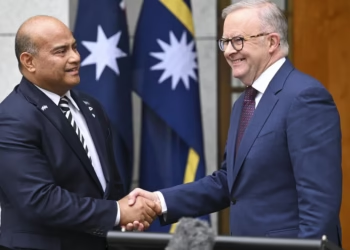
    Nauru’s Parliament has passed a constitutional amendment supporting a return from Nauru to “Naoero”, starting a national referendum process. The government acknowledged that the name Nauru emerged because Naoero could not be properly pronounced by foreign tongues and was changed not by their choice, but for colonial convenience. That statement alone should resonate deeply with us in Kiribati. Their leaders did not treat this conversation as emotional or symbolic nonsense. They treated it seriously, constitutionally, intellectually and nationally. They brought it into Parliament. They debated and secured the votes required. They are now preparing to allow the people themselves to decide through referendum. This is exactly how a mature nation approaches questions of identity and decolonisation.

    I hope we in Kiribati can now begin taking this conversation more seriously too. We need a brave Member of Parliament to table a motion in the Maneaba ni Maungatabu to formally begin a national discussion on reclaiming Tungaru. I understand that the government is dealing with many urgent and pressing national issues. But I humbly hope that Cabinet or the President, can consider this plea and gradually bring the conversation to the forefront of national dialogue.

    That process could involve constitutional review committees, consultations with unimane, church leaders, historians, educators, youth groups and island councils, eventually leading to a national referendum so the people themselves can decide whether we continue carrying the colonial shadow of Thomas Gilbert or reclaim a name rooted in our own identity and history.

    I am not an expert in constitutional reform or decolonisation processes, but I know this much: the conversation needs to begin, and the process needs to be set in motion. Whether one agrees or disagrees with the idea, the important thing is that the discussion deserves to happen seriously, respectfully, democratically and nationally.

    Decolonisation has never been easy or comfortable. It demands boldness, honesty and the willingness to challenge things that previous generations normalised. Perhaps the first meaningful step in any genuine decolonisation and national development effort is simply correcting who we are first.


    Source link

    Related Posts

    List Of 10 Least Forested Countries In The World [2026]
    Nauru

    List Of 10 Least Forested Countries In The World [2026]

    June 11, 2026
    Subscribe to The Australian | Newspaper home delivery, website, iPad, iPhone & Android apps
    Nauru

    Subscribe to The Australian | Newspaper home delivery, website, iPad, iPhone & Android apps

    June 11, 2026
    Next Post
    Espot expects the deal to be unlocked “in the coming weeks”

    Espot expects the deal to be unlocked "in the coming weeks"

    POPULAR NEWS

    77 members of the Iraqi parliament infected with AIDS?

    77 members of the Iraqi parliament infected with AIDS?

    June 11, 2026
    Al-Quds newspaper

    Al-Quds newspaper

    June 11, 2026
    Al-Azq River offers a tranquil natural retreat in Syria’s Tartous countryside

    Al-Azq River offers a tranquil natural retreat in Syria’s Tartous countryside

    June 11, 2026
    Everyone turned and looked at the 6-line banner hung by women.

    Everyone turned and looked at the 6-line banner hung by women.

    June 11, 2026
    Gulf News | The Southern Governor meets with heads and officials of funerals in the governorate and praises the Minister of Interior’s keenness to make the Ashura season a success

    Gulf News | The Southern Governor meets with heads and officials of funerals in the governorate and praises the Minister of Interior’s keenness to make the Ashura season a success

    June 11, 2026

    EDITOR'S PICK

    A group of Brazilian tourists were fined for entering a prohibited area of ​​the Nahuel Huapi National Park

    A group of Brazilian tourists were fined for entering a prohibited area of ​​the Nahuel Huapi National Park

    June 11, 2026
    Pécs Zsolnay Quarter Celebrates Women of Art Nouveau with Spectacular Events

    Pécs Zsolnay Quarter Celebrates Women of Art Nouveau with Spectacular Events

    June 11, 2026
    ‘A lot of renewable energy is being wasted’: Electricity rules that favour Ireland-Britain power lines are criticised – The Irish Times

    ‘A lot of renewable energy is being wasted’: Electricity rules that favour Ireland-Britain power lines are criticised – The Irish Times

    June 11, 2026
    Tayibat diet: breeders dismiss its involvement in the fall in chicken prices

    Tayibat diet: breeders dismiss its involvement in the fall in chicken prices

    June 11, 2026

    Recent Posts

    • 77 members of the Iraqi parliament infected with AIDS?
    • Al-Quds newspaper
    • Al-Azq River offers a tranquil natural retreat in Syria’s Tartous countryside
    • Everyone turned and looked at the 6-line banner hung by women.

      © 2026 Agentially - Navigating shifting sovereignties and global risk .

      Welcome Back!

      Login to your account below

      Forgotten Password?

      Retrieve your password

      Please enter your username or email address to reset your password.

      Log In
      No Result
      View All Result

        © 2026 Agentially - Navigating shifting sovereignties and global risk .

        This website uses cookies. By continuing to use this website you are giving consent to cookies being used. Visit our Privacy and Cookie Policy.