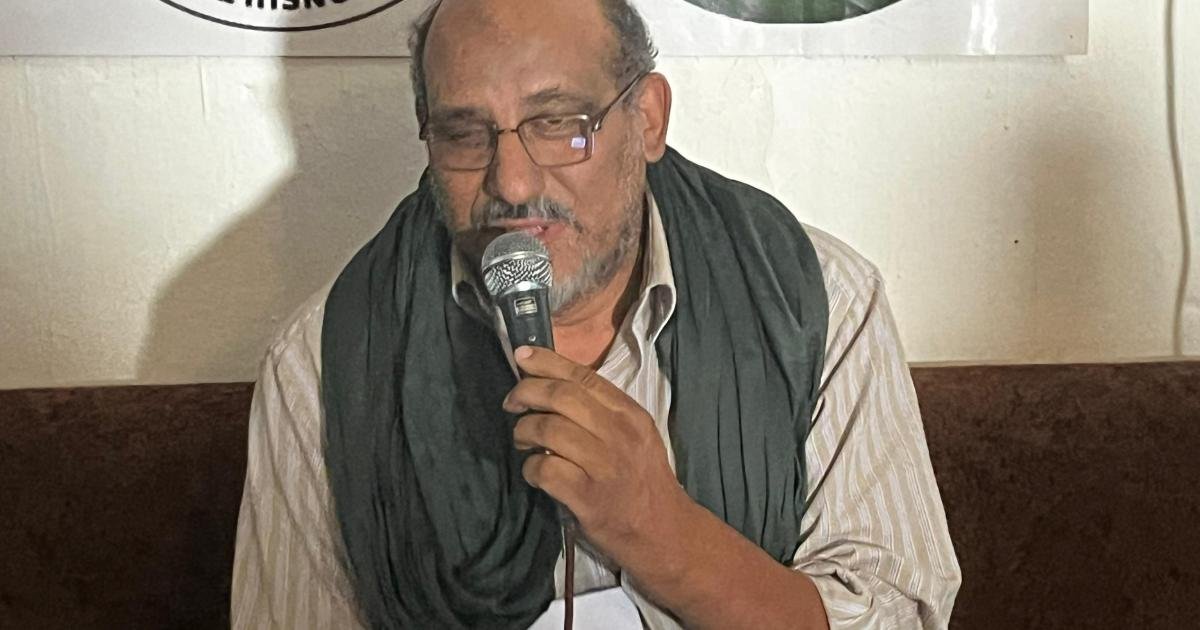
Awsard Province, June 23, 2026 (SPS) – Today, Tuesday, the Central Director of Personnel and Social Affairs at the Ministry of Personnel, Public Service and Administration Promotion, Filli Baraka Bouzid, gave a lecture on “The Structural Organization of the National Administration within Government Institutions,” during the National Administration Symposium.
The lecturer highlighted the administrative and functional relations that link the central agencies with their regional and local extensions, presenting, on the occasion, a model proposal for organizing the management of the central structure for managing human resources.
Fali Baraka emphasized that organizing administration and controlling its process inevitably passes through the gateway to the structural organization of institutions, as it is the effective tool for arranging jobs, defining responsibilities, and drawing lines of administrative relations, as well as limiting tasks and powers and distributing them accurately and rationally.
He highlighted that the Sahrawi state attached great importance to codifying administrative and structural work, citing several presidential and executive regulations and decrees issued in this regard to control all organizational structures in the Sahrawi state.
The lecturer reviewed the central structures of a specialized nature, which are entrusted with the main tasks of following up and implementing specialized programs.
In a reading of how government programs reach the citizen, the lecture discussed the structures that must be organized in the form of extensions, stressing the necessity of classifying them according to the horizontal or vertical projection (or both together) up to the last administrative circle responsible in the field for implementation and follow-up.
The intervention formed a fertile ground for discussion among the attendees, as the participants agreed that activating these regulatory frameworks, structural plans, and decrees issued by the state is the real safety valve for developing and modernizing the management of human and material resources, in a way that serves the citizen’s steadfastness and keeps pace with the current stakes of the battle of liberation and construction. (Was)