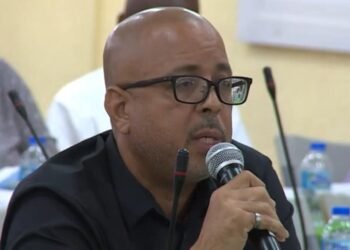

Independent Candidate Gregor Nassief has called on Dominica’s Electoral Commission to address what he described as serious shortcomings in the country’s electoral system ahead of the next general election. Speaking to members of the media on Friday at the launch of his political candidacy for the Mahaut Constituency at his campaign office in Mahaut, Nassief identified three areas requiring urgent attention, including restrictions on voter transfers, the processing of new registrations and the management of multiple voters’ lists.
He expressed shock and concern over the suspension of transfers throughout the year-long voter confirmation exercise, arguing that the process verified whether individuals intended to vote in a particular constituency without establishing whether they continued to reside there. According to Nassief, individuals who had relocated to other communities were unable to transfer their registration during the confirmation period, despite being advised by the Electoral Office that applications could be submitted once the exercise concluded. He said applicants were subsequently informed that their transfers would not take effect until September 2027, effectively leaving some electors without representation in the constituencies where they currently reside for approximately 24 months.
Nassief stated: “Now the electoral office told everyone that once the confirmation process was over, they could apply for a transfer.
The electoral office has then said publicly that your transfer does not become effective until September 2027.”
He then added: “Okay. So a person’s democratic right of representation has effectively been suspended for 24 months and that is absolutely unacceptable.”
Nassief described the situation as an unacceptable restriction on democratic participation, maintaining that voter registration and transfers should remain continuous processes. He argued that representative democracy requires citizens to elect representatives who are accountable to the communities in which they actually live. Citing what he described as widespread discrepancies between voters’ registered constituencies and their current places of residence, Nassief noted that Electoral Commission Chairman Duncan Stowe, for example, resides in Roseau South but remains registered to vote in Mahaut.
He stressed that the transfer process exists to address precisely such circumstances and rejected the characterization of the current arrangements as electoral modernization. Nassief urged the Electoral Commission to introduce a 30-, 60- or 90-day window during which affected voters could regularize their registration and transfer their votes to the appropriate constituencies before the next election.
The independent candidate also questioned the arrangements governing individuals who apply to register shortly before the issuance of an election writ. He explained that under the existing legal framework, someone who submits a registration application and receives a receipt one day before the writ is issued may not appear on the official voters’ register in time to participate in the election, since the application has not yet been approved.
Nassief pointed out that the law provides for a 10-day period for the preparation of a supplementary list following the issuance of the writ, arguing that the administrative process should be organized to ensure eligible applicants are not unnecessarily excluded from participating in the electoral process. He maintained that individuals who submit their applications before the writ is issued should be afforded an opportunity to have their registrations processed in time to exercise their democratic rights.
His third concern centred on the existence of multiple electoral lists, including supplementary, registration and transfer lists, which he believes complicate the administration and efficiency of the voting process. Nassief indicated that the Electoral Commission had approached the Attorney General regarding proposed legislative changes to facilitate the establishment of one consolidated electoral list.
He argued that the three issues must be addressed before the next general election, calling for an electoral system that allows timely voter transfers, ensures eligible applicants can participate in elections and operates through a single, integrated register. He maintained that these changes are necessary to strengthen public confidence in the electoral process and ensure citizens can exercise their right to choose representatives in the constituencies where they reside.