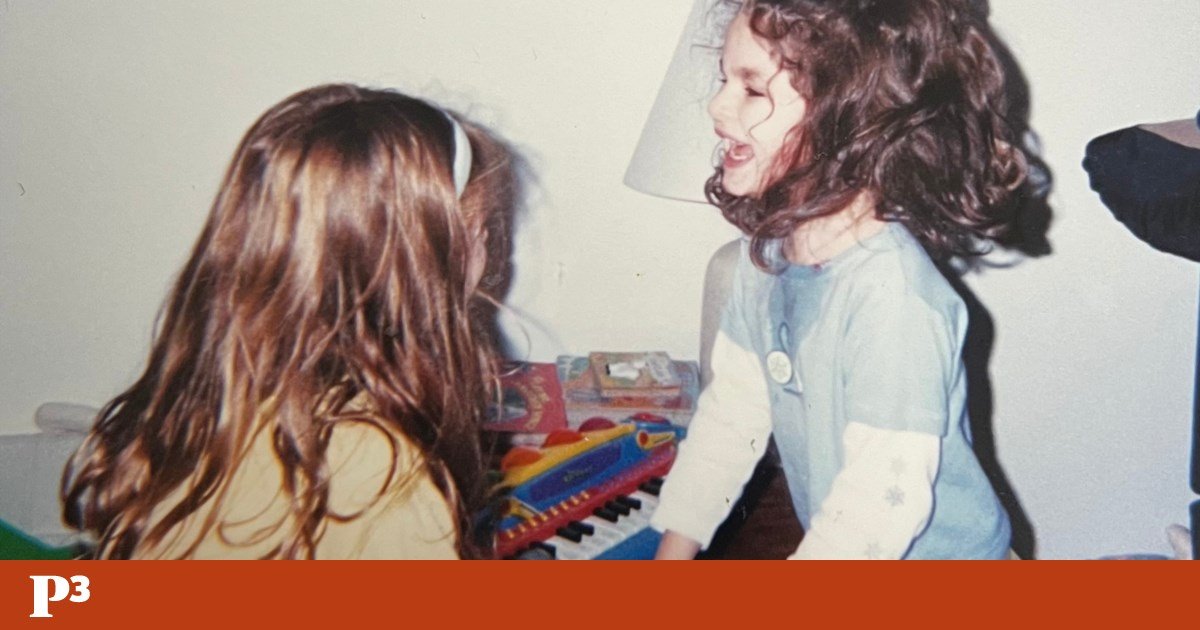
From a young age, I realized that my connection with my sister was fundamental and profoundly different from the relationships that my peers had with their brothers. Skye, who is two and a half years younger than me (we’re 31 and 28), is on the more severe end of autism spectrum disorder (ASD). This means you need very substantial support, i.e. 24/7 care.
Skye is non-verbal, although this term can have different meanings even among clinicians and researchers specializing in autism. In large part, this happens because there are no universal clinical guidelines that define exactly what qualifies a person as nonverbal.
“It’s a mess,” says Catherine Lord, professor of Psychiatry and Education at the David Geffen School of Medicine at UCLA, whose work focuses on autism and related disorders.
Part of the confusion is that some people who can say a small number of words continue to be classified as nonverbalalthough the term minimally verbal may be more appropriate, explains Lord. Some disability rights advocates also argue that the term “non-speaking” is more accurate since it refers to speech and not other vocal sounds or vocal stimulation, a common self-regulation technique among autistic people which involves the repetitive production of sounds or noises.
In Skye’s case, when she was a child she used to vocalize sounds like “mamama” or “dadada”, but as she grew up, these signs of speech gave way to audible moans, grumbles and sighs.
Recently, one of my friends asked me, “How do you relate to Skye if she can’t talk?” I thought, well, that’s easy—there are a lot of things we do together that naturally don’t require a lot of verbal communication. I had the privilege of growing up with her and, as far as I know, learning what she needs through her body language and facial expressions.
But for someone who hasn’t had this experience, it can be difficult to imagine how this type of connection is possible.
“Much of the way we relate to people is through words,” says Walter M. Zahorodny, a pediatric psychologist at Rutgers New Jersey Medical School who tracks the prevalence of autism in the New Jersey Autism Study. Without words, it becomes more important to establish a connection through “non-linguistic means, techniques or interactions”, he added. “Sometimes it’s difficult to understand subtle signs or clues, but if you spend time with the person and are receptive, I think they will guide you themselves.”
After speaking with these experts, I realized that this was exactly what I had been doing my whole life without even thinking about it.
While I may never know for sure whether our time together is as meaningful to her as it is to me, these are some of the things we do to strengthen our connection, without either of us needing to say a single word.
Tours focused on sensory stimulation
When I go home to Columbus, Ohio, one of my favorite things to do with Skye is taking her for a walk just with me. For years, our shared activity was going to the Polaris Fashion Place shopping center at off-peak times so she wouldn’t feel overstimulated by the crowds and large numbers of people.
We bought an iced green tea from Starbucks with some lemonade and walked, hand in hand, at our own slow, comfortable pace.
I usually go into a few stores with her, especially those that have soft blankets on display or other opportunities for sensory stimulation. At Bath & Body Works, I carefully remove the lids from the candle jars so she can smell each scent.
I can tell by the way she furrows her eyebrows when she doesn’t like the candle I’ve chosen for her to smell. In these moments, I try to acknowledge this reaction by gently squeezing his shoulder or letting out a small laugh, showing him that I understand that the scent is not one of his favorites.
In addition to simply acknowledging the person’s emotions, Paige Siper, chief psychologist at the Seaver Autism Center for Research and Treatment in New York, also recommended praising specific behaviors that make us feel connected to our family member. “For example, if you exchange glances, even for a moment, you can say: ‘I love it when you look at me.’ Or, if the person makes any sound: ‘I love hearing your voice!’ Or recognize moments of joy: ‘I love seeing your smile!’”, he explains.
When Skye and I go on these walks, I also make a point of showing her, through my body language and facial expressions, that I’m having a great time, because I’m not always sure that verbal descriptions resonate with her.
Watch your favorite shows and movies together
Some of my closest relationships are with people I can sit next to without saying a word. I’ve always loved watching movies with my parents and Skye, so when she comes home after a long, busy day at the center she goes to, I know that the last thing she wants to do is another mentally or emotionally demanding activity, like going for a walk.
In those moments, it seems best to sit quietly next to her on the couch while she rocks in her cushioned reclining chair—something I know calms her and helps regulate her nervous system.
“Sometimes we feel better if we talk, but often we talk too much,” says Lord, adding that minimally verbal or nonverbal people don’t always want to connect through conversation in the way that neurotypical people hope. One of her patients, a man in his 30s who is minimally verbal, prefers to express himself through facial expressions because speaking requires significant effort. “For him, talking is work,” Lord explained. “Whereas, for me, speaking is a way of expressing what I feel.”
For people like this patient and like Skye, talking is not always the main way to show that they are present, that they care, and that they enjoy spending time with someone. “Even if you’re both looking at the same thing and you both like it, that counts,” he says.
Help her with personal care
One of my favorite ways to connect with Skye is to help her overcome mobility limitations that prevent her from caring for herself independently. She also has cerebral palsy, so she needs help combing her hair, washing her face, brushing her teeth and getting dressed, for example.
Growing up, these small acts of help seemed completely natural to me and, honestly, I didn’t even think about it much. Now, as an adult, I look forward to these moments when I can return to old routines and help her choose her clothes or decide on her hairstyle for the day.
Something Siper said had a special impact on me: “Brief moments of connection are incredibly powerful and can be unpredictable or inconsistent.” When I’m sitting next to Skye on the couch, I occasionally hold out a glass of water and hold it while she takes a sip, which may be one of the briefest interactions we share. I do it spontaneously, without any specific pattern, except when she shows me that she wants to drink more, gently touching my hand.
Over the years, I’ve learned that I can often tell when she needs something, even if I can’t verbalize it. And in these small, simple, natural moments, I feel like we are truly on the same page.
Exclusive PÚBLICO/The Washington Post