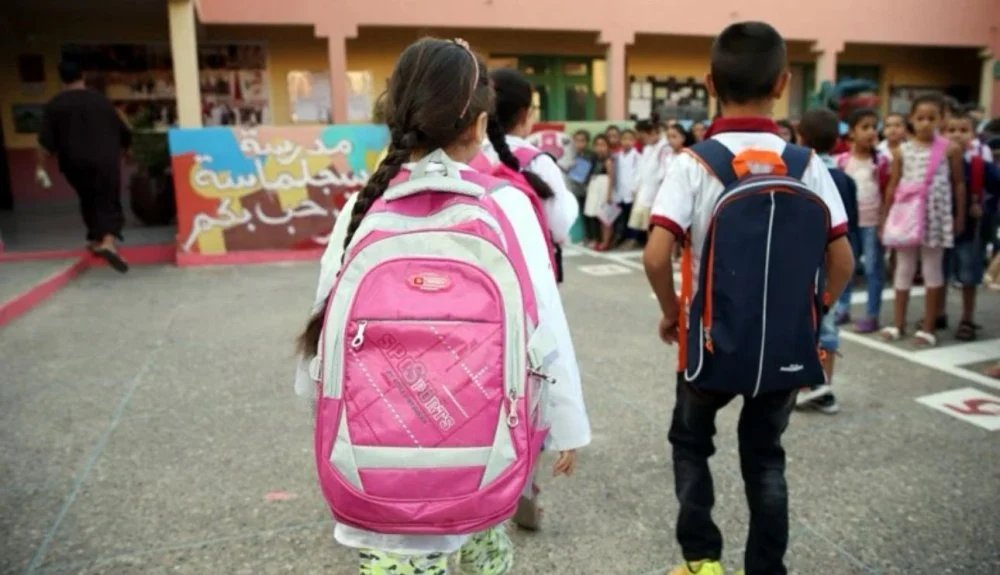
THE Morocco remains faced with a high level of school dropout despite the reforms undertaken. This is the observation made by UNICEF Morocco in its annual report published in April 2026, which reports nearly 280,000 students having left school in 2025.
Developed in partnership with the Ministry of National Education, Preschool and Sports, the report underlines that school dropouts no longer only concern the most precarious environments. It also affects intermediate categoriesunder the combined effect of economic constraintsof sociocultural factors and limits linked to the quality of the school environment. THE girls remain the most exposed, particularly in rural and peri-urban areas, where obstacles to pursuing studies remain structural.
In this context, UNICEF Morocco, in coordination with the ministry, has structured a dropout prevention model included in the 2022-2026 roadmap. This model is based on a combined intervention logic: individualized monitoring of students at risk, improvement of learning conditions within establishments and involvement of local stakeholders, particularly families and communities. Concretely, it relies on tools developed by the organization, such as management guides for school leaders, educational materials for teachers and social innovation programs aimed at young people, aimed at strengthening their academic engagement and skills.
The experiments carried out in the regions of Béni Mellal-Khénifra, Tangier-Tétouan-Al Hoceima and the Oriental allow us to measure the first effects. More than 5,523 young people participated in the activities put in place, the majority of which were girls. In some establishments, the dropout rate was reduced to 0% during the 2024-2025 school year, reports the UN organization. These results are attributed, according to the report, to approaches based on participation between students, anchoring in the local fabric and coordination between the different stakeholders.
The report also reviews the actions taken in terms ofeducational inclusion. In 2025, UNICEF Morocco has developed, with its institutional partners, tools intended to facilitate the integration of migrant and refugee children, in particular through language transition supports and adapted reception guides. Around thirty trainers were mobilized to support the deployment of these systems in several regions.
The improvement ofs school infrastructure constitutes another area of intervention. In areas affected by the 2023 earthquake, seven establishments were rehabilitated with the support of UNICEF, integrating water, sanitation and hygiene services that meet current standards, as well as arrangements taking into account accessibility and the specific needs of students. These interventions have benefited more than 3,300 studentsincluding 1,662 girls and 1,694 boys, she proves in figures.
Finally, the report emphasizes preparation of the education system to emergency situations. UNICEF Morocco has developed, in collaboration with educational authorities, a kit intended for teachers and supervisors, including educational tools and psychosocial support modules. This device is currently being finalized.
In view of the results observed in the pilot areas, the organization recommends integrating these approaches into public policies at the national level. She emphasizes that sustainable reduction of school dropouts depends on coordinated action, combining financial resources, continuity of reforms and involvement of local actors.