Switzerland rejected this Sunday in a referendum to impose in its Constitution a cap of 10 million people to the country’s population on the horizon of 2050. The initiative of the Swiss PP (SVP/UDC in its German and French acronym), the largest party in the country (with 30% of the seats in Parliament) and defender of a markedly anti-immigration and asylum program, has deeply divided a society that has experienced accelerated growth in the last two decades, going from 7.5 million people to 9.1 million. This increase in population has largely occurred due to the entry of EU citizens thanks to the free movement of people agreement agreed between Switzerland and the EU.
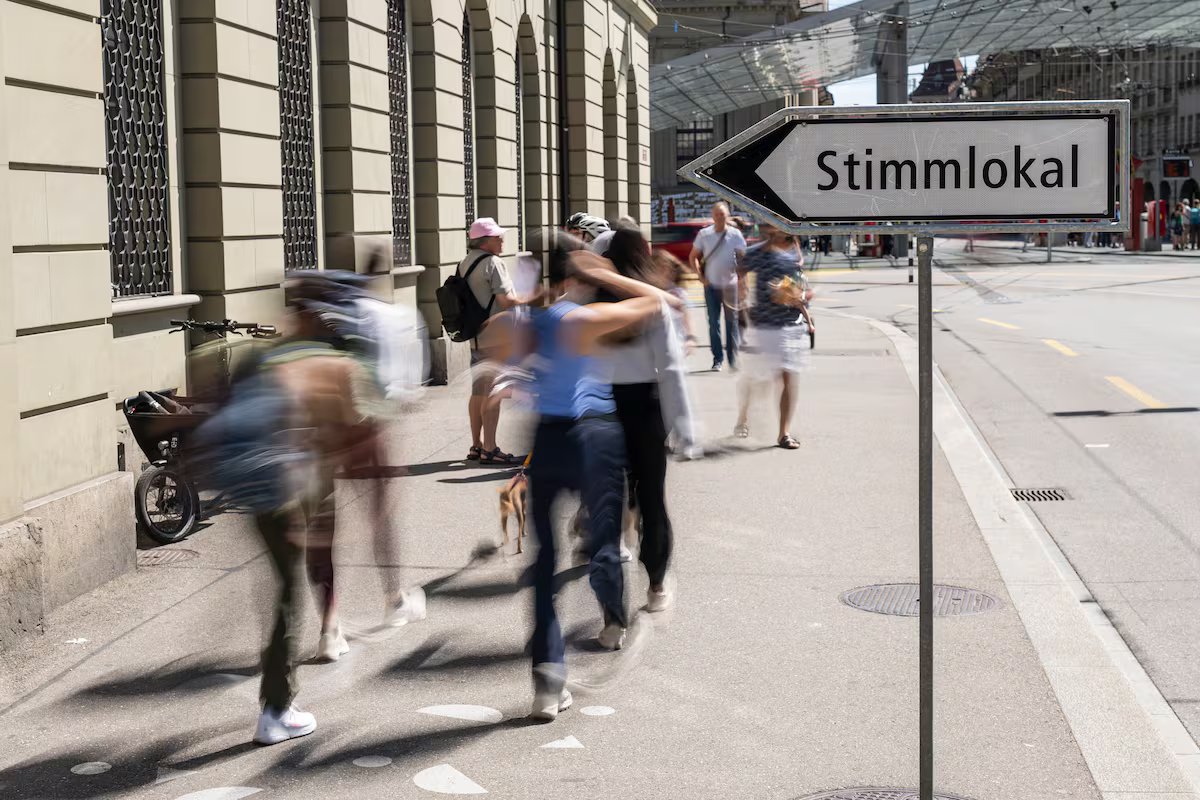
54.8% of voters have rejected the idea of putting a lock on the number of inhabitants to stop the entry of migrants, compared to 45.2% who have supported it, according to data from the scrutiny, which has already been completed. The proponents have admitted defeat. If the measure had been successful, Switzerland would have become the first country to establish a maximum population figure through constitutional means.
Thanks to bilateral agreements with Brussels, Switzerland has access to the single market, although it is not part of the European Union. With an economy that demands workers, especially qualified ones, more than one million people from the EU have entered the country since 2002. The foreign population represents 27.6% of the total; and, of them, 67% are community members.
The populist proposal put the relationship with Brussels at risk because, ultimately, it required a break with the free movement of people in the community bloc. Voters, in the end, have opted to maintain this link and its model of economic stability, in which immigrant workers are considered essential to continue growing. The EU is also Switzerland’s main trading partner and the destination of 50% of its exports.
The leadership of the SVP/UDC, meeting in a hotel in Aarberg, in the canton of Bern, received with long faces the first projections of a referendum that was predicted to be much closer. National deputy Thomas Matter, the main promoter of his party’s initiative, declared himself “disappointed”, while highlighting that “you cannot ignore” that 45.2% of the population that has supported it.
On the opposite side, the rest of the parties, unions and employers breathed a sigh of relief. The co-president of the Swiss Socialists (SP), Cédric Wermuth, declared in Bern to the newspaper blick that “the population does not want this type of division.” He also recalled that the Swiss have always blessed the bilateral path with Brussels at the polls.
The right launched the proposal with arguments attached to everyday problems, such as the shortage of housing at affordable prices, the burden of trains full of people, traffic jams and the advance of concrete on green surfaces, a way to give an ecological touch to what they called “sustainability initiative.”
He thus convinced a part of the population beyond its bases. At first, with a campaign of families in alpine landscapes ideal to not scare away potential voters, but it ended with some xenophobic advertising posters against refugees, to the taste of the most ultra supporters who are also in the party.
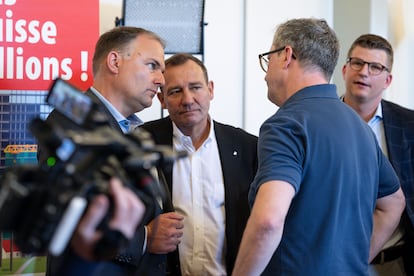
The no campaign, which baptized the populist plan as a “chaos initiative,” stressed that establishing a population limit would not solve the problems. problems that concern part of the Swiss. On the contrary, they argued: it would mean pillorying the relationship with Brussels at a time of turbulence and attacks by Donald Trump on Europe and specifically on Switzerland, which is still negotiating the fine print of an agreement with the United States that lowers tariffs that started at 39% to 15%, a blow that left last August in shock to the country.
Furthermore, sectors such as gastronomy or healthcare are clearly dependent on the foreign workforce, which accounts for around 35% of the total. Medical and caregiver entities have warned these days against blocking immigration in an increasingly aging population. Foreign workers are “vital” for companies and for the status of a leading economy in innovation, the Economiesuisse employers’ association has also insisted.
However, from parties to business associations, it is recognized that there is discomfort among many Swiss due to the accelerated demographic growth of recent years—among the largest on the continent—and that political responses must be given to the problems of housing or services in need of resources. The result of the referendum is a wake-up call for many citizens, although the majority did not see this proposal to limit the population as a way to address the problems caused by heavy immigration.
“The Federal Council (the Government) takes seriously the citizens who have voted yes to the initiative,” said the head of Justice, Beat Jans, with the result already defined after a high participation, 58.8%. Bern has launched projects for the housing and infrastructure sector, and will study whether further measures are necessary, Jans said. The Government, a collegiate body that acts by consensus and in which the main parties are represented (including the one that proposed the now discarded measure), recommended rejecting the popular plan and sees in the result “a sign of stability, openness and reliability”, especially in “times of geopolitical instability.”
It also occurs at a time when Parliament is discussing a new framework agreement with Brussels to update existing bilateral pacts. In this context, Commission President Ursula von der Leyen wrote in X that “the Swiss people have spoken” and that “the EU and Switzerland maintain close ties and a solid collaborative relationship.”
The populist right has warned that failure at the polls will not change its strategy against immigration that it considers uncontrolled. “It is a party that knows how to detect people’s problems. The population has increased considerably and absorbing that growth is a challenge that is increasingly noticeable,” argued Daniel Kübler, political scientist and researcher at the University of Zurich, shortly before the vote.
On the other side of the scale it has weighed that “Switzerland has benefited enormously from immigration.” “The birth rate has fallen to its lowest level in history (1.29). And, in that sense, the incorporation of labor into the labor market is extremely important. And, yes, it is essential in certain areas,” added Kübler.