“Kommersant” continues to talk about the main events in party life and how they may affect the results of the autumn elections to the State Duma. The main heroes of the past party week were two late politicians: Vladimir Zhirinovsky and Vladimir Lenin. Thanks to the first, the LDPR demonstrated to voters its importance in the modern political system and “support from above,” and the legacy of the second gave rise to an unexpected discussion about the communists’ commitment to the ideals of revolution and Marxism-Leninism.
Last week was marked by two dates of particular political significance: April 22 marked the 156th anniversary of the birth of Vladimir Lenin, and April 25 marked the 80th anniversary of Vladimir Zhirinovsky. According to the scale of the celebrations, the anniversary of the late founder LDPR (despite the scattering of news stories and documentaries on the main federal television channels) was, of course, incomparable with the celebration of even non-round anniversaries of the creator of the Soviet state during the USSR. But in the realities of modern Russia, Vladimir Volfovich clearly surpassed Vladimir Ilyich.
The exhibition “Zhirinovsky. Continuation. LDPR” became one of the main political events of the month immediately after the opening, and the Liberal Democrats saved several “desserts” for the last days of the exhibition. In particular, visitors were presented with previously unpublished political forecasts of Mr. Zhirinovsky and the third edition of his works in 50 volumes, and the party leadership announced the launch of the educational and personnel project “Zhirinovsky School.” Well, the highlight of the program was Vladimir Putin’s visit to the exhibition. True, the president refrained from making public assessments, but many experts regarded his very arrival as a signal of the special importance of the LDPR in the party and political system of Russia.
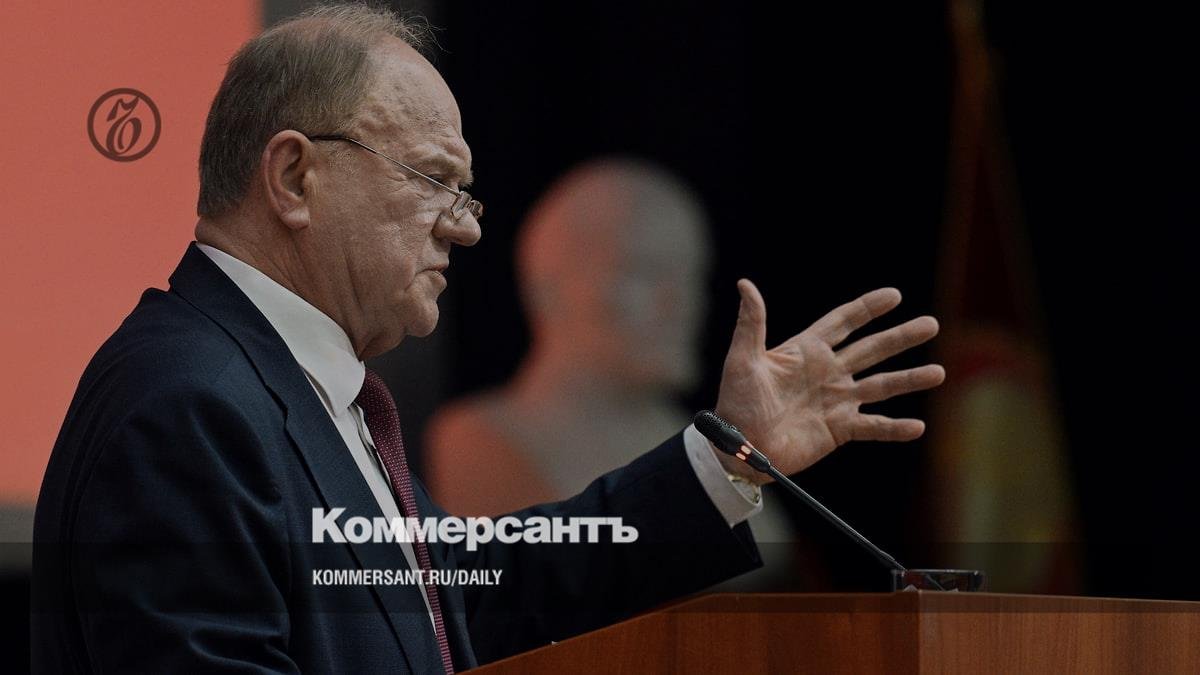
The competitors of the Liberal Democrats in the struggle for the title of “main opposition force” also tried to celebrate their memorable date to the maximum, but they had fewer opportunities. Even traditional ones Communist Party of the Russian Federation It was not possible to hold rallies everywhere. But the Communists worked well on the “Leninist agenda” at the plenum of the Central Committee, where party leader Gennady Zyuganov made a report on the pre-election “Victory Program”. However, outside observers remembered much more his speech in the State Duma, in which the leader of the Communist Party of the Russian Federation mentioned blogger Victoria Bonya with her sensational video message to the president and unexpectedly declared that “we have no right to repeat” what “happened in 1917.” The fact that Mr. Zyuganov spoke not about the October, but about the February Revolution, commentators “did not notice” and readily speculated about the departure of today’s communists from the precepts of Marxism-Leninism.
Of the other parties, it worked most actively on election issues “United Russia” (ER). First, United Russia Chairman Dmitry Medvedev gave a keynote speech at a large municipal forum, setting goals for local politicians for the upcoming elections. Then, Secretary of the United Russia General Council Vladimir Yakushev reported on the “record activity” of Russians during the start of voter registration for the internal party primaries (3.5 million people in three days). And at the end of the week, United Russia held a retreat of their faction in the State Duma, at which they approached the president with a proposal to restructure budget loans to the regions in 2026. In addition, sociologists spoke to the deputies, who explained the difference between the assessments of different pollsters and shared an optimistic forecast for United Russia.
“A Just Russia” At the beginning of the week, she finally officially confirmed that she had nominated her fellow party member, head of the Duma Committee for the Development of Civil Society, Yana Lantratova, to the post of Commissioner for Human Rights in the Russian Federation. And, judging by the unanimous support of her candidacy from United Russia, the outcome of the vote scheduled for mid-May can be considered predetermined. Well “New People” They were only noted for their next sociological successes, continuing to increase their lead (according to VTsIOM) over their competitors in the fight for second place in the 2026 State Duma elections.
Legislative policy
The current work of the State Duma, as usual, has given parties additional opportunities to defend their program positions.
United Russia One of the main achievements of the past week was the law initiated by them on behalf of Dmitry Medvedev on the launch of a three-year experiment with the use of mobile pharmacy points on September 1. One such pharmacy will be able to serve up to 50 settlements. Also, deputies from United Russia (UR) voted for the adoption in the first reading of two important government initiatives on the regulation of digital currency and supported in the second and third readings another government document – on the creation of a new gambling zone in the Altai Republic.
When discussing inter-factional amendments to the electoral legislation, the opponents were communistswho unsuccessfully tried, among other things, to defend the right to use the image of Vladimir Lenin in propaganda. And the Liberal Democrats failed to pass their bill on liability insurance for owners of dangerous dogs.
Another popular way for voters to indicate their party priorities is to introduce new projects.
EP last week was marked by two such initiatives: on mitigating the personnel shortage in the fire service by sending conscripts there and on the abolition of fines for failure to provide “zero” income declarations. In addition, United Russia initiated an inter-factional bill on writing off loans to citizens signing a contract to participate in the SVO.
The opposition, on the other hand, habitually focused on topics that were understandable to its voters. So, Communist Party of the Russian Federation proposed to allow children of Russians to travel to fraternal Belarus without a passport and prohibit foreigners from owning land. “A Just Russia” advocated reducing insurance premiums for small and medium-sized businesses from 15% to 10%. A “New People” introduced an amendment allowing graduates to retake two Unified State Examinations instead of one.
“United Russia” (ER) continues to demonstrate its usefulness for voters and reliability as a political support and partner of regional authorities. United Russia suggested that the president restructure budget loans to the regions and allocate funds for social support: an attractive move for governors and that part of the population that needs such support. And the law on the right of spouses of deceased SVO participants to enter universities and colleges without exams once again allowed United Russia to emphasize that it plays the role of an instrument for solving the tasks set by Putin. But if current socio-economic problems and unpopular actions of individual government structures lead to a situational decrease in the government’s rating, then the United Russia is also the first to play the role of a natural lightning rod.
LDPR continues to cling to the image of Zhirinovsky. Vladimir Putin’s visit to the exhibition in memory of the party founder became the main event of the week for her. The signal is received and read by everyone. If Putin’s kind words were also addressed to the modern LDPR, then everything would be even cooler for it. But the best is the enemy of the good, and United Russia was and remains Putin’s party.
U Communist Party of the Russian Federation The highlight of the week was Zyuganov’s speech in the State Duma about the threat of a new October, the undesirability of the revolution and the role of Victoria Boni as the loudest voice. The speech generated a lot of comments, but this is a case where the leader’s quotation did not benefit the party. At the same time, the communists published a selection of Zyuganov’s harshest statements at the April plenum of the Central Committee of the Communist Party of the Russian Federation under the heading “The country is not a penal battalion!” This is not only a serious bid to tighten the rhetoric, but also a designation of the thematic lines of the campaign, an attempt to expand the electoral niche at the expense of the notorious “angry citizens.”
“New People” during the week they fought against harmful addictions and continued to explain the advantage of evolutionary changes over loud slogans. But, frankly speaking, it is difficult to single out anything from their activities in recent days. “A Just Russia” once again proposed freezing housing and communal services tariffs until an inventory of the state of networks and returning state control over natural monopolies in housing and communal services. Socialist-Revolutionaries return to their roots and eternal themes, but their effectiveness is not so high. However, the party is also in search of something new and hype: here I would highlight the proposal of deputy Alexander Aksenenko to ban the use of electric scooters by minors. The topic is resonant, many would support it.
Crisis of content—with these words I would describe the general situation for Russian parties that emerged this week.
Primary “United Russia” left the news focus. The very fact of their holding was an “event of the day” only at the moment of their start. There were no news sources “inside” the primaries. For LDPR The effect of the celebration of Zhirinovsky’s 80th birthday turned out to be more short-term than observers expected, and today it is almost exhausted. This means that the question of the party’s search for a new subjectivity, postponed for four years thanks to the charisma of the late party leader, is on the agenda. Finally, the leader’s speech Communist Party of the Russian Federation Gennady Zyuganov’s speech in the State Duma about the danger of a repeat of 1917 not only attracted attention to the party, but also made it clear that the communists would build their election campaign on an openly protest agenda.
U “United Russia” There were two bright events this week. The first is a meeting of the party chairman with United Russia members—participants of the municipal forum: a conversation with the heads of municipalities plus joining the president’s agenda. The second was a faction meeting on the eve of the regional week, at which United Russia members turned to the head of state with a request to restructure the regions’ debts. Other topics include party ratings, preliminary voting, reporting forums.
LDPR became an indirect beneficiary of government events in connection with Zhirinovsky’s 80th birthday. On the one hand, there is a positive in the form of high media exposure, on the other hand, there is the obvious question of what the LDPR is without Zhirinovsky. U Communist Party of the Russian Federation the entire media agenda was built around the next plenum. One interesting thing is an attempt to become a party of the Northern Military District. A “New People” remained the main beneficiaries of the discussion of the growing party ratings. Separately, it is worth noting the successful campaign in non-political segments of social media.