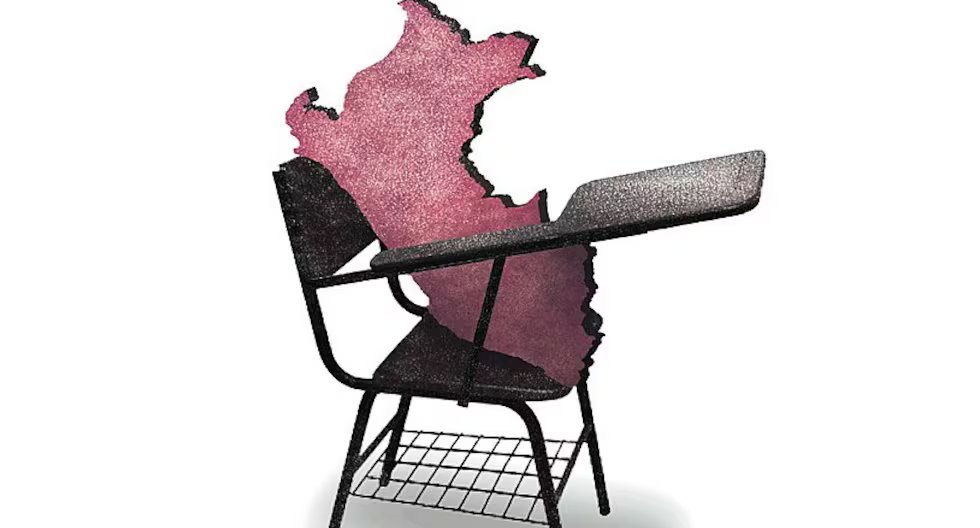

The OECD confirmed that 15-year-old Peruvian schoolchildren regressed 18 points in reading in PISA 2025. The Minedu, in a report, recalled that this generation experienced the closure of schools between the ages of 10 and 11. But stopping there would be confusing context with explanation.
READ ALSO
The OECD confirmed that 15-year-old Peruvian schoolchildren regressed 18 points in reading in PISA 2025. The Minedu, in a report, recalled that this generation experienced the closure of schools between the ages of 10 and 11. But stopping there would be confusing context with explanation.
I reviewed the OECD microdata and the Minedu evaluations. These students achieved, in 2019, a good result in the ENLA in fourth grade and, in 2023, when they were in second grade, their results did not drop. The drop appears later and did not hit the poorest: according to the OECD, the quintile with the greatest resources lost 21 points.
What changed? In the students’ questionnaire it is observed that those who missed school without justification increased from 28% to 39%; those who dedicate more than two hours a day to their tasks fell from 64% to 52%; and those who suffered some form of harassment rose from 43% to 56%. To measure how much these changes weigh, I applied an Oaxaca-Blinder decomposition, which separates out how much of a gap is due to changes in group characteristics. The result: fewer hours of study, more time on screens and more absenteeism accompany about half of the decline in reading: 9 of the 18 points. It doesn’t prove causality, but it points out where to start.
It is time to look to the future and design an education system based on the needs of students. The tests are a diagnosis to act: more reading, safe schools, modern methodologies and development of 21st century skills. Let’s start measuring to change.