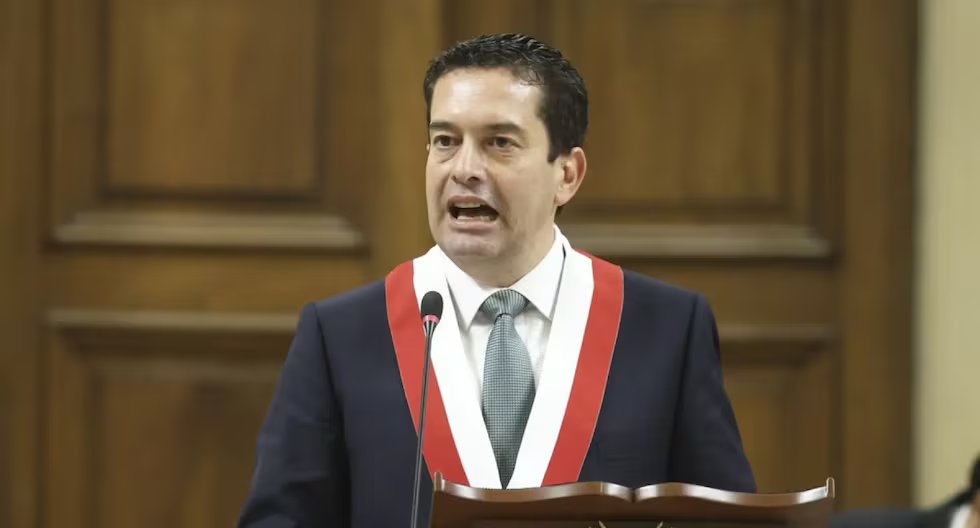

The president of the Congress of the Republic, Michael Torres Morales, stated that the procedure for sending the signature of the law of delegation of powers to the Executive power It was carried out in accordance with the Political Constitution and the Senate Regulations, in response to questions about the document being signed only by this chamber.
The president of the Congress of the Republic, Michael Torres Morales, stated that the procedure for sending the signature of the law of delegation of powers to the Executive power It was carried out in accordance with the Political Constitution and the Senate Regulations, in response to questions about the document being signed only by this chamber.
Through a publication on his account on the X platform, Torres maintained that the autograph was signed and sent to the Executive for its promulgation within the current regulatory framework.
“The signature of the law of delegation of powers was signed and sent to the Executive Branch for its promulgation, in accordance with the Political Constitution of Peru and the Regulations of the Senate. “The procedure followed is within the current regulatory framework.”he pointed out.
The statement came after the president of the Chamber of Deputies, Oscar Retoquestioned the procedure and sent a letter to Torres in which he recalled that Congress is made up of both the Senate and the Chamber of Deputies.
In the document, Reto maintained that what happened with the autograph “does not formally respond to the manifestation of the will of Congress nor to the constitutional framework provided”. Therefore, he requested that the corresponding corrective measures be adopted, in accordance with article 34 of the Regulations of the Congress of the Republic.
To support his position, the president of Congress cited the article 105 of the Political Constitutionwhich establishes that the Senate approves or modifies the legislative proposal submitted by the Chamber of Deputies and sends the signature of the law to the President of the Republic for its promulgation.
He also mentioned the article 37 of the Senate Regulationswhich includes among the powers of its president to sign and send the signatures of law to the head of State for its promulgation, in accordance with the Constitution.
Likewise, he made reference to the article 148 of the same regulation, according to which the legal signatures are sent by the president of the Senate to the President of the Republic within a period of no more than 15 business days.
The questions center on the fact that the signature of the law on the delegation of powers was signed only by the Senate and not by the Chamber of Deputies. Faced with this, Reto asked to review the procedure, while Torres reiterated that the action was in accordance with current provisions.