The President of the Republic, Keiko Fujimori, together with the Minister of Economy and Finance, Elmer Cuba, presented at the Government Palace a package of fiscal measures to mitigate the impact of the El Niño phenomenon and other external shocks on the Peruvian economy. The proposal contemplates mobilizing an additional S/ 18,000 million in 2027. To do this, the Government proposes modifying the fiscal rules and raising the limit of the fiscal deficit to 2.4% of GDP, which would allow it to have margin to finance the announced measures.
The plan seeks to sustain growth in the face of three factors that, according to the MEF, could slow down economic activity: the climate phenomenon, the rise in the price of oil and its derivatives, and the increase in international interest rates.
“We have solid macroeconomic figures that allow us to take these additional measures,” said Fujimori. The president pointed out that the objective is to protect homes, employment and economic activity, especially in regions most exposed to intense rains or droughts.
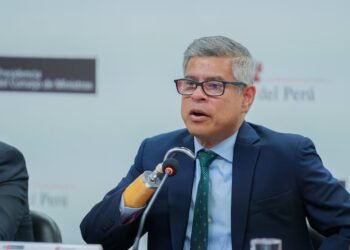
For its part, Cuba defined the package as a countercyclical fiscal policy, of a “specific, transitory and highly focused” nature. As he explained, the purpose is to prevent external and climatic shocks from slowing down the economy and ensure that growth in 2027 exceeds that of 2026.

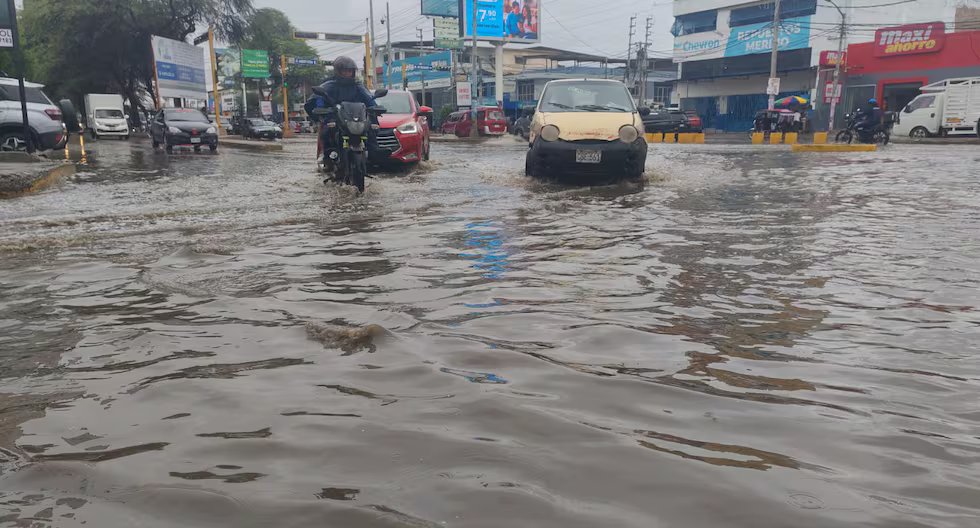
Rains in Piura due to the El Niño Phenomenon. (Photo: Tania Bautista)
According to the breakdown presented by the president, the resources will be distributed between bonds, infrastructure maintenance, support for the transportation sector and public investment projects.
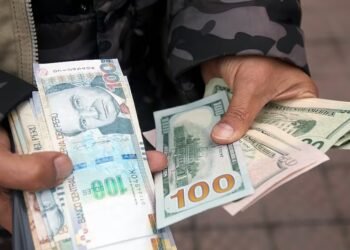
– S/ 2,500 million for bonuses: they will be aimed at vulnerable families and would be delivered over a period of between three and five months, depending on their needs.
– S/ 2,000 million for maintenance: they will finance interventions in public infrastructure, with emphasis on schools, health centers, police stations and roads.
– S/ 500 million for fuels: they will be allocated to a subsidy linked to the sector.
– S/ 13,000 million for infrastructure: of this amount, S/ 6,000 million will be directed to educational infrastructure and S/ 7,000 million to complete paralyzed works that register a high level of progress.
“While it is true that a Niño is coming, the State’s response is stronger than this. It is a strong and historic response,” Fujimori stated.
The Government indicated that the details of the beneficiaries and the execution of each component will be specified by the responsible ministries in the coming days. For this reason, the individual amounts of the bonds and the exact universe of companies that would access the tax and liquidity measures have not yet been announced.

Rains in Piura due to the El Niño Phenomenon. (Photo: Tania Bautista)
The first component contemplates temporary transfers for households exposed to the effects of El Niño and the deterioration of their purchasing capacity. The MEF mentioned families in the north that could be affected by rains and floods, as well as homes in the south exposed to drought and livestock or crop losses. Populations that live in areas vulnerable to landslides and river overflows are also considered.
The package also includes bonuses for other vulnerable groups, including pensioners from the Pension Normalization Office (ONP), with the aim of cushioning the impact of inflation during a transitional period.
Cuba explained that the design of the transfers seeks to reduce targeting errors recorded in previous experiences. “The pandemic taught us to focus better,” he indicated, noting that the MEF will coordinate with the Ministry of Development and Social Inclusion (Midis) to identify households that really require support.
The minister maintained that georeferenced records and identification tools for the vulnerable population will be used to prevent both people who do not need it from receiving the benefit and affected families from being excluded.
Regarding the deadlines, Cuba announced that the bonds aimed at vulnerable sectors and pensioners could begin to be executed from December, while an important part of infrastructure spending would be deployed from January. The final access criteria and the complete calendar still need to be specified.

Rains due to the El Niño Phenomenon in Piura. (Photo: Leydi Timana)
The package also includes measures to alleviate the liquidity needs of companies affected by climate and economic shocks. These include the postponement of advance tax payments in activities hit by the current situation, the release of withheld balances and the granting of credit guarantees through the Crecer Fund.
Cuba gave the fishing sector as an example: if a company cannot carry out its activity due to the absence of fishing, the early collection of income tax could aggravate its financial problems. The proposal seeks to prevent these obligations from further reducing their liquidity.
The minister also indicated that mechanisms are being evaluated to support companies in affected sectors and areas, including fishing and textiles. However, the eligibility criteria and the number of benefited companies were not detailed.
Regarding the perfect suspension of work, Cuba pointed out that this figure can help avoid the closure of companies that stop selling and cannot assume their payrolls. However, he acknowledged that affected workers also require protection. “A bonus is never going to compensate for a job,” he stated, explaining that the transfers would be temporary support for households that lose income.

Rains in Piura this month of October due to the El Niño Phenomenon. (Photo: Leydi Timana)
/ Leydi Timana
Another axis of the package will be the maintenance of public infrastructure, a measure that the MEF considers useful both to prevent further damage and to generate employment in the short term.
The program will include schools, health facilities, police stations and roads. According to Cuba, these interventions allow the existing infrastructure to be preserved and prevent the State from having to subsequently assume greater expenses to rebuild it.
“Maintenance has several advantages. First, it avoids a capital deficit. It is much more expensive to rebuild a road, a school or a police station than to maintain it,” the minister explained.
He also highlighted that these jobs can be carried out in a decentralized manner and have a high capacity to generate jobs, because they require more labor than machinery. Responsibility for interventions would fall on school directors, heads of health centers and commissioners, in coordination with the corresponding authorities.
The largest component of the package corresponds to infrastructure, with S/ 13,000 million announced by Fujimori. Of that sum, S/ 6,000 million would be allocated to educational infrastructure and S/ 7,000 million to finish projects that were paralyzed, as long as they make significant progress.
Cuba pointed out that the plan considers around 250 relevant works with more than 50% progress and contemplates taking advantage of mechanisms such as Works for Taxes to finance projects that are close to completion. He also mentioned the possibility of activating popular housing programs, such as MiVivienda and Techo Propio, through conditions that allow their execution to be promoted.
The criterion, he explained, is to prioritize investments that can advance quickly and generate an effect on economic activity. The intention is to prevent resources from being dispersed on projects that take too long to get underway.

Floods in Piura after rains due to the El Niño Phenomenon. (Photo: Tania Bautista)
/ Tania Bautista
The MEF justified the measures due to the confluence of three crashes. The first is the El Niño phenomenon, which can affect fishing, agriculture, roads, bridges and homes, in addition to putting pressure on the prices of certain foods when their supply is reduced.
The second is the international increase in fuel prices. Cuba indicated that oil registered an increase of more than 70% and diesel nearly 120%, in a context of conflicts in the Middle East and damage to supply facilities. The increase in prices can be transferred to the costs of passenger and cargo transportation, as well as other energy-intensive activities.
The third factor is the increase in international interest rates, which can raise the cost of financing for the State and Peruvian companies. According to the minister, the country is not isolated from these movements because it maintains commercial and financial ties with the rest of the world.
Faced with these risks, Cuba maintained that Peru has room to respond thanks to its level of debt and the trajectory of its fiscal accounts. The Government proposes modifying the path of fiscal convergence, with a maximum deficit of 2.4% of GDP for next year and a progressive reduction to 1.1% at the end of the current administration. Currently, the fiscal trajectory requires a deficit of 1.8% this year, and 1.4% in 2027, according to the initial projections of the Multiannual Macroeconomic Framework.
The minister assured that the package seeks to prevent a more pronounced slowdown. The official economic growth projection of 3.4% for this year, initially presented in August, is maintained, although it was acknowledged that the result will depend on the evolution of external factors and the local economy.
“We are taking these measures to achieve that objective,” Cuba said, referring to the goal of sustaining growth and making the economy advance more in 2027 than in 2026.