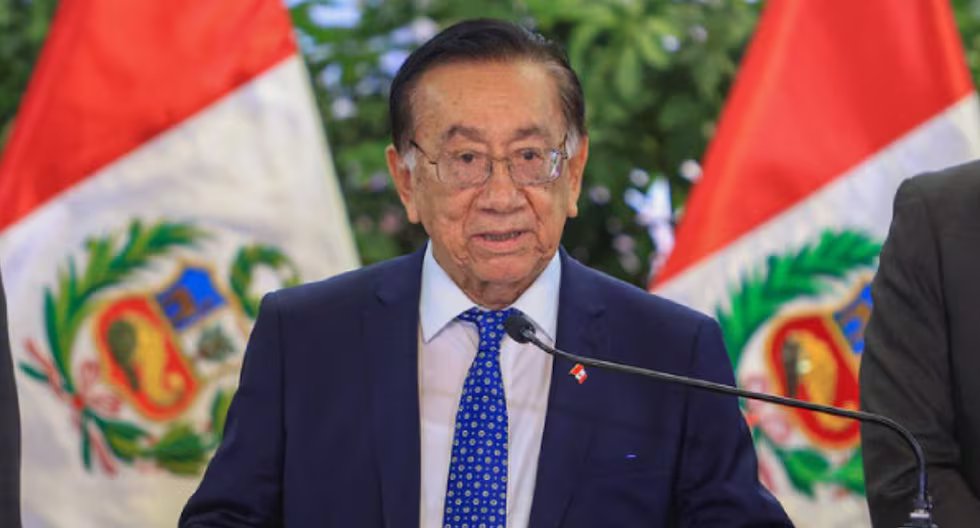
The government of José Balcázar reaches its final days dragging a stain that sums up its time in the Palace: apathy. The transfer team led by Marco Vinelli, which in two weeks had to verify the conditions under which Fuerza Popular will receive the State, found expired medicines in the Minsa, undistributed school kits in the Minedu and a chain of last-minute appointments that smell more like the distribution of quotas than public management. None of these findings should surprise anyone who has followed this administration closely, but their accumulation in the final hours confirms that the disorder was not an isolated episode, but rather the method of government that characterized it.
Balcázar took office with three explicit priorities: clean elections, economic stability and the fight against insecurity. Added to them was a fourth, tacit but unavoidable in any transitional government: handing over power in an orderly manner. The elections were held without incident and the macroeconomy remained relatively stable, merits that the Executive frequently repeats. But these figures are of no use if, at the same time, a state apparatus is left in disarray, with portfolios that did not fulfill such basic obligations as distributing medicines or school supplies on time.
More serious is the absence of a contingency plan against the El Niño phenomenon in Mindef, Midagri, MEF and Produce, despite the fact that the government itself announced in July a million-dollar budget allocation for that purpose. The distance between the official discourse and what was found on the ground confirms that improvisation, already noted in these pages regarding the failed appointment of Hernando de Soto, was installed as a method of government until the last day.
The more than 50 appointments revealed in July, added to the last-minute ministerial appointments in the Minedu and the MTPE, make up the portrait of an Executive who in his final hours prioritized political quotas rather than leaving an orderly administration to his successor. This is an irresponsibility that compromises the next administration, forced to correct on the fly errors that do not correspond to it and that it did not commit.
Balcázar has the obligation, in the days he has left, to respond transparently to these findings. The country cannot afford a transition marred by opacity nor a government that says goodbye without accounting for what it left half done.