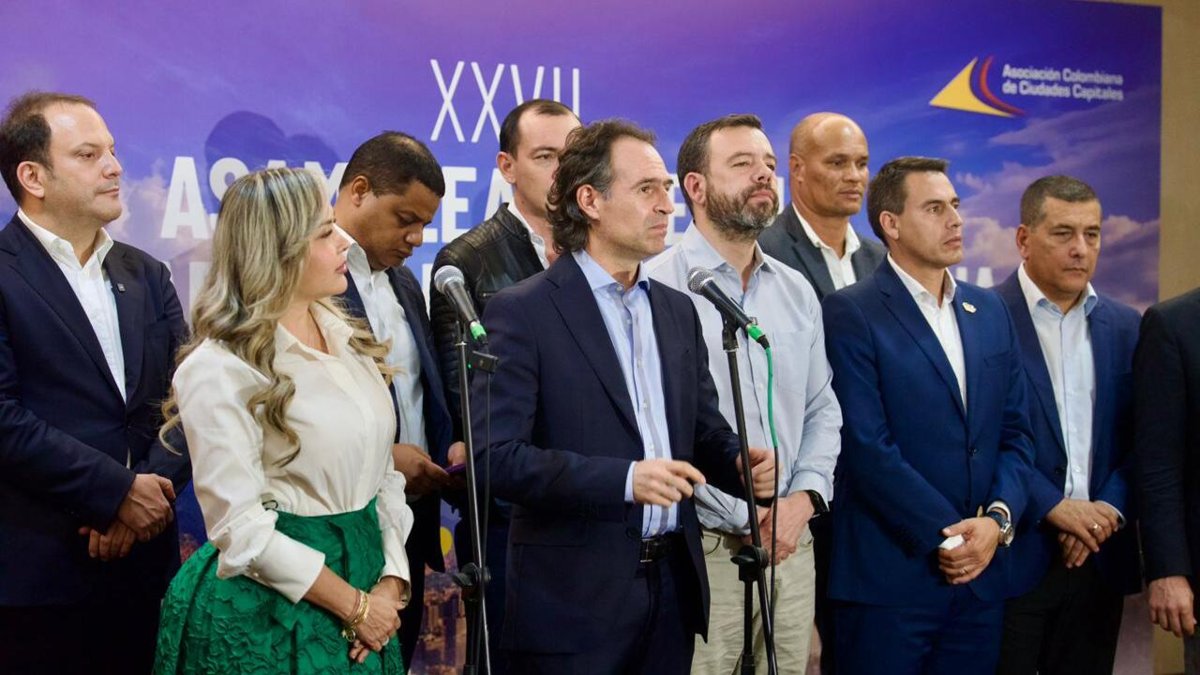
As proposed, the powers law would not guarantee a true correspondence between functions and resources, and could increase the fiscal pressure on municipalities, especially capital cities. That is the main conclusion of the Asocapitales technical report, known by EL TIEMPO.
READ ALSO
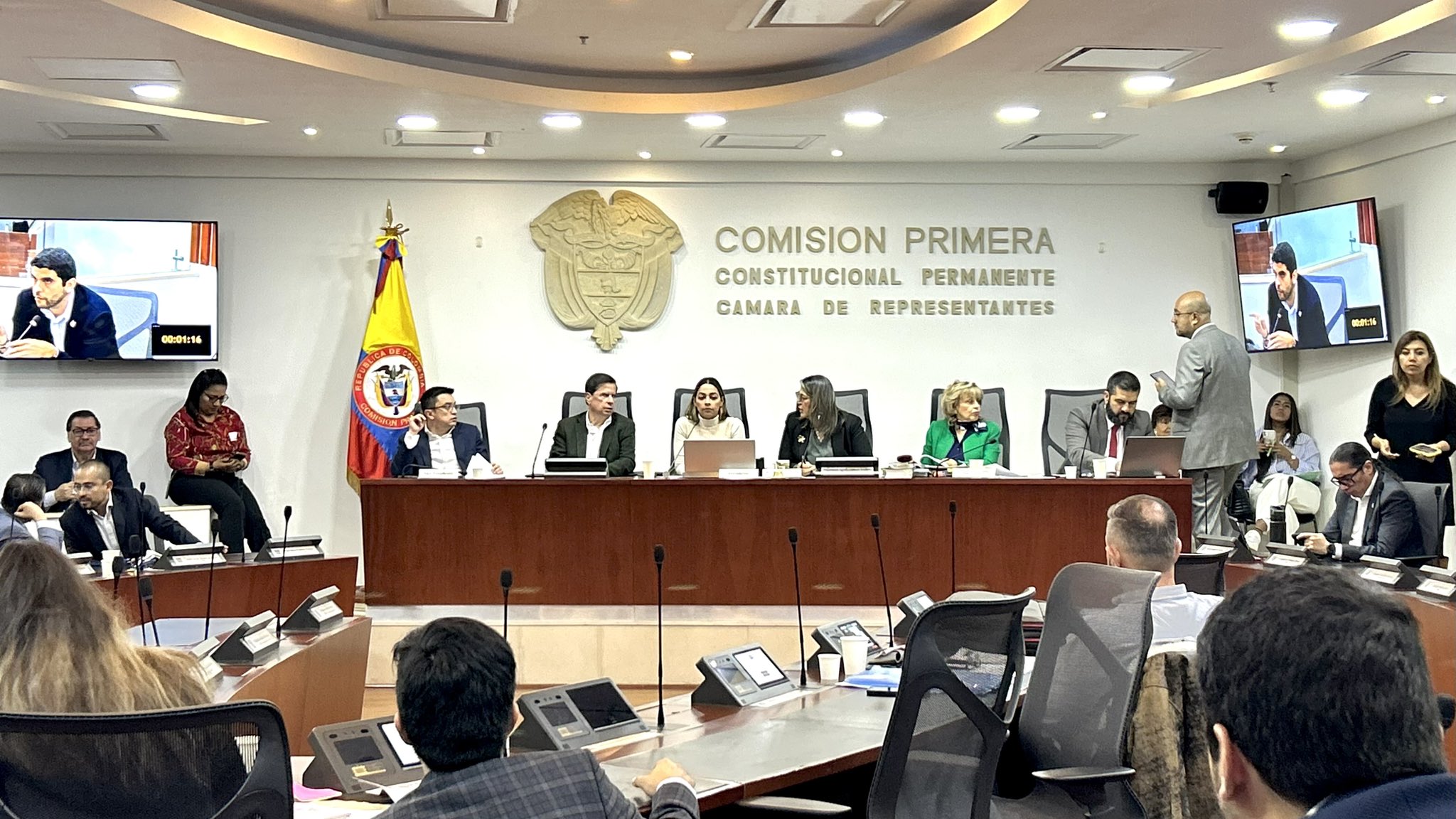
According to the analysis of the Association of Capital Cities (Asocapitales), the bill presented by the Government shows several concerns, in addition to an eventual greater fiscal pressure for the regions. Among them, it mentions a possible ideological bias in its approach, a tendency towards the concentration of power at the central level, the incorporation of elements specific to the health reform – despite the fact that it has not been approved – and a possible excess of regulatory power.
The director of Asocapitales, Andrés Santamaría. Photo:Jaiver Nieto Álvarez.
READ ALSO
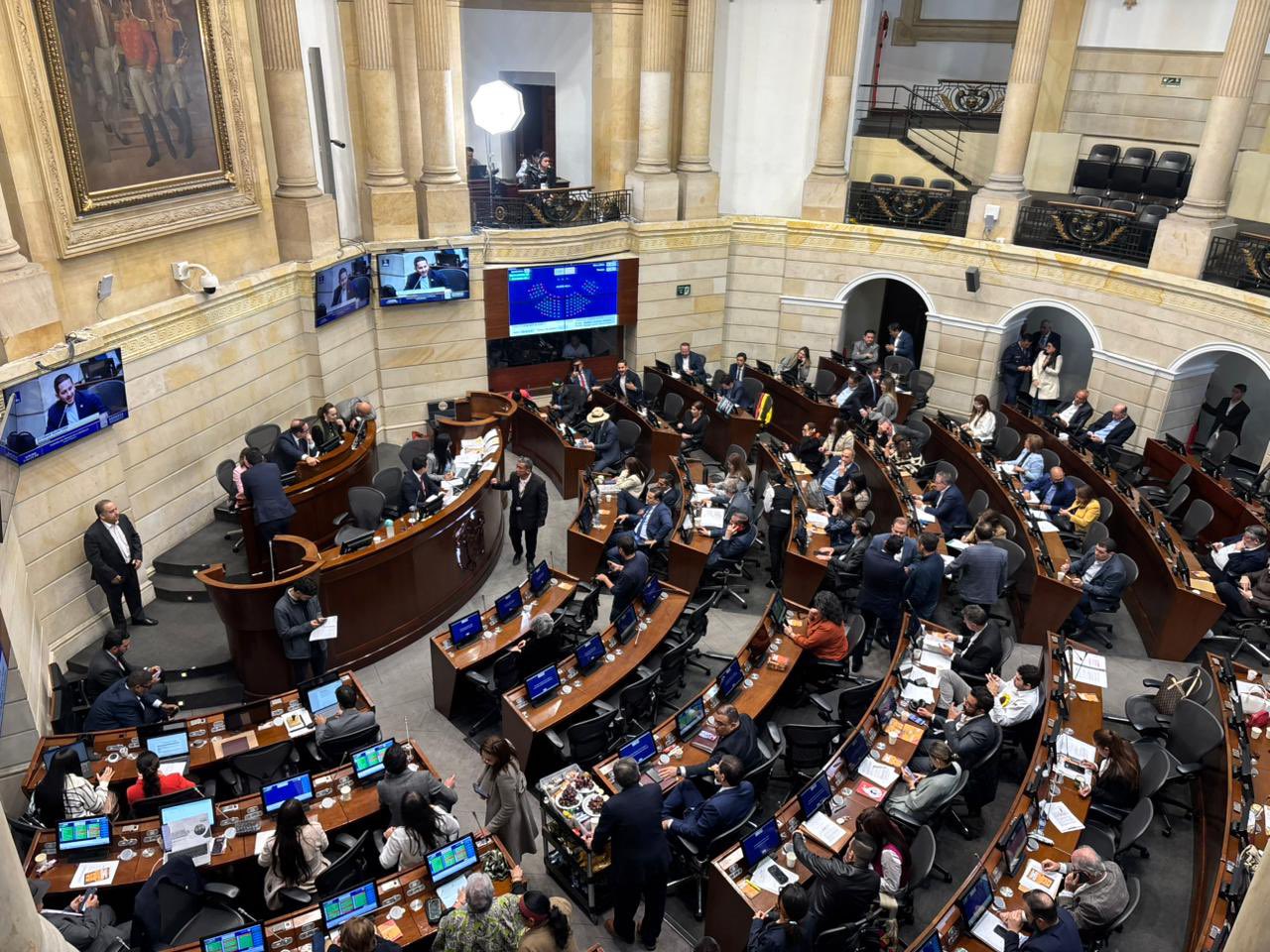
Although in theory different sectors agree with the competition law, it still does not reach consensus and faces new objections on its way to the first debate in the First Committee of the Chamber. In this legislative cell there are majorities close to the ruling party and the interests of different parties converge around decentralization, a scenario that could facilitate its legislative progress.
However, this could sink. If it is not approved in the first debate, the initiative would be archived due to lack of processing and would have to be filed again, either by the current Government or by the next administration.
The norm seeks to regulate the already approved legislative act that reformed the General Participation System (SGP) and that gradually increases the participation of the regions in the national budget, from 28% to 39.5% within a period of 12 years. The law will define how these additional resources will be distributed and how departments, municipalities and districts can invest them in the coming years.
Being a project of such magnitude, all eyes have been on it. The analysis, contained in a 40-page document prepared with technical contributions from the country’s main cities, evaluates the institutional, fiscal and sectoral impacts of the proposal.
Approaches from Asocapitales on the draft competition law. Photo:Asocapitals.
Of the 22 general comments on the project, the main conclusion is that, although it incorporates principles such as closing gaps and decentralization, “it does not guarantee sufficient resources to comply with the powers granted and the subsequent powers that will be delegated to each level of territorial government.”
For Asocapitales, the problem does not lie in the progressive increase in resources, but in the way in which they are distributed and conditioned.
The objections to the project presented in Congress
According to the report, the project introduces new responsibilities without ensuring sufficient or stable sources of financing.
Furthermore, the justification accompanying the initiative does not present clear calculations about how much it will cost to maintain and expand services such as health and education over the next 12 years. This is especially sensitive because both sectors have inflexible expenses that also tend to increase over time.
In terms of health, the main concern is the concentration of 90% of incremental resources in the Priority Care Centers (CAPS), a figure associated with the health reform that was not approved by Congress in 2025.
CAPS would receive 90% of health resources at the regional level. Photo:Bill
READ ALSO
For the association, this not only generates legal uncertainty, but also reduces the resources available for public health and limits the territorial capacity for prevention, epidemiological surveillance and local response.
In education, the report warns that the project expands powers in infrastructure, the School Feeding Program (PAE), inclusive education and higher education, without guaranteeing full financing. This could increase pressure on the resources of cities with high enrollment and rigid teaching costs.
Furthermore, by not specifying the predominant weight of enrollment in the distribution formula, Asocapitales points out that the proposal could end up “negatively impacting cities with a larger student population.”
In drinking water and basic sanitation, the document questions the permanence of departmental water plans, a model that has been criticized for its low results, especially in rural areas.
“It is important to consider whether this should continue to be the mechanism with which water and sewage systems are managed at the territorial level,” the report states.
The work for drinking water in Medellín. Photo:Medellín Mayor’s Office
It also warns that the “mandatory strengthening of community management” could fragment service provision, increase supervision costs for municipalities and weaken local institutions.
This was a warning that Andrés Santamaría, executive director of the entity, had already made: “We want to avoid assigning functions and resources to specific population groups, weakening the primary institution, which is local governments. The ideal would have been to harmonize this.”
Another critical point is the rigidity in the allocation of the budget. The project maintains specific allocations on topics such as sport, culture and Fonpet, which, in the opinion of Asocapitales, restricts territorial autonomy.
“This limits the possibility of directing resources towards strategic priorities of each territory,” he warns.
Added to this is another of the most repeated questions: the high normative indeterminacy. The association warns that structural issues—such as distribution methodologies, the weighting of criteria and the final structure of the SGP—are subject to subsequent regulations by the Executive.
Capitals with more load, less autonomy
One of the central axes of the document is the defense of differentiated treatment for capital cities, recognized as a special category by Law 2082 of 2021.
Andrés Santamaría talks about sustainability. Photo:
Asocapitales maintains that these cities concentrate population, service provision, internal migration and regional demand, which entails additional costs in health, education, housing and mobility.
In this sense, the report warns that the project does not adequately recognize the dynamics of urban agglomeration nor compensate for the additional burdens assumed by the capitals to serve the floating and regional population.
On the contrary, it strengthens the role of the departmental level as a mandatory articulator, which could translate, in practice, into a functional subordination of municipalities and districts, even in sectors where they already have their own certification.
The Association’s proposals
Faced with this panorama, Asocapitales proposes that the powers law must guarantee that each new function assigned to municipalities and districts is accompanied by sufficient resources, to avoid transferring responsibilities without financing.
In general terms, it proposes that the distribution of SGP resources continue to recognize the population weight, the reality of capital cities and their metropolitan dynamics, including floating population, migration and urban agglomerations.
In health, it calls for greater flexibility in the use of resources to strengthen prevention, mental health, rural care and response to health emergencies, in addition to recognizing the pressure generated by the high reception of migrant and floating populations.
In education, it insists that the closing of gaps and educational quality have specific and progressive financing, as well as resources for infrastructure, school feeding, transportation, connectivity and free education.
In drinking water and basic sanitation, it proposes making the use of resources more flexible to especially serve rural areas and recognize factors such as climate change and urban agglomerations in the distribution of funds.
In general purpose, it requests eliminating rigidities in the allocation of resources—for example, in sports and culture—so that municipalities have greater freedom of investment according to their priorities.
The project has not been without controversy. One of the first sources of controversy was the delay in its presentation: although the Government had initially announced that the text would be submitted in June, the initiative only reached Congress on December 15, 2025, after several months of questions about the delay.
Asocapitales’ final recommendation goes in that direction. “We suggest that the relevance of discussing this bill, given its structural nature, be evaluated in the next legislature, before the new Congress and the new Government,” the report states. This, they say, with the purpose of opening a broader space to debate the approaches stated in the document.
Paula Valentina Rodríguez
Political Writing
More news in EL TIEMPO
Final stretch in Congress: these are the key projects. Photo: