A new logistics route from Pakistan to Central Asia, bypassing Afghanistan, comes in response to tensions between Islamabad and Kabul and clashes along their shared border. At the same time, the launch of the corridor, which passes through the territory of Iran, occurred during a period of escalation in the Middle East.
Experts call this route one of the real alternatives for the landlocked Central Asian region. But there is a “but” – and this is not only the high cost of transportation. In question Azattyk Asia looked into it.
“Still, some kind of alternative”
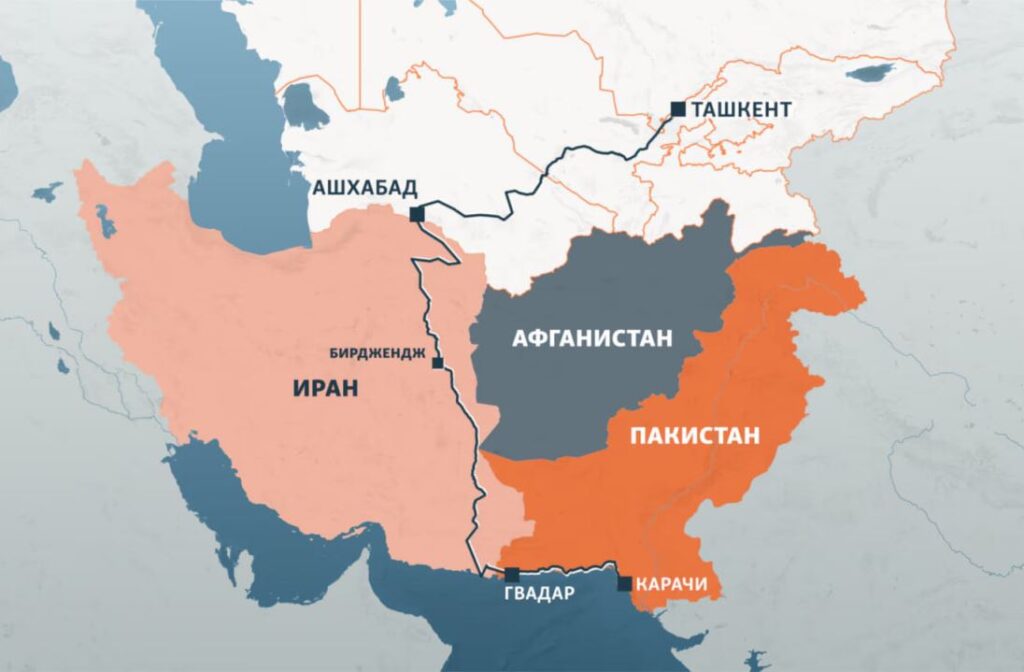
Refrigerated trucks filled with frozen beef left Pakistan for Uzbekistan this month. The cargo from the port city of Karachi on the shores of the Arabian Sea was sent to Tashkent. The vehicles passed through the Gabdt-Rimdan border terminal to enter Iranian territory, then they cross Turkmenistan and reach their final destination.
This is a land route launched in pilot mode. Pakistan sees it as an opportunity to enter the markets of Central Asia, where about 70 million people live.
For Uzbekistan, which has faced rising meat prices due to limited domestic production capacity, beef from Pakistan is an opportunity to diversify supplies from abroad. And for Central Asia as a whole, this is an option to gain access to seaports.
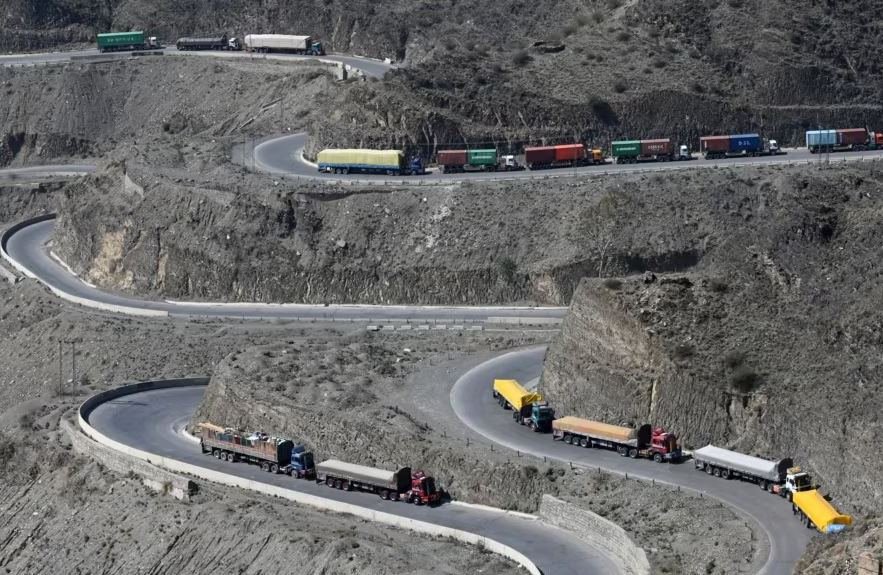
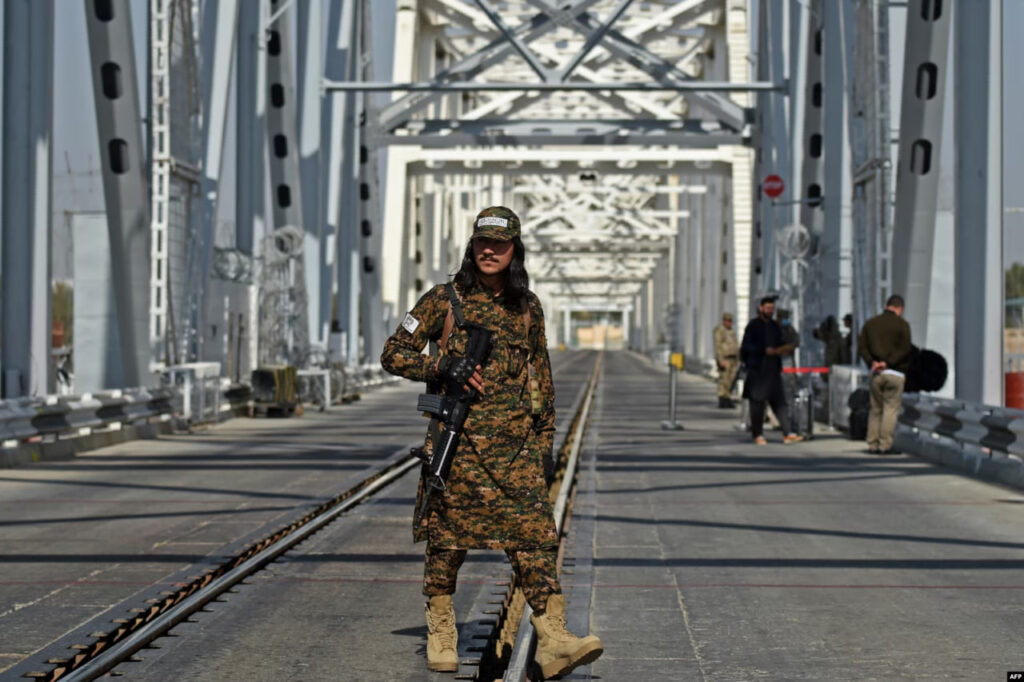
The path chosen for this is not the shortest. The shortest and most economically profitable route runs through Afghanistan, which has been ruled by the Taliban since 2021. But the situation on the border between Pakistan and Afghanistan has been unstable in recent months. The Torkham and Chaaman crossings were repeatedly closed due to hostilities and escalating tensions, which led to the blocking of thousands of trucks, disruption of supplies and increased logistics costs for Central Asian countries.
Plans of Astana and Tashkent to connect their railways with Pakistani ports through Afghanistan remain on paper for now – largely due to the same instability. In February 2026, the President of Kazakhstan Kassym-Jomart Tokayev and the head of Uzbekistan Shavkat Mirziyoyev made separate visits to Islamabad, and transport corridors were, of course, on the agenda of the negotiations. Framework agreements have been concluded, but it is unknown when the rails will be on the ground.
In such conditions, the road route through Iran is a forced alternative for the countries of Central Asia in exchange for the virtually closed Afghan route, experts say.
“After the Taliban took power in Afghanistan into their own hands and established a more or less unitary regime throughout the country, the possibility arose of laying logistics trade routes through it, further to the southern ports of Pakistan. This started to work, but now the conflict between Pakistan and Afghanistan, which has dragged on, is derailing all prospects – using Afghanistan as a transit zone for trade routes is impossible. And, of course, the new route will probably be more expensive and longer, but it is still some kind of alternative if cargo is sent through Iran,” says political analyst Alisher Ilkhamov, director of the London-based Central Asia Due Diligence center.
“Of course, it would be advisable and much cheaper, faster through Afghanistan. Pakistan, if it sent its cargo through Afghanistan as before, delivery would take a maximum of 5-6 days. This takes a maximum of 500–600 liters of diesel fuel. That is, the mileage is reduced, fuel and lubricants are saved, and delivery times are also accelerated and prompt.
Pakistan was transported directly through Afghanistan, that is, through one state it was already in Uzbekistan, then to other countries of Central Asia. Uzbekistan borders Afghanistan: I drove in from the Termez-Hairatan border crossing, drove towards Kabul, where Pakistan is just a stone’s throw away. The route from Uzbekistan to Pakistan in transit through Afghanistan takes a maximum of 1.5 thousand kilometers – for international transport this is “nothing,” says Azamat Dzhumabekov, head of the Association of International Cargo Carriers of Kyrgyzstan, to Azattyk Asia.
Against the backdrop of blocked Hormuz
Azamat Dzhumabekov, who has been transporting goods from the Middle East and South Asia to Central Asia and back for many years, explains that previously, cargo from Pakistan to Iran was first transported by sea – from the ports of Gwadar and Karachi to the Strait of Hormuz, and then transported by land to Turkmenistan, Kazakhstan, Uzbekistan, Kyrgyzstan and Tajikistan.
Since the start of US and Israeli strikes on Iran on February 28 and Tehran’s retaliatory attacks on Middle Eastern states hosting US bases, Hormuz has been blocked from shipping, causing disruptions in global supply chains. And the work of the Iranian port of Bandar Abbas was disrupted due to military operations and a series of powerful explosions.

“Bandar Abbas was the most global port. It is currently not functioning. The first bombing, in my opinion, hit there right away. There was a multimodal mode along this corridor (transportation that is carried out under one contract and using more than two types of transport. – Ed.). And from Iran they were then reloaded from sea to Eurotrucks and transported through Iran and Turkmenistan to Uzbekistan,” says Dzhumabekov.
His company transported meat products from Pakistan, mainly for clients in Uzbekistan, and picked up legumes from Central Asian countries on the way back.
Key facilities along the land corridor through Iran, unlike seaport infrastructure, have not been damaged by military operations over the past few weeks. This allows them to be used in a new road route, which carriers are pinning their hopes on as a way that can facilitate logistics.
“Two border crossings – Gabd-Rimdan and Taftan-Mirzhave – were in operation before. But they operated bilaterally between Pakistan and Iran. Taftan was the strongest and most developed. There is a system for TIR (Transports Internationaux Routiers – international road transport – editor’s note), where there is always a “green path” for transit.
If this corridor really starts working, then not only Uzbekistan, but also Kyrgyzstan, Turkmenistan, Kazakhstan – everyone will rush there. Because we have large volumes of transportation from the Middle East. We now have 80 percent of the cargo stuck in the port of Jeddah in Saudi Arabia, in the port of Dammam in the Persian Gulf, in Qatar, in the port of Jebel Ali in Dubai. Our cargo is now idle there. If the new scheme works, we will calmly reorient ourselves there,” notes Dzhumabekov.
“A question for the entire region”
Uzbekistan, the recipient of the first cargo via the new land route, has not yet commented on the launch of a new transit corridor through Iran. Analysts do not rule out that this is due to the position of Tashkent, which, on the one hand, does not want to irritate the Taliban in order to ensure the security of its southern borders, and on the other, is developing cooperation with Islamabad for direct access to its ports and access to world markets.
Tashkent’s silence may also be dictated by the reluctance of the Uzbek authorities to face a negative reaction from the United States, analyst Alisher Ilkhamov believes.

“Since the new route goes through Iranian territory, they (the Uzbek side) are afraid that this may look like cooperation. They are afraid of a negative reaction from the United States. In terms of the US reaction, they may see certain risks. Especially after the visit of (the president’s daughter and head of his administration) Saida Mirziyoyeva to Washington, which is assessed as positive due to the fact that an agreement on business cooperation was concluded, the Council was created. They are afraid of possible, even minimal risks.
But it is unlikely that the United States will attach much importance to this, but in our country, just in case, they are apparently keeping silent for now so as not to attract attention. I think this is a better reason than not teasing Afghanistan. What about Afghanistan? As if very simply, Uzbekistan can say: “Establish relations with Pakistan, and we will work with you.” There simply cannot be any grievances here,” says Ilkhamov.
Uzbekistan is one of two countries in the world (along with Liechtenstein) that is classified as “twice landlocked”. The country’s authorities have been making attempts to build a route to Pakistani ports for several years.
In February 2021, official Tashkent began planning the construction of the Trans-Afghan Railway, which should not only connect Uzbekistan, Afghanistan and Pakistan along the route Termez – Mazar-i-Sharif – Kabul – Peshawar, but also open the possibility of access to Gwadar and Karachi for the countries of the Central Asian region. It is estimated that the line can significantly reduce the delivery time of goods and reduce the cost of transporting them by at least 40 percent. It was assumed that the project would be completed by the end of 2027, and by 2030 the trains would be able to transport up to 15 million tons of cargo per year.
Kazakhstan has also announced its interest in building a railway line to Afghanistan. The country announced plans to build a line from Torghundi station on the Turkmen-Afghan border to Herat to connect to the port of Karachi. Astana has shown its readiness to invest about half a billion dollars in the project.
“We need a road to the seas, to the ports. This is vital. We are suffocating without it. It’s difficult to talk about further development,” said Deputy Prime Minister of Kazakhstan Serik Zhumangarin last August.
“It would be best if, of course, there was some kind of railway network. To increase the flow of cargo and reduce their cost, says analyst Alisher Ilkhamov. — In general, this issue concerns the entire region, which includes Iran, Pakistan, and Central Asia. The question is about developing a sufficiently developed backbone trade network to be able to switch and use both sea routes and land routes.”
The development of viable transport corridors connecting Central Asia with world markets, including routes in a southern direction – through Afghanistan and Pakistan to the Arabian Sea – was discussed on April 20 in Washington at the presentation of the new Silk Seven Plus strategy. It was developed by the New Lines Institute and is positioned as a long-term plan to integrate seven countries – Kazakhstan, Uzbekistan, Turkmenistan, Kyrgyzstan, Tajikistan, Afghanistan and Pakistan – into a more cohesive economic bloc.
“You can’t just give up on Afghanistan,” says researcher Azim Ibrahim, who is in charge of strategy at the New Lines Institute, adding that isolating Afghanistan has not worked. “The idea is to integrate it into a broader regional structure where economic incentives provide long-term stability.”
The Silk Seven Plus project is at an early stage, admit the developers, who assign the United States the role of mediator in initiatives for cooperation between countries within the region, which has become an arena of competition between Russia and China. The success of integration efforts is “not guaranteed,” the researchers note, but depends on the aspirations of the region itself.