
Listen to this article
Estimated 5 minutes
The audio version of this article is generated by AI-based technology. Mispronunciations can occur. We are working with our partners to continually review and improve the results.
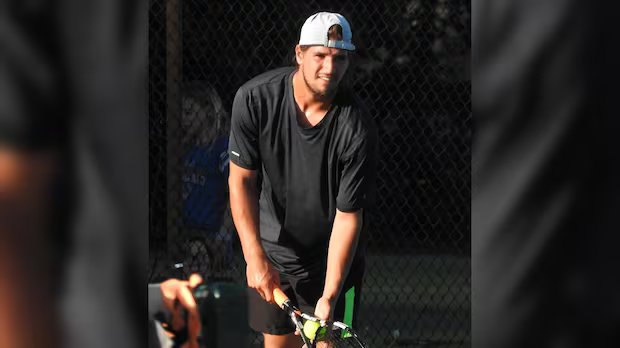
London police Const. Ryan Hendrick says he thought he was going to die the night a break-and-enter response quickly escalated into a struggle with a Sarnia tennis player who put him into a gripping chokehold.
“I was feeling like, ‘This is it.’ And then I heard a pop,” Hendrick told the inquest examining Justin Bourassa’s death.
Hendrick’s partner, Const. Joshua Ryan, shot the 29-year-old in the early hours of Oct. 28, 2021. Bourassa later died in hospital of a gunshot wound to the neck.
Ryan testified Wednesday, the third day of the week-long inquest in London, that he and Hendrick were responding to a reported break and enter in the area of St. George and Mill streets when they spotted Bourassa jogging across nearby Richmond Street towards a pathway between two businesses.
Both officers told the jury they thought Bourassa’s dark clothing and “slim build” matched the suspect description they heard over the dispatch radio. The pair followed Bourassa, Ryan exited the vehicle, and Hendrick said he attempted to use the police radio to contact dispatch, but was unsuccessful.

“The problem was there was a significant amount of chatter on the radio at the time. If someone else is on the air, you can’t be on.”
Things changed quickly
Hendrick said he exited the vehicle when he noticed Ryan was moving to put handcuffs on Bourassa, and that’s when the situation changed quickly.
Bourassa resisted and tried to flee, Hendrick testified, and the three men fell to the ground. Hendrick landed stomach down with Bourassa on his back, and the police radio flew off his vest.
“As I go to reach for it, I feel somebody starting to choke me from behind,” said Hendrick. “The application of this choke was severe from the offset. It’s almost as if someone is trying to pop my head off.”
Hendrick said he attempted to escape by “tapping out” on Bourassa’s arms, trying to pry them off his neck in an effort to slip his own fingers between the arms and his body to create space.
“I started to see flashing. I’m out of breath,” he recalled. “Thoughts of kids and my wife are going through my mind.”

He told the jury that he tried accessing his own firearm, with the intent of shooting it behind his head towards Bourassa, but then saw the stripe of Ryan’s pants come into view.
“In the middle of this ruckus, I start to see red stripes. I just hear a light pop and the arm instantly releases. I start coughing. I turn around and see my assailant on the ground,” he said.
“He saved my life.”
Hendrick said he and Ryan began taking turns doing chest compressions on Bourassa before paramedics arrived.
‘Don’t kill police,’ officer says
When inquest counsel Phil Tsui asked Hendrick if he wanted to take a breather after recounting the day’s events, Hendrick was quick to tell the jury that he’s been waiting to tell his story.
“I’ve been waiting four and a half years for this.”
However, when Tsui asked if Hendrick had any recommendations to prevent similar deaths, he didn’t provide any suggestions.
“I was there. I have 16 years of policing experience and I don’t have answers that I feel comfortable sharing.”
Counsel for Bourassa’s family, Meaghan Daniel, questioned his lack of recommendations for the police force after so much time has passed, but Hendrick maintained his response.
“From a police standpoint, no. My instinct would be to say, ‘Don’t kill the police,’ but otherwise no.”
Ryan also told the jury he had no recommendations during his testimony Wednesday.

Inquests following police shootings are mandatory in Ontario. A coroner’s jury is tasked with answering questions including medical causes of death and how someone died — by natural causes, accident, homicide, suicide or undetermined — and possibly come up with recommendations. Jurors are prohibited from making any finding of legal responsibility or laying blame on anyone.
The five-member jury in the Bourassa case has spent all week analysing the circumstances surrounding his death. It’s expected their findings will come down Monday.
Bourassa’s mother, Lorraine Sabourin Bourassa, testified earlier this week that her son was well known in the tennis and francophone communities in Sarnia. He was also a brother, coach, massage therapist and avid cyclist, she said.
The jury also has heard from forensic pathologist Dr. Edward Tweedie, London police sergeants Daniel Thompson and Kevin Easton, and Ontario Police College instructor Mariano Benincasa.
Proceedings are set to continue Friday morning.