- Finance Minister Karin Keller-Sutter wants to introduce new capital requirements for UBS.
- The FDP is cautious: the risk for taxpayers must be reduced, but the financial center must remain strong.
- The SVP spoke out against the new regulations in the consultation.
- The SP sharply criticizes the proposals. She considers the measures to be inadequate.
On Wednesday evening, Finance Minister Karin Keller-Sutter spoke about the new capital requirements for systemically important banks – de facto it is a “Lex UBS”.
It accommodated the wishes of the big bank in some respects, but remained tough with regard to the foreign subsidiaries.
The reactions to this are mixed.
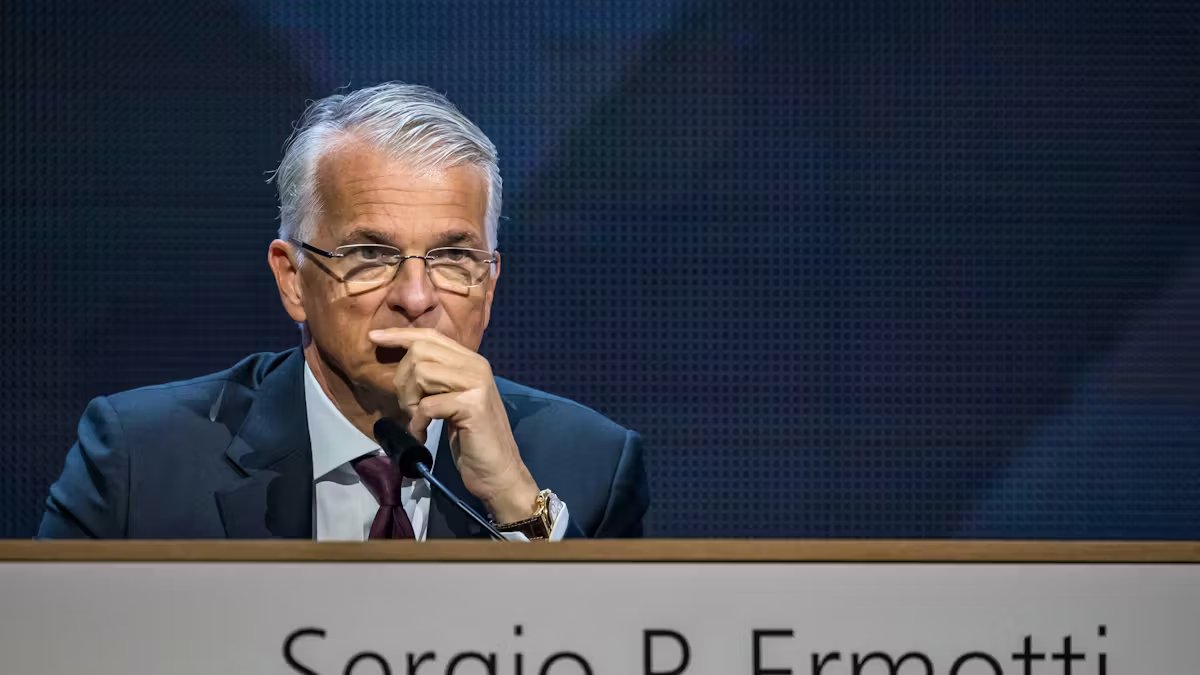
UBS writes in a statement that it continues to firmly reject the proposed overall package. It is “extreme, not coordinated internationally and ignores the concerns of the majority of participants in the government consultations”. If it were to be implemented, it would have far-reaching consequences for the Swiss economy, according to the big bank.
With the Federal Council’s proposal, the bank says it would need around 37 billion in additional capital. UBS also writes that the government documents are misleading. However, since the bank only recently received the information, it still has to examine it in detail. The bank has so far left unanswered a 20-minute query as to whether UBS is committed to Switzerland.
FDP between two fronts
The FDP appears torn. Federal Councilor Keller-Sutter’s party is correspondingly reserved on social media. It is clear that banks can no longer be saved at the expense of the population. “The risk for taxpaying individuals and companies must be reduced,” she explains.
At the same time, a strong financial center is crucial for Switzerland. “It creates jobs, brings in important tax revenue and ensures access to cheap loans for our SMEs,” said the liberals. The two councils now have the responsibility to adopt a proposal that guarantees both.
The SVP spoke out completely against the new regulations in the consultation. She demands that the Federal Council examine whether and how the US business can be separated from the other businesses of the globally systemically important bank.
SP criticized: Measures were “far from” enough
The SP is dissatisfied. She criticizes that the Federal Council is delivering the “minimum” – while the “Monster UBS risk” remains. The 100 percent capital backing of foreign subsidiaries is “far from enough” to get the “cluster risk” of the new UBS for “the economy, taxpayers and prosperity” in Switzerland under control.

“UBS is twice as big as the entire Swiss economy. Anyone who believes that this measure will avert the risk for Switzerland has illusions,” said co-party leader Cédric Wermuth in the press release. The party is also calling for transparent corporate structures, a “significant” increase in equity capital or compensation for the “de facto state guarantee”. The SP will fight in parliament to strengthen the template.
The GLP is now calling for “regulation with a sense of proportion”. She fundamentally supports stricter rules for UBS. But: “The Federal Council is overshooting the mark,” Councilor of States Tiana Moser is quoted as saying in a statement.

For GLP, the proposed 100 percent equity capital requirement for foreign subsidiaries goes “too far”. Moser warns: “This rule harms the competitiveness of our financial center.”
Bankers Association: “Significant location disadvantages”
The Swiss Bankers Association is also “extremely critical” of the new regulations. She writes in a media release that the capital regulations lead to “significant locational disadvantages for the Swiss financial center”.
The Federal Council ignored the “predominantly critical” feedback from the consultation. The association complains that this “maximum proposal” and “Swiss solo effort” weakens the financial center, makes it more difficult to provide credit and makes financial services more expensive for companies.
Economiesuisse also warns of a “deterioration in the attractiveness of the location”. The regulation goes “significantly beyond international standards” and burdens banks and the workplace with “additional costs”.

It is also about the competitiveness of “the entire Swiss economy” – because the capital requirements also increase the cost of credit.

Christof Vuille (vuc) has headed the politics department since 2023 and is a member of the editorial board. He reports for 20 minutes, keeping his finger on the pulse of federal politics.

Christina Pirskanen (pir) has been working for 20 minutes since 2022. She has been deputy since January 2026. Head of the Politics Department.