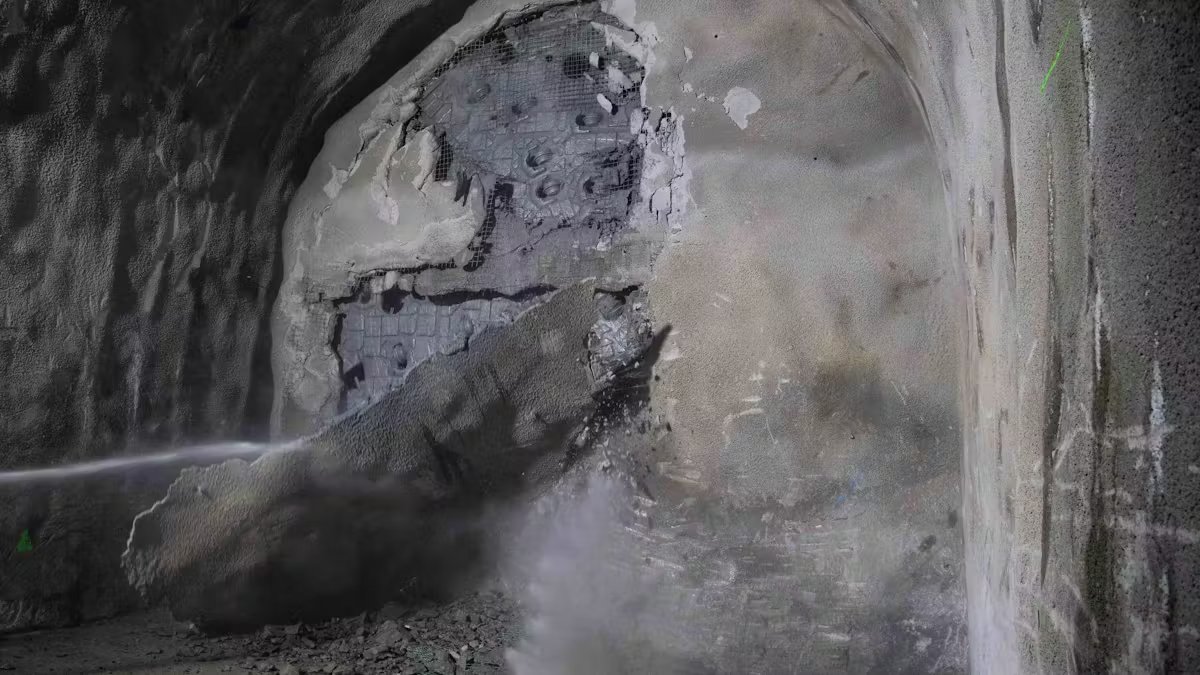
- The “Alessandra” tunnel boring machine covered up to 35 meters per day through the Aare granite.
- After around 14 months, she reached the cavern of the northern “Mesozoic” fault zone during the construction of the second Gotthard tube.
- Astra sees the breakthrough as a significant step for the major project.
An important milestone has been reached in the construction of the second tube of the Gotthard road tunnel, as Astra writes in a statement. The tunnel boring machine “Alessandra” reached the cavern in the northern fault zone on Wednesday after around 14 months of tunneling.
It started in Göschenen in February 2025 and has now excavated around four kilometers of tunnel, mostly through Aare granite with advance rates of up to 35 meters per day.
Important step for a major project
The approximately 320 meter long “Mesozoic” fault zone consists predominantly of loose rock and could not be excavated using a tunnel boring machine. It was therefore already created and secured conventionally beforehand. With the breakthrough into this cavern, key risks for further advance could be reduced.
“The Gotthard is probably the most emotional stretch of road in Switzerland.”
Representatives of the Federal Roads Office (Astra) praised the progress as an important step for the major project. The Gotthard is a central traffic axis for Switzerland and Europe, connecting north and south.
Astra director Jürg Röthlisberger says the construction of the second tunnel is much more than a new road – it is a promise to future generations. “The Gotthard is probably the most emotional stretch of road in Switzerland.”
Work is also progressing on the south side
In the coming weeks, the tunnel boring machine will cross the fault zone and is expected to continue driving south in August.
Work is also progressing on the south side: the “Paulina” tunnel boring machine is scheduled to resume driving northwards from mid-May. At the same time, work on the southern fault zone is continuing as planned.
What is your favorite way to travel through the Alps?