FAO donated laboratory equipment to Tajikistan equipment to enhance food security. Once launched, it will help to quickly identify dangerous animal diseases, prevent outbreaks of infections and better control risks in the food chain. Diagnostics will become more accessible not only in Dushanbe, but also in the regions of the country.
The Food and Agriculture Organization of the United Nations (FAO) donated laboratory equipment, materials and reagents to the National Center for Food Security Diagnostics under the Food Security Committee of the Republic of Tajikistan. The ceremony took place at the Rumi Hotel on May 4.
The equipment was purchased as part of the regional project “Preparing for and responding to pandemics in Central Asia” using the “One Health” approach.
The project helps countries in the region prepare for outbreaks of dangerous diseases and respond more quickly to them. Its goal is to reduce risks to human health, the economy and society, and strengthen food security, agriculture and trade.
In 2025–2026, the project assessed the performance of veterinary services, tested samples for brucellosis in five laboratories, and conducted 30 training sessions on laboratory and epidemiological safety. They trained more than 300 specialists from the Food Safety Committee on biosafety, protection against biological threats, and the diagnosis of bird flu, brucellosis, foot-and-mouth disease and plague of small ruminants.
In 2026, the project purchased and transferred equipment and laboratory materials for the central and three regional laboratories of Tajikistan.
Chairman of the Food Security Committee Muhammadsaid Faizullozoda noted that modern threats require more attention to the quality of veterinary services and the prevention of infectious animal diseases.
“Modern threats force us to pay more attention to the quality of veterinary services, as well as to the prevention of infectious animal diseases, which are of serious importance for livestock farming in our republic,” he noted.
According to Faizullozoda, with the support of the World Bank, programs are being implemented to strengthen veterinary services and measures are being developed that should encourage farmers to carry out diagnostics and veterinary treatment of animals.

Separately, the Chairman of the Committee noted the modernization of laboratories.
“No less important now is the modernization of the material and technical support of laboratories. Thus, with the support of the project, the necessary laboratory equipment for PCR diagnostics was purchased,” Faizullozoda said.
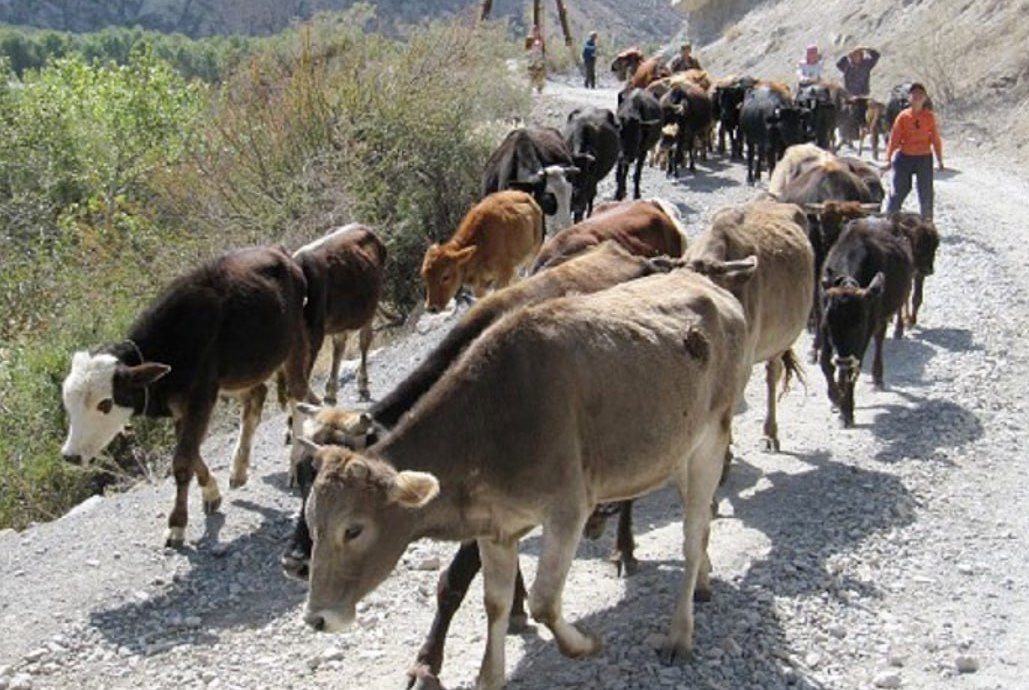
Among the current problems, Faizullozoda named the seasonal movement of livestock between regions and countries, animal identification, limited infrastructure resources, weak analytical capacity for the use of veterinary drugs and the need to improve policies on the use of antibiotics.
FAO Representative in Tajikistan Agasi Harutyunyan noted that food safety for the organization is part of sustainable agri-food systems.
“For us at FAO, food safety is an integral part of sustainable agriculture and food systems. It is directly related to public health, ensuring food security, developing trade and the well-being of rural communities,” Harutyunyan said.
He also emphasized the importance of the One Health approach.
“Today’s challenges, be they zoonotic diseases, antimicrobial resistance or food safety risks, require integrated solutions and close collaboration between different sectors,” he said.
Deputy Chairman of the Food Security Committee Mustafo Muminzoda noted that the transfer of equipment and reagents is of strategic importance for the national laboratory network.
“It will strengthen the capabilities of the national laboratory network, improve the quality of diagnosis and monitoring of diseases, and will also contribute to the further development of an early warning system and response to biological threats,” Muminzoda said.
At the same time, he drew attention to the problem of shortage of consumables for previously supplied equipment.
“I would like to note that within the framework of the intergovernmental agreement, the Chinese side supplied and installed modern laboratory equipment. However, due to the lack of necessary consumables, the equipment has not yet been put into full operation, which limits its effectiveness,” he said.
Muminzoda also noted the need to train specialists in the capital and regions, since the sustainability of the laboratory system depends not only on equipment, but also on a stable supply of reagents and regular training.
After the official part, the participants visited the National Center for Food Security Diagnostics. They were shown the transferred equipment, reagents and the work of the laboratories of virology, bacteriology, food safety, serology and parasitology. Participants also got acquainted with the construction of new laboratory premises.