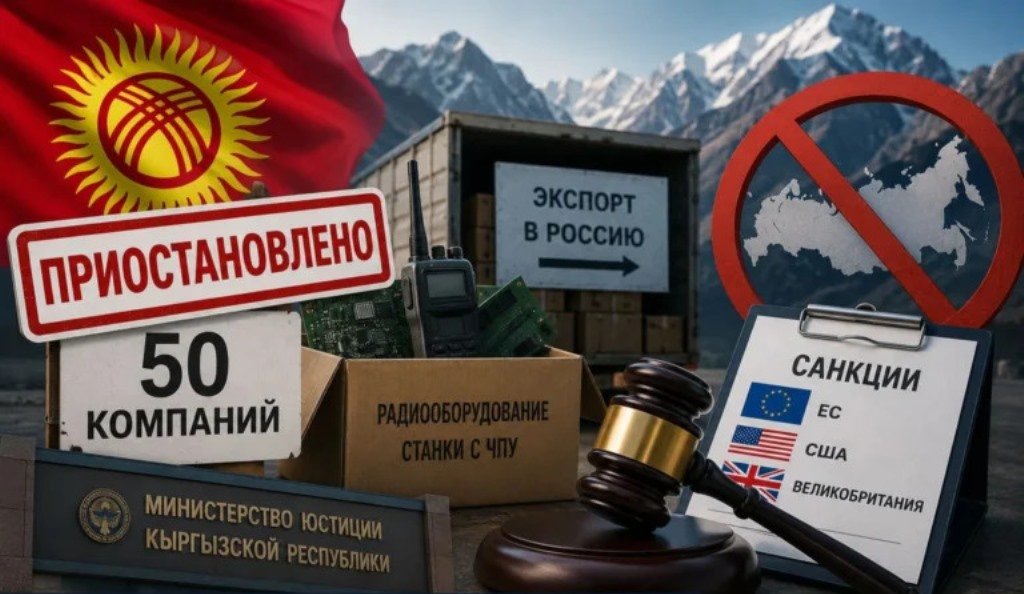
The authorities of Kyrgyzstan have begun to liquidate 50 legal entities whose activities may be associated with increased sanctions risks.
The decision was made after consultations with Western partners, including structures of the United States, Great Britain and the European Union, said the special representative of the President of Kyrgyzstan on sanctions policy and minimizing sanctions risks Bakyt Sydykov, writes Fergana.
According to him, the post of special representative was established by a decree of President Sadyr Japarov dated June 3. Sydykov himself holds this post in the status of Deputy Chairman of the Cabinet of Ministers.
He noted that in the context of growing geopolitical tensions, the republic is taking systematic measures to prevent the use of its territory, financial system and certain sectors of the economy in order to circumvent international restrictions and carry out illegal activities.
The authorities pay special attention to the virtual assets market. According to Sydykov, the rapid development of digital technologies is accompanied by the risks of laundering criminal proceeds, financing illegal activities and circumventing sanctions regimes.
At the same time, the state’s task is not to restrain technological progress, but to create an effective regulatory system that ensures a balance between innovation, security and the trust of international partners.
In this regard, an important role is assigned to the recently created National Agency for Virtual Assets and Blockchain Technologies under the President of Kyrgyzstan.
Among the priority tasks of the relevant departments, he named improving legislation in accordance with international standards, strengthening monitoring of sanctions risks and increasing the transparency of the activities of IT service providers.
According to the special representative, Kyrgyzstan adheres to an open and responsible approach to sanctions policy issues, confirming its commitment to international law, national legislation and its international obligations.
At the same time, the republic advocates a balanced application of restrictive measures and considers it necessary to take into account the economic consequences of the extension of unilateral sanctions to third countries and bona fide participants in international trade.