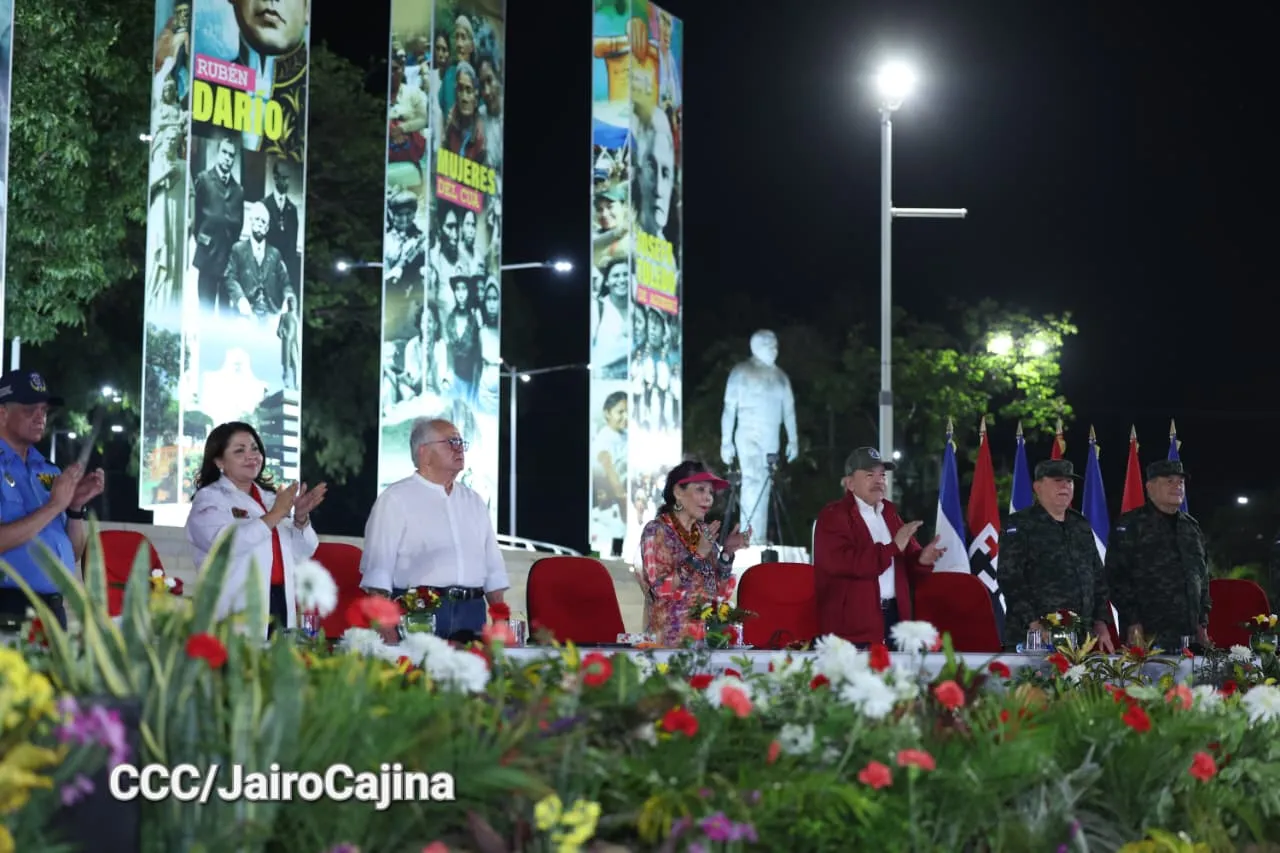
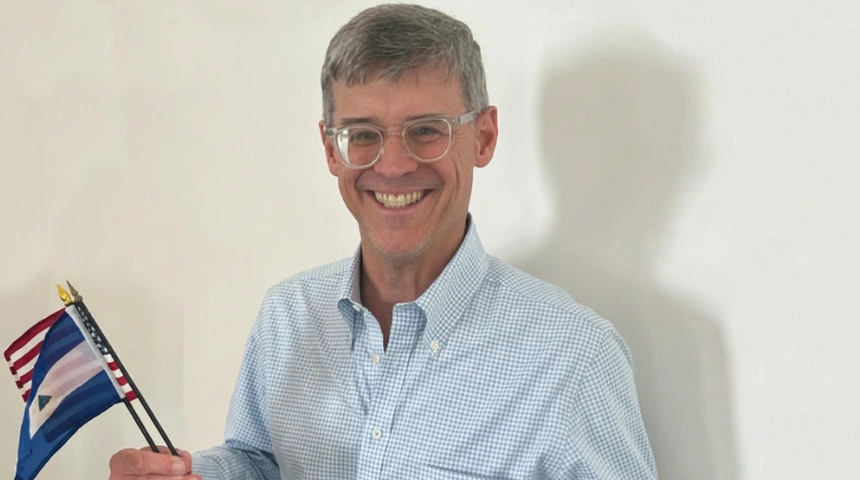
The former chargé d’affaires of the United States, Kevin O’Reilly, stated that a “very personalistic” dictatorship has been consolidated in Nicaragua under the command of Daniel Ortega and Rosario Murillo. During a forum of the Inter-American Dialogue, held on May 5, 2026 in Washington DC, he described a system of concentration of power, repression and social control in the country.
O’Reilly, who concluded his diplomatic mission in Nicaragua in December 2025pointed out that decision-making in the country takes place outside institutional channels. “I can’t remember the times that a minister or vice minister with whom we interacted said yes, no, or we are going to do it this way. What they said was: ‘let me consult with El Carmen,’ which is the residence where the Ortega family lives,” O’Reilly said in the forum called Nicaragua’s Democratic Crisis: Consolidation of the Authoritarian Regime and the Future of US Policy
He added that in Nicaragua “there are many people who censor themselves, limit themselves in all their activities, and you can see, even people who were very close to the Ortegas in the past.”
Dissent is punished by the regime
At the forum, organized by the think tank in Washington, DC, he recalled his experience with a vice minister who accepted an invitation to an event on July 4, the United States’ Independence Day, which illustrated, he said, the level of internal control in decision-making within the regime.
“Another person appeared. It was like the great Soviet encyclopedia: no one in the Ministry of Foreign Affairs dared to mention this woman’s name, because if they had done so and someone had found out, it could have been the end of them. It is a very paranoid state,” said O’Reilly, in the forum that also included the participation of Eddy Acevedo, vice president of Policy and Government Relations of the National Foundation for Democracy and Manuel Orozco, director of the Program, Migration, Remittances and Development of Inter-American Dialogue.
The former American diplomat explained that this way of operating of the Ortega-Murillo regime has become a closed structure that does not admit disagreements.
“They do not tolerate independent action and thought,” he said, after adding that for those who express criticism, “the slightest within government institutions will bring negative consequences.”
“They will lose their jobs,” O’Reilly added, “their families will be attacked, their pensions and property will be confiscated, they will be expelled abroad or imprisoned.”
In Nicaragua there is a “very controlled gerontocracy”
The former diplomat pointed out that the dictatorship has moved away from its convictions assumed 46 years ago with the revolution.
“They have betrayed all those aspirations and the commitments they made with their own people,” he stated, while describing the process as “a failed revolution” that led to “a very successful oligarchy.”
O’Reilly pointed out that in his official reports he avoided referring to Sandinism and chose to describe the government as “Orteguistas,” alluding to a regime that “has centralized a lot of power.”
“A very controlled gerontocracy. No one else is really prepared to assume leadership, no matter how close they are to the family, because the family, the central nucleus, does not trust people like Laureano or their judgment,” he said.
China is a “chronic problem” for Nicaragua
In foreign policy, he noted that the China’s influence represents “a chronic problem”while the presence of Russia constitutes “an acute problem.”
“If the Ortegas were overthrown and another government, a much better, nobler government, came to power, the Chinese would still be there trying to extend their economic and commercial influence. And, through that, a certain type of indirect political influence,” he said, referring to the Relations with China, restored in December 2021.
According to him, Moscow supports the regime in Managua because it considers that “they have a certain margin of action, because the agreement is that they will defend the security of the Ortega political system if things get difficult.”
Orozco noted that China’s presence in Nicaragua is expanding through import and export activities of the regime’s family companies, although Ortega “is practically dead economically and politically.” He added that actors linked to the power environment seek to displace the “mining sector that currently operates taking over exploration, production and exports”.
Acevedo stated that Nicaragua “has become a kind of North Korea” due to the power concentrated in a single family. “Little by little, the family, the children, everyone else, used the platform, used corruption not only to make money, but also to oppress the people,” he said.
The US “can’t fix it” alone
O’Reilly warned about the impact of “sports washing”—a strategy to wash the face of the regime—and pointed out that holding international events in Nicaragua projects a distorted image of the internal situation.
“The fact that FIBA has held a regional tournament in Nicaragua (…) indicates to Nicaraguans that everyone considers it acceptable,” he questioned.
The former diplomat stressed that an eventual solution does not depend exclusively on the United States. “The United States government can’t fix it,” he said, while raising the need for a coordinated response.
In that sense, he maintained that the objective should be “to work with others to help Nicaraguans regain democratic control of their society.”