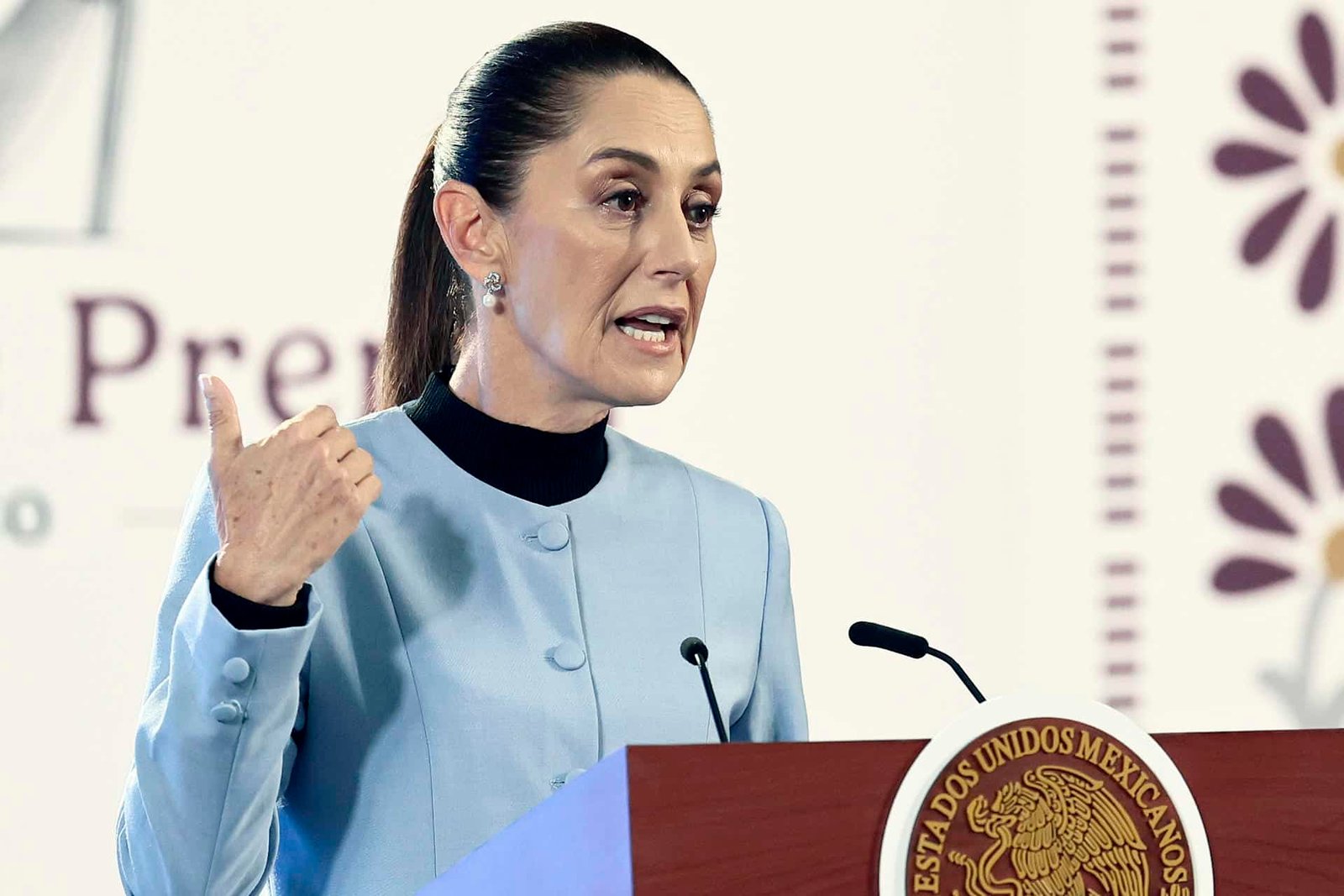
The indictment by a grand jury in the Southern District of New York of Rocha Moya and other Sinaloa politicians and officials raises more questions than conclusive statements. Beyond the obviousness that is impossible to avoid or deny—this places Sheinbaum in a terrifying Hamletian dilemma: to give in or not to give in, with disastrous consequences in both cases—several obvious and at the same time enigmatic doubts arise to which today we have no answers, despite some leaks to the American press.
First question: Did Washington notify the president with some advance notice—a week, a month, three months—that if she did not act against Rocha, he would do so? USA? If we had not given him that opportunity, as I believe was the case with Mencho, it would be a lack of trust and a violation of an unwritten rule of the bilateral relationship: no surprises. If the warning had occurred, it is obvious that it was not followed by the Mexican government. Did they not believe the Americans? Did they not act because they couldn’t? Did they prefer that Trump be the one to ask for and obtain the head of the governor of Sinaloa, so that he could then say to the dead man: “We lost, Pollo”?
Second question: what is the logic of fighting the battle by legal means of “there is no evidence” and “they publicly aired” the matter? If articles 10 and 11 of the Extradition Treaty with the United States – the governing law – are read together, it is evident that it is not necessary to present evidence, compelling or not, if it is an “urgency” that justifies the “request for provisional detention for the purposes of extradition.” The United States has 60 days to present evidence, which must also only exceed a very low value threshold. It is enough to justify the probability of guilt; The trial itself will take place in the United States. Mexico is in this same situation in Argentina with Farías. According to The New York Times —and the timeline of the Mexican media confirms it—the Mexican government was notified of the grand jury’s decision a couple of days in advance, following the speech in Sinaloa by the American ambassador, without the news being disclosed. Any advisor to the assistant to the Legal Consultant of the SRE or the FGR knows that if the presidential decision consists of waging war in the legal field, Mexico has nowhere to stand.
Continuing to insist on evidence under Mexican law ignores the existence of a treaty, and its explicit provisions. Open the door to complaints USAwhich have already started, that Sheinbaum resorts to maneuvers and legal tricks to make herself stupid. Wrapping yourself in the flag and claiming that only Mexico can judge Mexicans is false and implies deceiving the famous people: that is precisely what extradition treaties are for, like the one we have invoked with Argentina, and the one that does not exist with Israel (Roemer and Zerón).
Third question: when Sheinbaum sent 92 Mexicans, initially drug traffickers, to the United States, ignoring the extradition procedures, invoking an alleged National Security Law that endorsed the procedure, did anyone warn him that one day Washington could request the same treatment with Rocha and others? Were you informed that when she preferred that the 92 drug traffickers be tried in the United States, and not in Mexico, she was setting a dangerous precedent?
Last question, for now: do you know in the government if there is a list of narcopoliticians required by the United States, and who will be accused soon? I have never fully believed in the existence of the famous list, but if Sheinbaum has seen it, or it has been given to him, has he already decided how to react to those who follow? It is obvious that the accusations of the Department of Justice, endorsed by a grand jury in Manhattan, come from and rest on the enormous amount of information, gossip, lies, sayings of all the drug traffickers now in the hands of the United States: Mayo, Ovidio, his brother, among others. Are they pure counter-truths?
And, by the way, how come no Mexican media highlighted the end of Ambassador Johnson’s speech in Sinaloa last Friday? “That’s why the USMCA requires our governments to criminalize bribery and corruption and enforce codes of conduct for public officials. We will soon see significant action on this front. Stay tuned.” Did you want more notice than that?
*This article was originally published in Nexus.