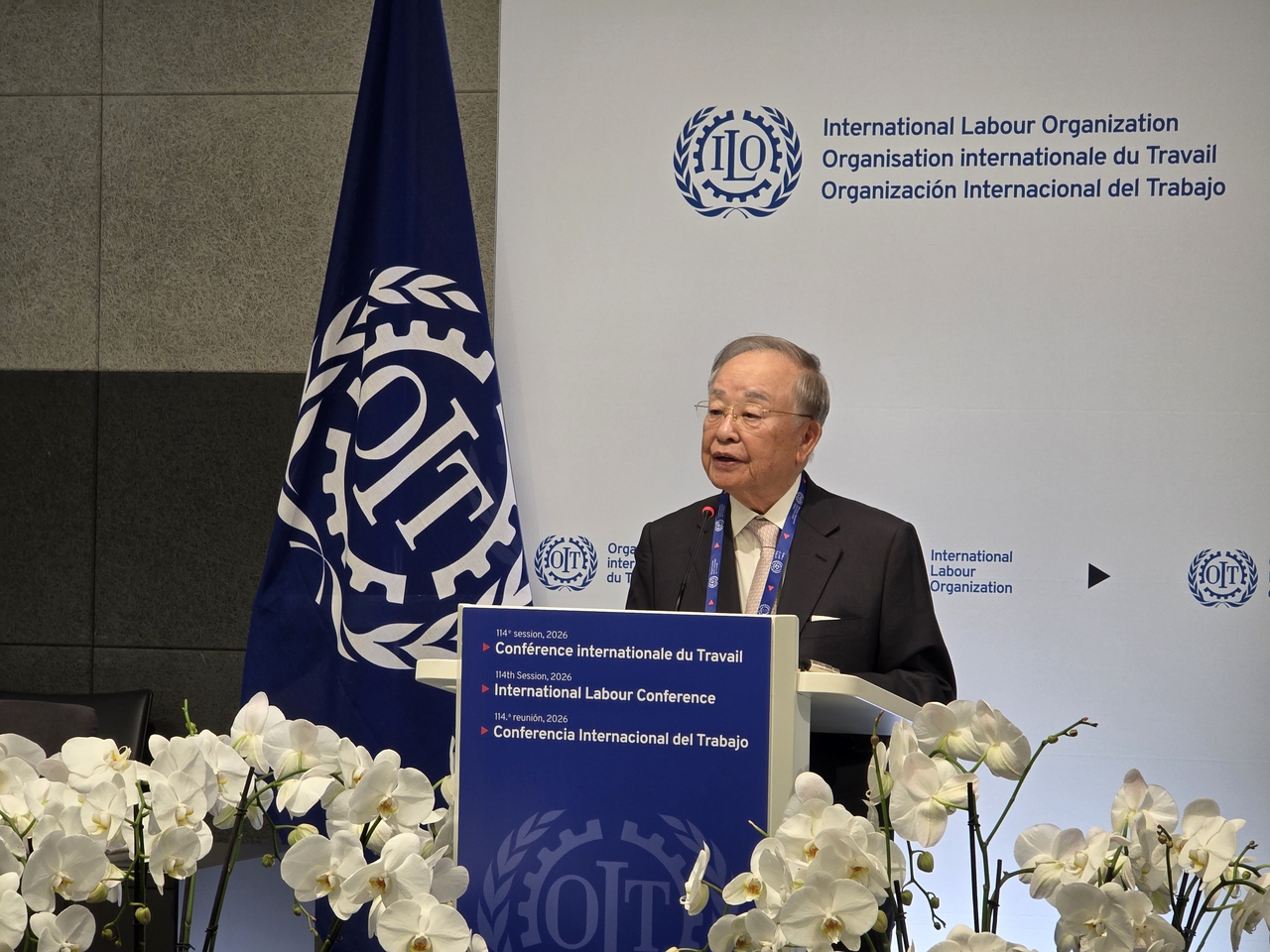
Sohn Kyung-shik, chairperson of the Korea Enterprises Federation, called for labor market reforms and stronger labor-management cooperation to help businesses adapt to the artificial intelligence era, during a speech at the International Labor Organization’s annual conference in Geneva.
Sohn, who is also chair of CJ Group, addressed the 114th International Labor Conference on behalf of the Korean business community, the KEF said Wednesday. Representatives from governments, employers and labor groups from the ILO’s 187 member states attended the gathering.
“Rapid advances in AI are reshaping the economic and social structures that affect our daily lives,” Sohn said. “While AI is expected to boost productivity and growth across industries, it is also raising concerns about disruptions to existing jobs and ways of working.”
Sohn outlined three priorities for helping economies navigate the transition.
First, he argued that governments should modernize labor regulations to create a more innovation-friendly business environment.
“Outdated laws and institutions must be revised to fit a changing economic landscape,” he said. “In Korea’s case, rigid labor regulations, including strong protections for regular workers and inflexible working-hour systems, need to be improved.”
Second, he called for greater support to help workers and companies adapt to AI-driven changes through vocational training, reskilling programs and other workforce-transition measures.
Third, Sohn emphasized the need for cooperative labor-management relations to ensure companies can invest in innovation and remain competitive.
“Excessive demands for bonuses and compensation can undermine labor-management trust, weaken corporate competitiveness and widen wage disparities,” he said.
He added that sustainable social dialogue requires balanced participation from both labor and management.
“Our priority should be to support corporate innovation while preparing workers and businesses for the AI era,” he said.
Sohn also urged the ILO to take into account the different economic and labor-market conditions of member countries when developing international labor standards.
He said labor policies should allow sufficient flexibility for individual countries to pursue innovation and economic growth while addressing local circumstances.
shwang9@heraldcorp.com