Her fingers are completely thin, just bone and skin. She nervously twirls the ring that barely stays on her finger. The 45-year-old Sudanese woman prefers not to tell her real name, and she still has psychological and physical consequences.
About half a year has passed since this mother and her four children survived the massacre in her native Al-Fashir, in the war-affected Darfur region of Sudan. In the meantime, they managed to escape to Uganda, where they are refugees today. “I saw the genocide with my own eyes and experienced it on my own skin,” says the Sudanese woman to our journalists through tears. writes Deutsche Welle.
All the characteristics of genocide
There has been a war in Sudan for three years. Humanitarian organizations assume that hundreds of thousands of people have already died in the fighting or as a result of the war. The violence reached its peak last October: the RSF militia (Rapid Suport Forces), fighting against the government army and its allied militias, after a long siege, captured Al-Fashir, the largest city in the Darfur region, and committed a large-scale massacre of the civilian population. It was only a few days that completely changed the life of our interlocutor.
This is the worst war in the world
“These atrocities show the characteristics of genocide,” concludes the chief UN investigator Mohamed Chande Othman in an interview with DW. In February, after approximately three months of research, he presented his 30-page report to the UN Human Rights Council in Geneva and at the same time submitted it to the International Criminal Court in The Hague. He bases his conclusions, as he says, on three key findings: “First, the existence of mass murders. Second, torture and horrific sexualized violence. And third, long-term starvation by denying humanitarian aid and destroying medical facilities.”
Impossible escape
For more than 18 months, the RSF previously held Al‑Faşir under siege. The Internet and telephone network were disconnected; neither a grain of rice nor a drop of gasoline could pass through the roadblocks of the RSF. And no one could escape. The command of the 6th division of the army, against which the RSF is fighting, was also located in Al-Fashir. At the beginning, the soldiers still managed to defend the city. Then the RSF cut off all their supplies, and the population was declared “enemy”. When the military units finally surrendered, the approximately 250,000 remaining inhabitants were completely at the mercy of the RSF.
So does this mother with her family. When the RSF bombarded the city with artillery shells and drones on the night of October 25-26, 2025, our interlocutor fled with her young children. That was the last time she saw her husband, who wanted to help his wounded nephew.
During the siege, the enemy militia dug a trench around the city with excavators 30 kilometers long, four meters deep and four meters wide. An earth embankment was built behind him – an insurmountable obstacle, as he tells us today: “In the chaos, I fell into the trench, I was buried by earth and corpses. When I came to, it was already daylight. I saw so many dead people around me.”
Thus the escape ended in captivity. After a relative in Australia paid the ransom, she and her children were eventually released and, after further vicissitudes, arrived at a refugee camp in Uganda.
The RSF boasted of its atrocities
The militia itself documented its crimes and there are countless such testimonies. After complete communication blackout, the internet was turned on again and on its Telegram channel, the RSF published videos of atrocities from close range, accompanied by pompous music. There are also aerial shots of off-road military vehicles driving through the city. You can also see the trench and the thousands of people who tried to escape, but fell into the deadly trap of the dug ditch, writes Deutsche Welle.
One video also shows the RSF commander Abu Lulu – clearly recognizable by his disheveled curly hair, as confirmed by various media and institutes – shoots at all those in the trench who are still alive. Another video, recorded on the same day in the hospital in Al-Fashir, shows fighters going through a half-destroyed building and executing all those still alive lying in beds or crouching on the floor: a war crime and crimes against humanity in front of the cameras.
Mass rapes
Only about 100,000 people, according to estimates by the International Organization for Migration (IOM), somehow managed to escape. Some, like our interviewee and her children, made it to Tavila, a refugee camp 70 kilometers to the southwest, where they finally got food.
He also worked there Bob Kitchen from the International Rescue Committee, one of the few humanitarian organizations that dared to be in Sudan. The scale of brutality these people were subjected to deeply shook him, says Kitchen. He says that “almost everyone we talked to was sexually abused” regardless of age, from infants to grandmothers. “These were mostly gang rapes of extreme brutality – that violence was very clearly used as a means of punishment.”
And the satellites saw everything
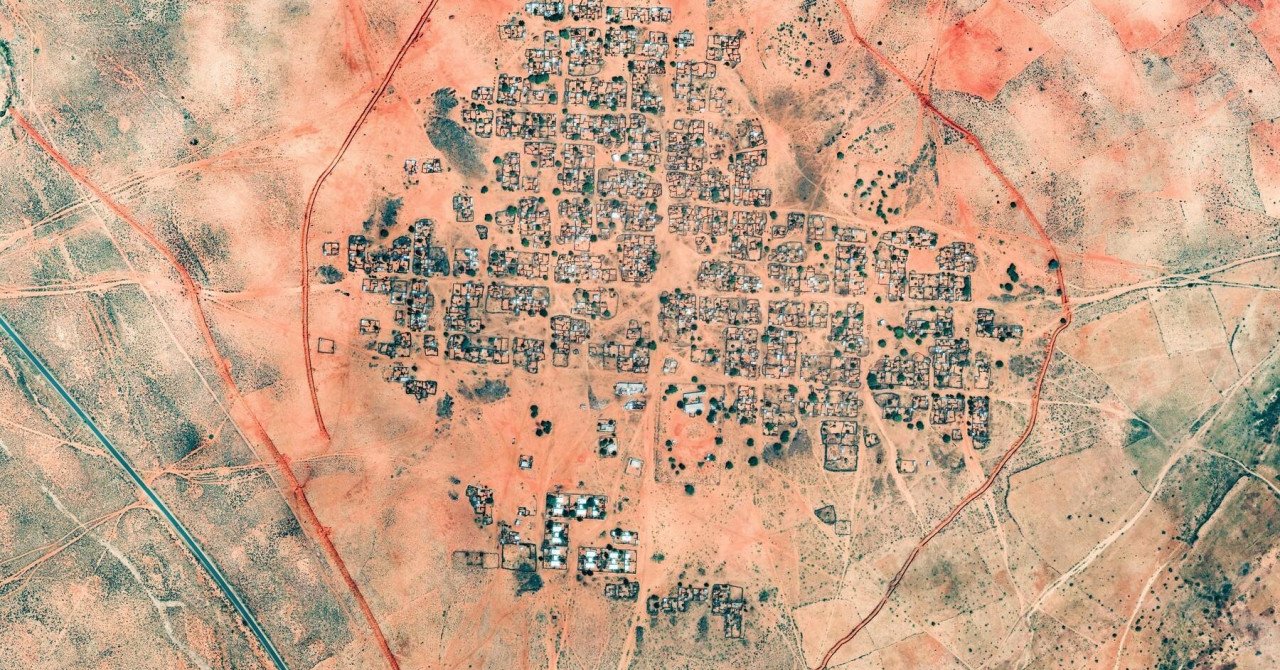
What happened in Al-Fashir during the months of the siege mostly went unnoticed by the world public and only occasionally some short news was published. A team of forensic scientists from the prestigious American Yale School of Public Health was able to monitor these events live using satellite images. In their latest analysis, American experts were able to prove that even before the attack, the RSF had already destroyed the fields and rural settlements in the vicinity that supplied the city with food so that everyone in the city would remain hungry.
These are five places where a new world war could break out in 2026
From orbit, in those October days, when the RSF captured the city, on the dusty roads, the forensic experts could recognize corpses, even bloodstains. They counted about 150 piles of bodies and numerous mass graves, says Nathaniel Raymond of Yale University. His team is trying to estimate the number of dead, he explains to DW. The expert believes that at least “about 70,000 people must be declared dead or missing”.
After the little-reported siege of Al-Fashir, the carnage that October nevertheless sent shockwaves around the world. Calls for an investigation are getting louder. In the eyes of the runaway mother, the international community is also to blame. “The world community left us stranded. It had to intervene during the siege to prevent the worst,” says our interlocutor through tears. “But nothing happened.” Again.