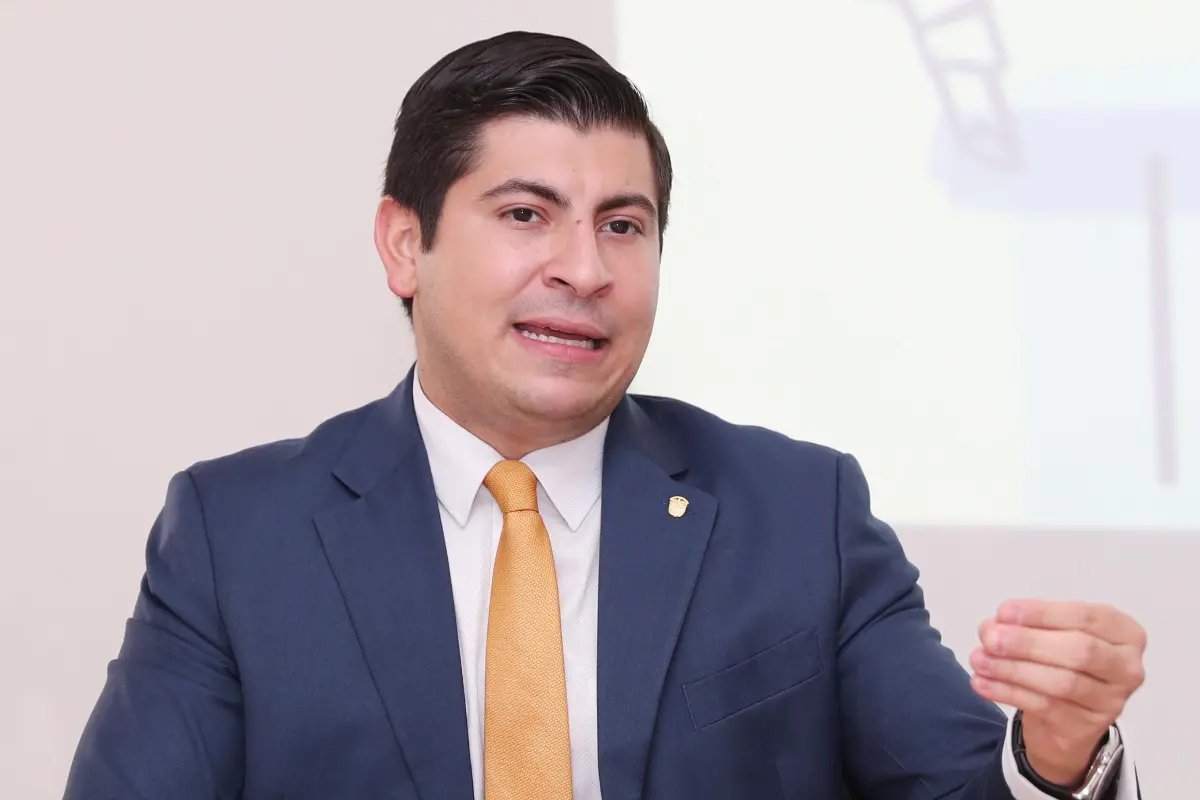
The deputy of Vamos, Jorge Bloise, tells La Estrella de Panamá’s Polígrafo his reading about the crisis of the educational system and his proposal to reform the Organic Law of Education in force – with patches – since 1946. A debate crossed by the political pulse between the Executive, the Assembly and the teaching unions, which question the ossified centralized system, the low execution of the Ministry of Education and the schools in crisis. Bloise supports five axes: quality, equity, investment, teaching careers and decentralization. The deputy acknowledges that he still maintains tensions with the head of Education, Lucy Molinar, although he assures that it is not a personal issue, but rather an institutional one. The conflict over separated teachers and reports of persecution are part of the discussion, he stated. He gives his assessment of the management of the president of the Legislature, Jorge Herrera, and why the possibility of Vamos becoming a party is getting closer and closer.
What are the key points of the educational reform that you propose?
Clear. Educational reform is a national issue, it is not an issue of a government or a person, and that is why we have promoted it from the Education Commission, convening multiple actors. We organize working groups with different sectors: representatives of the government, academia, teaching unions, students, parents, workers and civil society organizations. The main idea was to all sit down and agree on what is truly indispensable and priority at this moment for the educational system. Five fundamental axes emerged from this process: quality, equity, investment, teaching careers and the comprehensive strengthening of the system. Additionally, we address key issues such as curriculum, infrastructure and decentralization. This last point is essential, because we believe that more autonomy must be given to the directors of educational centers so that they can better manage their realities. Regarding the teaching career, it has been one of the greatest advances of the proposal. We seek to dignify it, establish clear entry and exit profiles for the educator, guarantee continuous training and apply periodic evaluations (…) We want a reform with a vision for the future, but also connected to the urgent needs of the present, such as infrastructure and educational quality.
Quality is precisely a serious problem of the system, how is it addressed in its reform?
Quality, to a large extent, depends on the teacher. Improving training, accompanying them in their first years in the classroom and establishing adequate admission processes will allow us to have better educators. And better teachers generate better learning. Of course, resources, infrastructure and school feeding also matter, but all studies agree that the most determining factor is the teacher. However, the current system has many flaws that affect quality. For example, there are funds that cannot be used, schools without administrative staff, problems with the use of resources and very poor physical conditions. There are centers where a single toilet works for hundreds of students or where classes are given in modules, once a week, which is not quality education. So, we see quality in three pillars: well-trained and accompanied teachers, an updated and relevant curriculum, and minimum infrastructure conditions. Without these three elements, it is impossible to speak of a decent education.
The Government is also preparing its own changes to the Education Law, what is your strategy when both proposals meet?
This is a commitment that I assumed before arriving at the Assembly. For years there was talk of educational reform without specifying anything. We have taken the step of turning the dialogue into a real proposal. The Executive’s initiative is also important. I see it as an opportunity to complement efforts. Both proposals can nourish each other and fill gaps. But the Assembly has to fulfill its role. We can’t wait. We want to present the project, open the debate and move forward. This is not a personal or political issue, it is a country issue. The reform must focus on the student, not on individual figures.
You were a harsh critic of 7% of GDP for education, what is your position now?
I would not reduce resources for education under any circumstances. I understand that it has been an important struggle for unions and civil society. However, it is also true that GDP is an estimate, while the State budget is a more concrete figure. In the working groups it was agreed to defend that percentage, and I respect that consensus. The problem is not just how much is allocated, but how it is used. Today there are resources that are not executed. Other countries allocate between 15% and 18% of their budget to education. Panama should aim for something similar, but guaranteeing efficiency in the use of funds.
Meduca has one of the Government’s poor investment executions, how do you evaluate that problem?
It is a regrettable situation. There are many needs in schools and resources are not being used as they should. We have visited numerous educational centers and the reality is worrying: infrastructure in poor condition, lack of equipment and insufficient basic conditions. To say that schools opened is not enough. You have to ask yourself under what conditions they are working. This shows the urgency of reform, because the current system is too bureaucratic and centralized.
One of the problems is the hypercentralization of the educational system, what do you propose about that?
A real decentralization. Although it was attempted in the past, it was not fully achieved. Today everything continues to depend on the central level, which is inefficient. We want directors and regions to have autonomy to manage resources, maintenance and administrative processes. It is impossible for a single central structure to manage thousands of schools and officials. With more autonomy, solutions can be faster and more effective, and schools are prevented from being left unattended.
Last year he said that Minister Lucy Molinar did not want him as president of the Education Commission of the Assembly, have they already smoothed things over?
No, we haven’t, but this is not personal. I have been critical because I consider that there are things that can improve. My focus is education, not people. Each authority must fulfill its role. I am doing mine from the commission, promoting a reform that I consider necessary for the country.
The Government has a war with the teaching unions and seeks to end them. In this context of tension, how is the discussion of the reform progressing?
It is a complex scenario, without a doubt. But we have worked with all the actors. The unions have contributed a lot, as have students, universities, the private sector and parents. We have achieved important coincidences, such as the need to improve the teaching career and the system in general. The key is to center the discussion on the student. We cannot allow political differences to stop a country project. We must move forward with minimum agreements and will.
One of the big obstacles is the more than 290 separated teachers and the reports of persecution. What is your position on the reinstatement of these teachers?
It is a sensitive topic. The unions have constantly raised it. From the Assembly we do not have administrative control over these processes, but we do believe that there was an agreement with the unions, the president of CONEP was present, but that agreement was not fulfilled. It was expected that the separations would stop, but that was not the case. In addition, there were administrative errors in the way the cases were handled, processes have been skipped, unpaid leave was applied to teachers when that is a very personal act. I have always defended the right to education, but I also believe that this issue should be reviewed responsibly.
Some unions are concerned that the reform will create gags to defend their rights and even limit or eliminate the right to strike. Is that on the table?
The right to strike is a constitutional right, so I would not go into the topic. What could be discussed is its regulation, but our proposal does not propose eliminating it. Likewise, with topics like this, the debate will be public and open, and all sectors will be able to participate.
What are your red lines for the educational reform you propose?
There are elements that are not negotiable. First, the teaching career. Second, the curriculum. Third, the infrastructure. You cannot talk about quality without minimum conditions in schools. There are students in very precarious situations, and that must change. It is also essential to include topics such as technology, artificial intelligence and mental health. Problems of anxiety, depression and bullying have increased, and the system must respond to these realities.
Changing the subject, how do you evaluate the management of the president of the Assembly, Jorge Herrera?
From 1 to 10, I would give it between 8 or 9. He has been an important ally and has provided spaces for the commission’s work. Thanks to that support we have been able to advance many projects.
At the beginning of the legislature they denounced pressure and interference from the Government in the Assembly, do these pressures continue?
In my direct experience, I have not felt them in the (Education) commission. I know they may exist in other spaces, but I act according to my criteria. Sometimes I agree with my caucus and other times I don’t, but I always vote conscientiously.
This week the Assembly approved Ángela Russo for the Ombudsman’s Office, anointed by the ruling party; you opposed, what to expect now?
In the end, democracy is democratic and is won with votes in the Assembly. The only thing I ask is that work be done for the citizens and that their actions demonstrate that there is good will in that position. Although it did not have my vote, an oversight for the people is greatly needed… a defender who has an ear for the people and who cares about the citizens and ensures that actions are taken against the State is needed. I expect nothing less from a former judge of the Court who takes action on issues of education, a right that is constantly violated.
The electoral reform put a wrench in the wheels of the candidacies due to free nomination, now it is going to the Assembly, how are they going to face that?
There have been setbacks, especially in the free application. Some modifications affect fairness against the parties. I hope that the Electoral Tribunal reviews this before it reaches the Assembly.
Seeing that situation, is Vamos going to form as a party?
I don’t have the answer, it is a decision that the Vamos board of directors has to make; I imagine that the bodies, both local authorities of the local governments and the deputies of the Assembly (…) I tell you honestly, I believe that since what was done in the electoral reform is approved today, there would be no other option. The most perfect example in San Miguelito could vote for a free nomination, but in a party you can vote for seven, getting seven deputies, bringing seven deputies to the Assembly (…) I believe that the reforms force a bit to be a party, but my faith as a deputy, as a citizen who was at the table, today my faith is placed in the magistrates of the Electoral Tribunal and that this does not reach the Assembly.
It seems that there is concern in sectors of Vamos about becoming a party, especially because they won with an anti-party speech. Do they fear that this change will reduce their support?
Without a doubt, parties are essential in any democracy, but what is missing is strengthening them: they must have a clear ideology, training for their members, and solid rules and principles. I’m not afraid of that, although I understand that many are. I value independence of criteria, that is why I ran that way and I defend that deputies think differently. The country wins when there is diversity of ideas, as long as it acts ethically and without corruption. The debate should be based on arguments, not people. If I come with a party, I will defend my principles anyway. We must also strengthen democracy and improve the rules of the Electoral Code.